
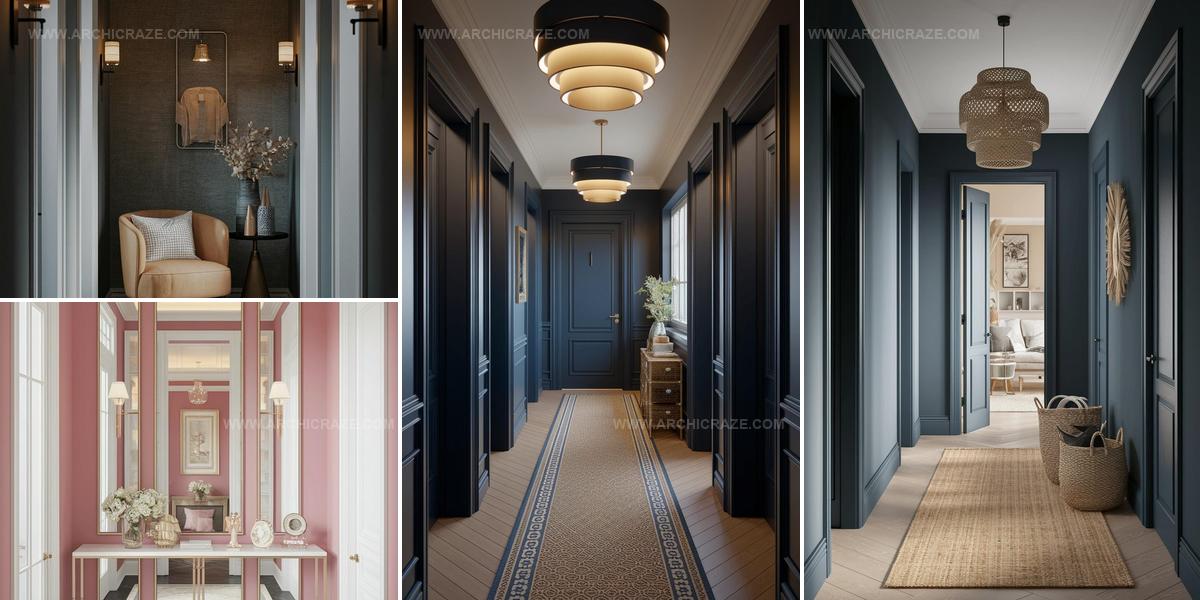
27 Dark Hallway Ideas That Create Drama and Style

Dark hallway ideas can completely change how people experience one of the most overlooked spaces in a home.
Shadows and moody tones actually make narrow passages feel more intimate rather than cramped when done right.
Rich colors absorb light in ways that add depth and character to what might otherwise seem like wasted square footage.
Black walls, charcoal accents, and deep navy hues work surprisingly well in corridors where natural light is limited anyway.
If you embrace darker shades instead of fighting against dim conditions, hallways become dramatic transitions between rooms rather than forgotten afterthoughts.
Bold design choices in these connecting spaces show confidence and creativity that visitors notice immediately.
Stop seeing low-light corridors as problems and recognize them as opportunities for striking style.
Gold-Framed Mirrors Amplify Hallway Light
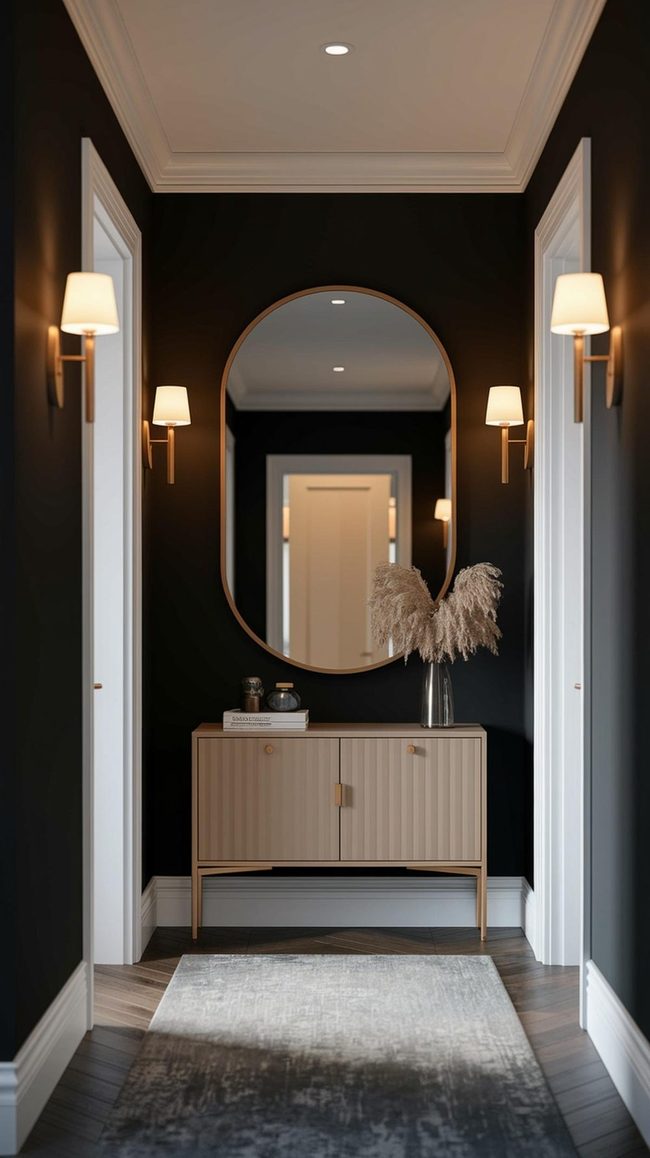
Large mirrors positioned directly across light sources instantly brighten dim hallways and multiply available light throughout the space.
Gallery-style arrangements with multiple mirrors work well, or consider one oversized piece for impact.
Frame choices matter, brushed gold brings warmth, black suggests modern style, and natural wood softens the overall look.
Mirrors add polish and sophistication to any dark corridor while expanding the sense of length.
I recommend keeping the area around mirrors clear to avoid clutter and let reflections work at full strength.
Extra items competing for space reduce the mirror's ability to reflect light and open up the hallway.
Simple placement and minimal surrounding decor deliver the best results.
Light-Colored Murals Transform Dark Hallways
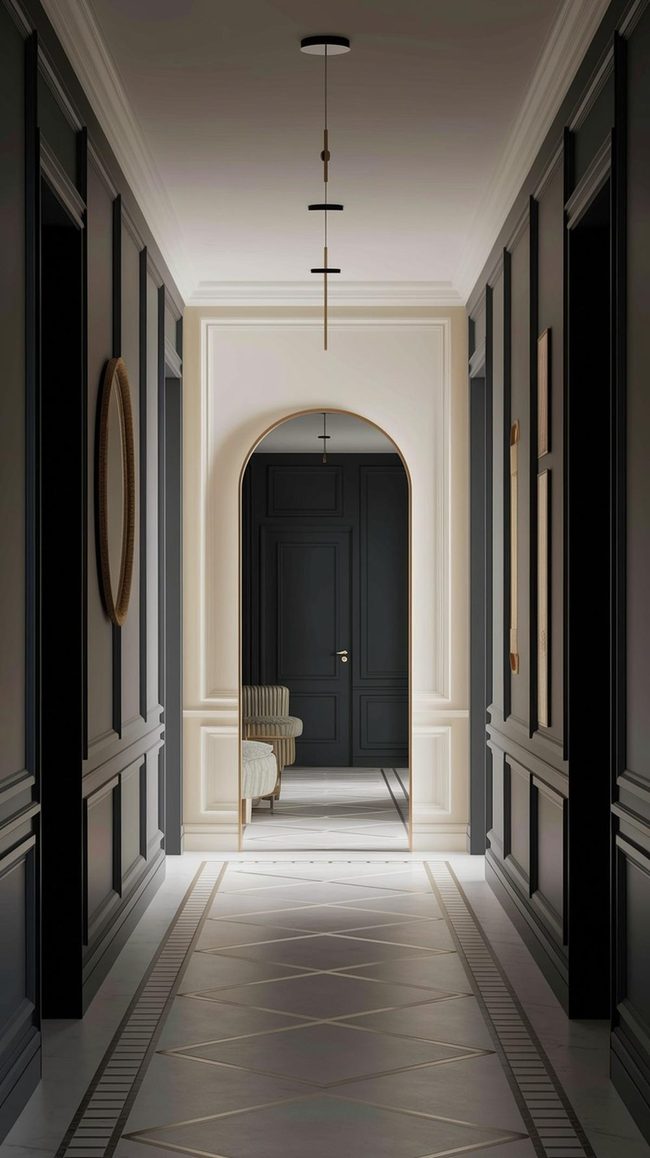
Bold wall murals with light backgrounds instantly transform dark hallways into areas of emphasis that stop you in your tracks.
Large mirrors and oversized artwork amplify natural light and add visual pop to narrow spaces.
Painting a single wall in ivory, delicate sage, or powder blue reflects light throughout the corridor.
Paneling in light hues brings structure and calm without overwhelming the space.
Framing a sunlit wall with darker side walls creates striking contrast and depth.
I'd suggest starting simple, even one reflective surface can shift the entire mood of a gloomy hallway.
Layered Lighting For Bright Hallways
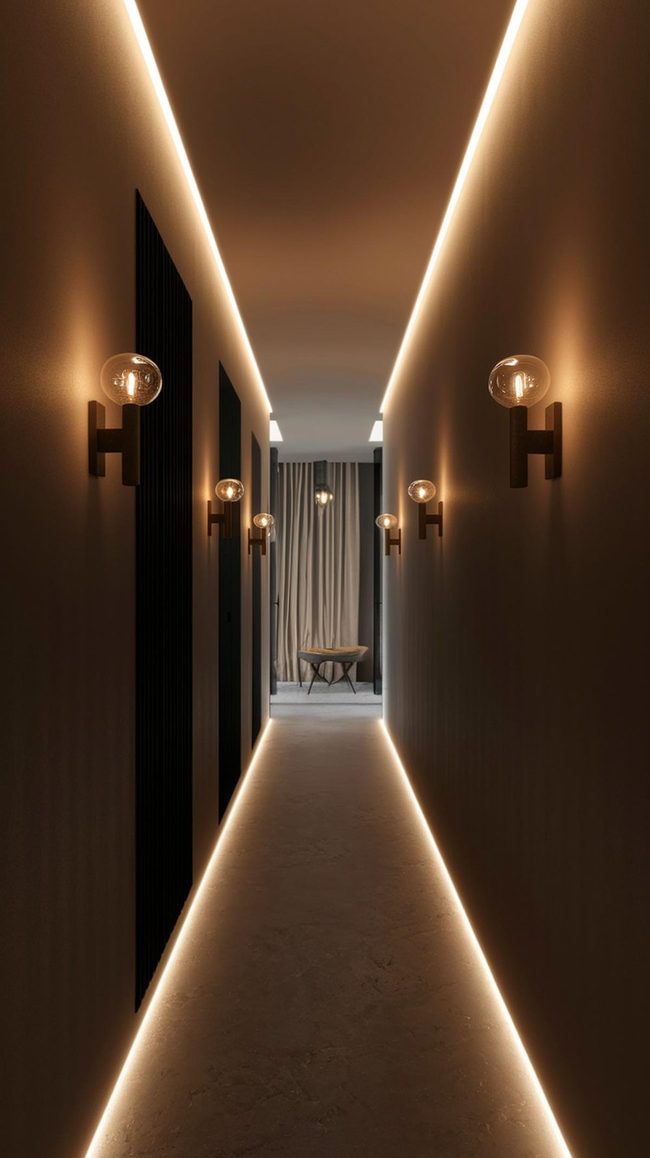
Skip traditional ceiling lights in dark hallways and instead layer your lighting with wall sconces, recessed floor lights, and hidden LED strips to fill the space with warm glow.
If height allows, hang modern pendant lights or small chandeliers along floating shelves and baseboards for gentle sparkle and visual interest.
The goal is spreading light throughout the space without creating harsh shadows or sharp outlines.
I'd recommend using gentle white bulbs to enhance the warmth and make the hallway feel more comfortable to walk through.
This layered approach distributes illumination evenly across the entire area.
Avoiding concentrated overhead lighting prevents dark zones while keeping the space feeling balanced in structure and welcoming.
The result is a hallway that feels open and warm rather than cramped or dim.
Deep Navy Hallway With Light Wood Contrast
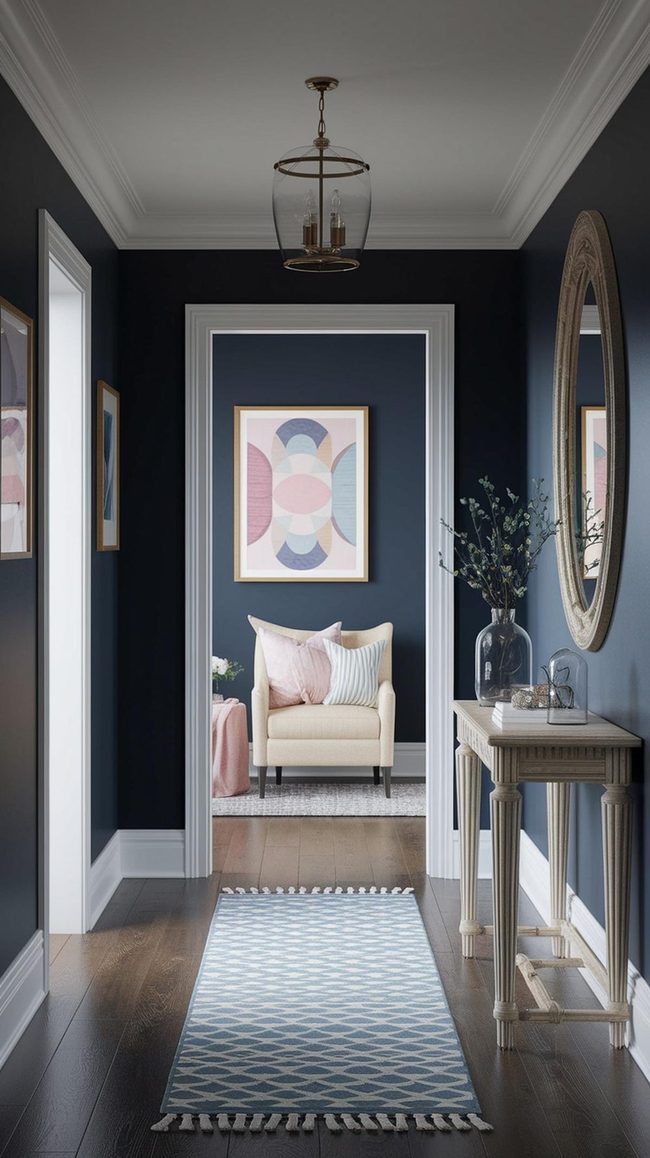
Deep navy, forest green, or plum walls paired with white trim and light wood flooring yield a striking hallway foundation.
Balance these rich colors with cream runners, pastel artwork, and beige curtains to keep the space from feeling heavy.
Glass and metallic accents bounce light around the room and prevent darkness from overwhelming the area.
I recommend maintaining at least 40% of your surfaces and decor in lighter shades to avoid a cramped or gloomy feel.
This mix of bold wall colors and filled with natural light accents gives hallways sophisticated depth without sacrificing openness.
Light and dark tones working side by side transform narrow passages into dynamic spaces that feel both refined and welcoming.
Dark Walls With Metallic Accents
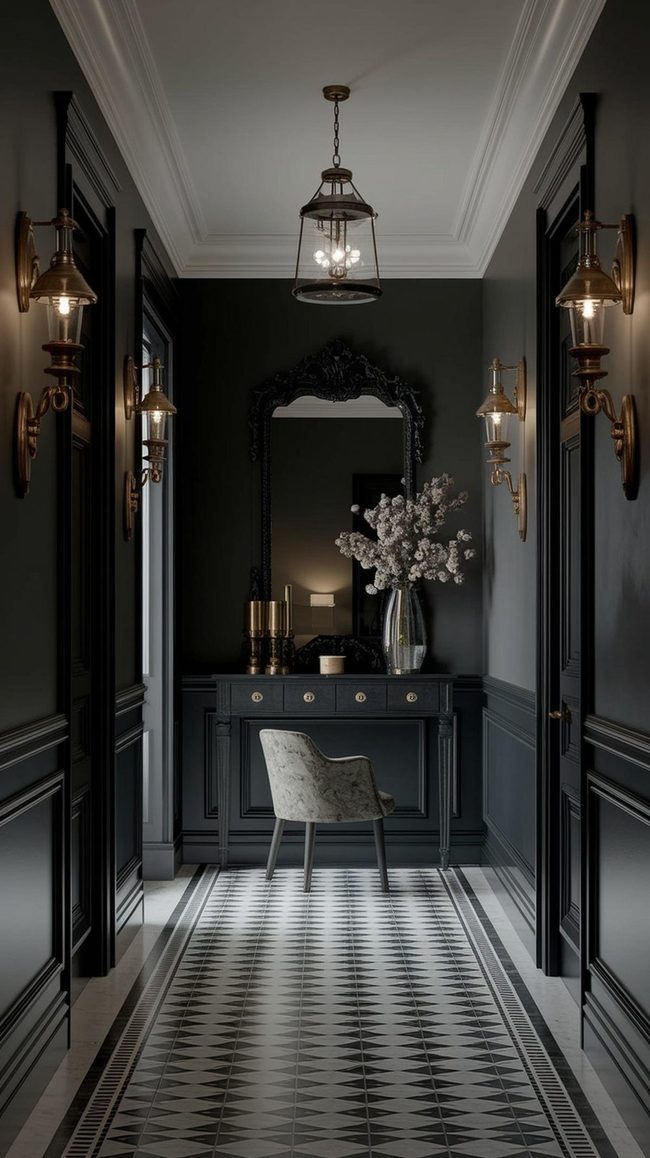
Charcoal, deep emerald, or rich plum walls form the foundation of a moody hallway that looks straight from a design magazine, paired with black-framed mirrors and industrial sconces that anchor the space.
Statement flooring like patterned tiles becomes a focal point against darker tones and adds visual interest.
Matte wall finishes provide warmth while gold or brass candleholders bring metallic shine that breaks up the darkness.
Layering dark textures such as velvet, wood, and metal creates a dramatic cocoon without feeling cramped or heavy.
Balancing these darker elements with lighter accessories like pale vases or cream-toned wall hangings maintains structure and adds breathing room.
It appears that this contrast keeps the space from feeling too closed in while preserving that sophisticated, intimate atmosphere everyone loves about dark hallways.
Metallic Geometric Patterns Dark Hallways
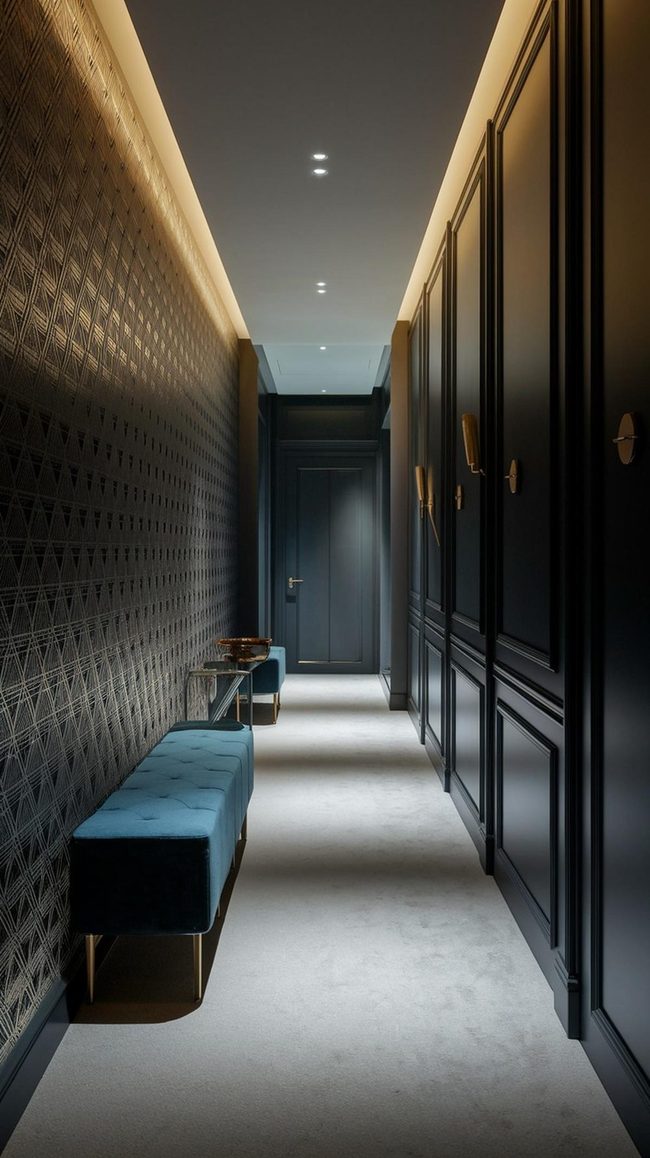
Dark hallway wallpaper with geometric patterns, metallics, or textured grass cloth brings rich dimension to narrow spaces.
Lighter patterns layered over deep backgrounds add sophistication without overwhelming the area.
I recommend choosing wallpaper that works alongside existing lighting and furniture pieces for balanced results.
Bold wallpaper pairs beautifully with minimalist furniture, keeping the space from feeling crowded and drawing attention upward.
Applying wallpaper to just one feature wall maintains airiness while still delivering commanding look.
Console tables, pendant lights, and wall art fill out the hallway further.
Storage benches and ottomans round out the space with function and style.
Gold Pendant Lamps For Layered Hallway Lighting
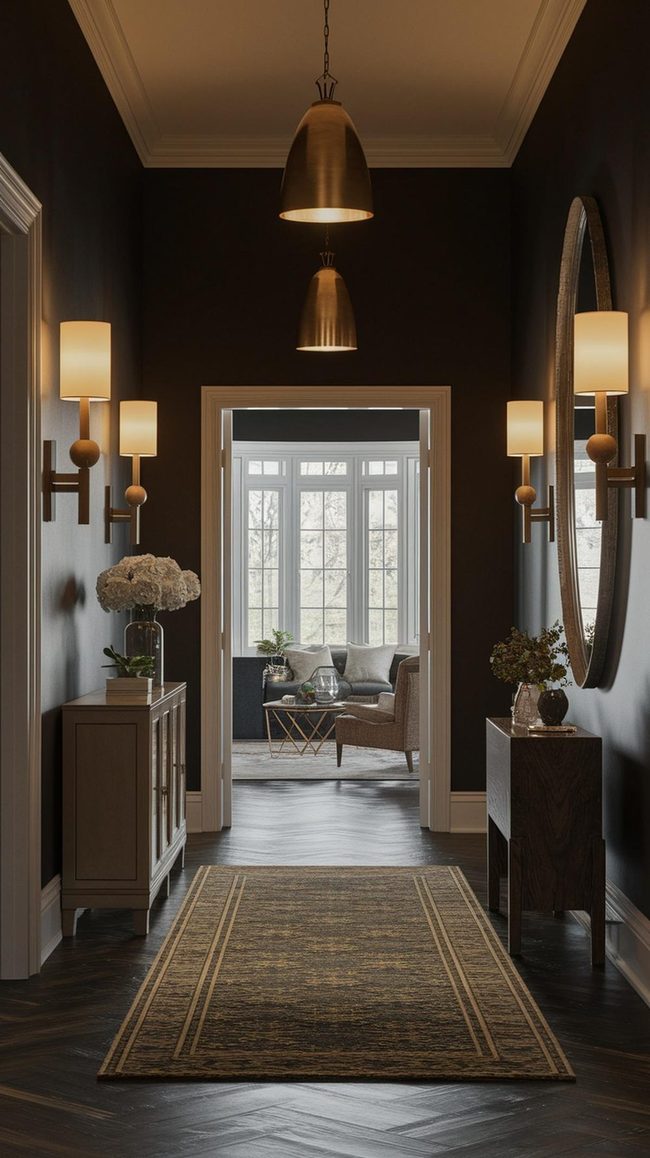
Warm pendant lamps hung at regular intervals instantly brighten a dark hallway with layered lighting from multiple sources.
Gold or brass fixtures add glamour and warmth throughout the space.
Wall-mounted lights placed in pairs along the sides complement overhead fixtures and reduce harsh shadows through balanced diffusion.
Floor lighting in certain areas extends the glow and fills darker corners.
Dimmable bulbs let mood adjust throughout the day, adapting the atmosphere whenever needed.
Combining overhead and side lighting creates minimal in effect, even illumination that feels welcoming rather than cold, and The result is often this layered approach works best for transforming dim hallways into warm, functional spaces.
Personal Gallery Through Neutral Hallway
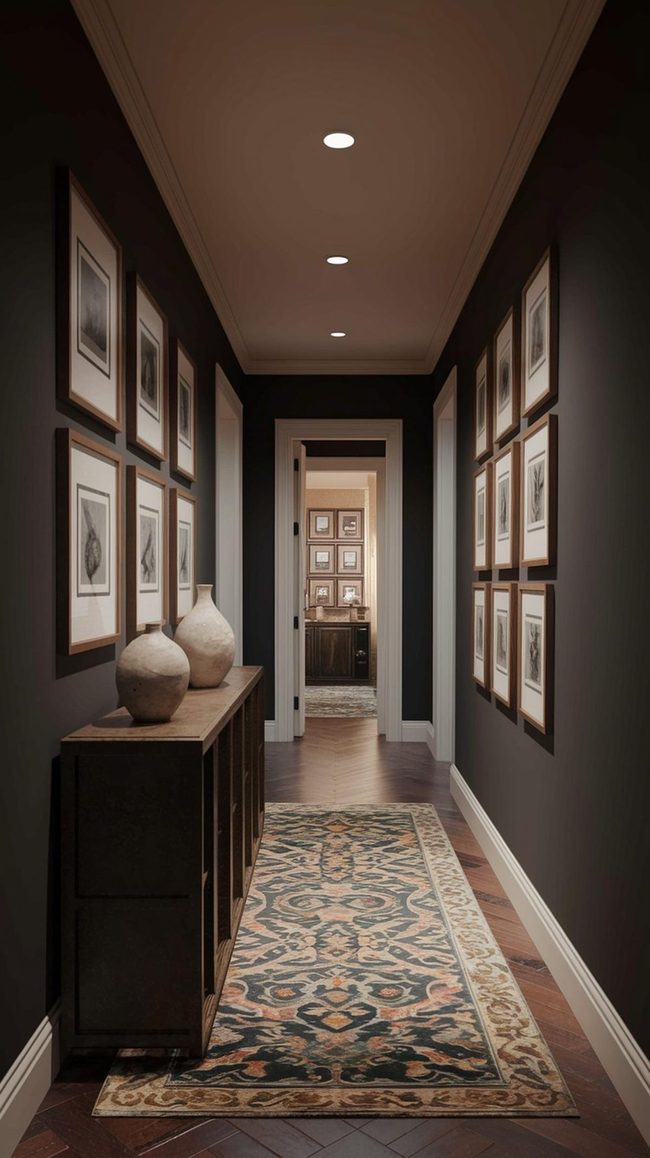
Personal photographs and travel keepsakes transform a dark hallway into a gallery of memories and stories.
Sculptured ceramic pieces arranged on wall consoles add dimension and visual interest to narrow spaces.
Custom artwork that reflects individual taste brings character and warmth to otherwise forgotten corridors.
Accessories like these balance function with beauty, making the hallway feel lived-in and artful.
I recommend restraint over abundance, selecting a few meaningful pieces creates more impact than filling every surface.
Spacing out your selections allows every single item to stand alone rather than competing for attention.
This philosophy turns a simple passageway into a personal sanctuary that welcomes everyone who walks through.
Light Neutrals With Dark Trim Contrast
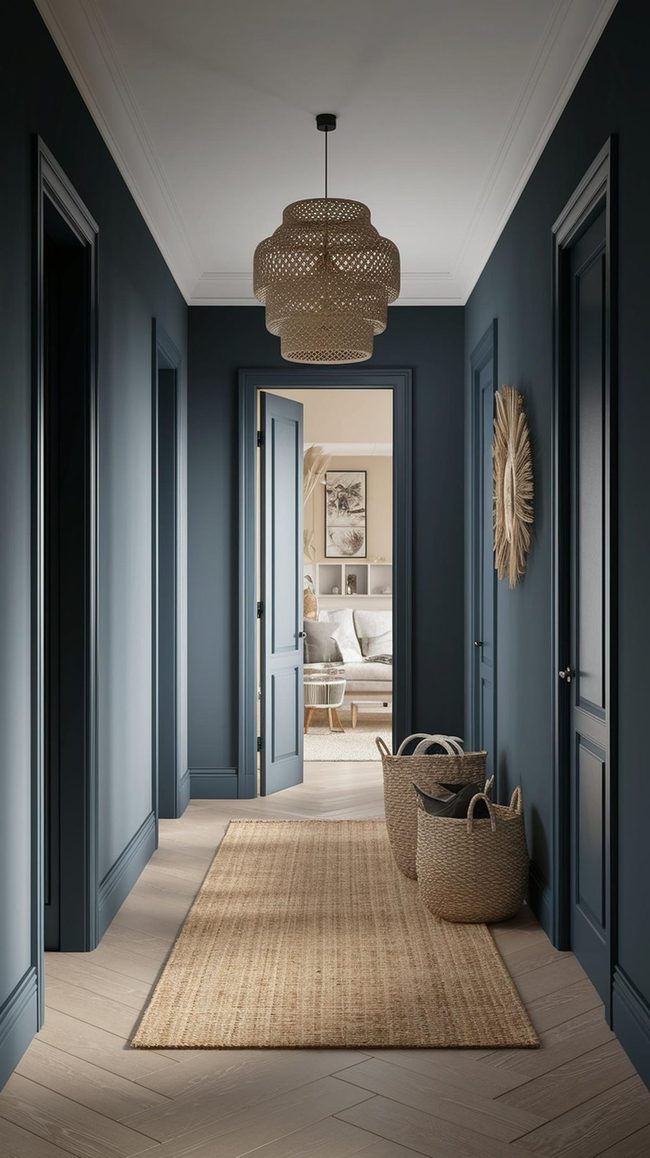
Pale gray, delicate beige, and mist blue walls reflect artificial light beautifully and plan a calm, open feeling in dark hallways.
Pair these light neutrals with darker trims or doors in charcoal or navy to add visual interest and depth.
I'd recommend sticking to just two main colors and one accent to keep the space from feeling cluttered.
Woven baskets and linen wall art bring texture and freshness without disrupting the peaceful atmosphere.
This balance of light and dark hues prevents the hallway from feeling cramped while maintaining a soothing energy throughout.
Metallic Surfaces Transform Dark Hallways
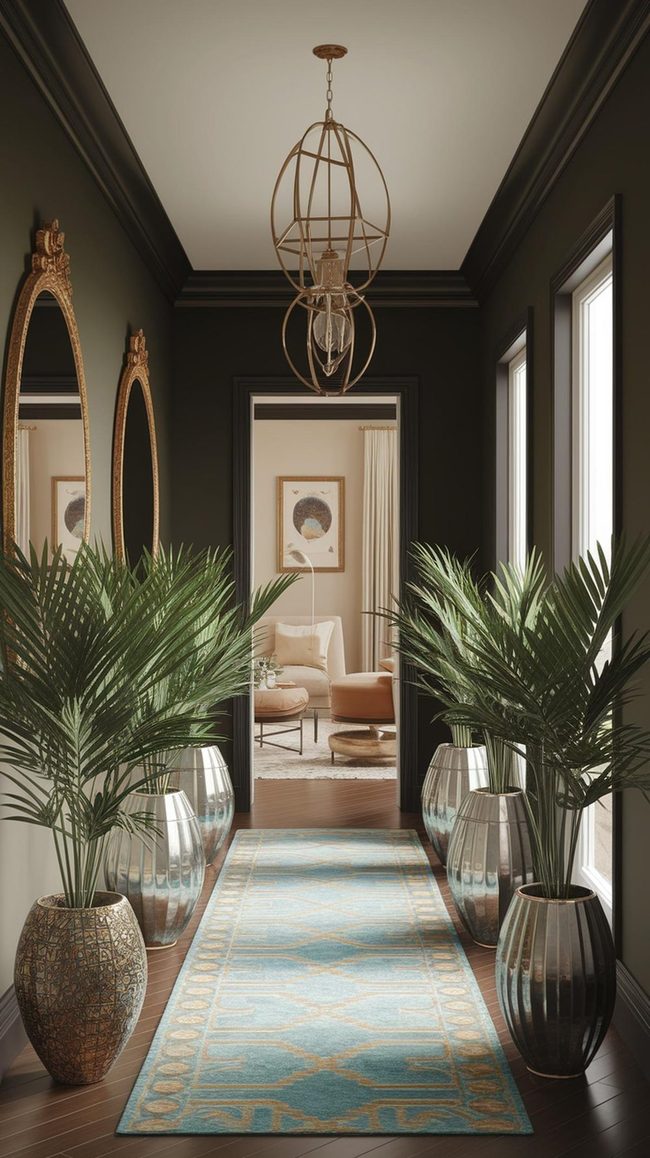
Metallic vases and mirrored lampshades catch light and bounce it around the space, instantly opening up a dark hallway.
Yellow throw pillows add vivid color that energizes the area and lifts the mood.
Lighter artwork on the walls works alongside these beaming pieces to build a bold look.
Tall plants in glossy ceramic pots bring life to the hallway and soften hard surfaces.
Layered colors throughout the space prevent a dull feeling and add visual interest.
Rather than scattering many small decorative pieces everywhere, I'd suggest focusing on just two or three standout elements that make a real impact on the room's beamingness and appeal.
Green Plants Brighten Dark Hallways
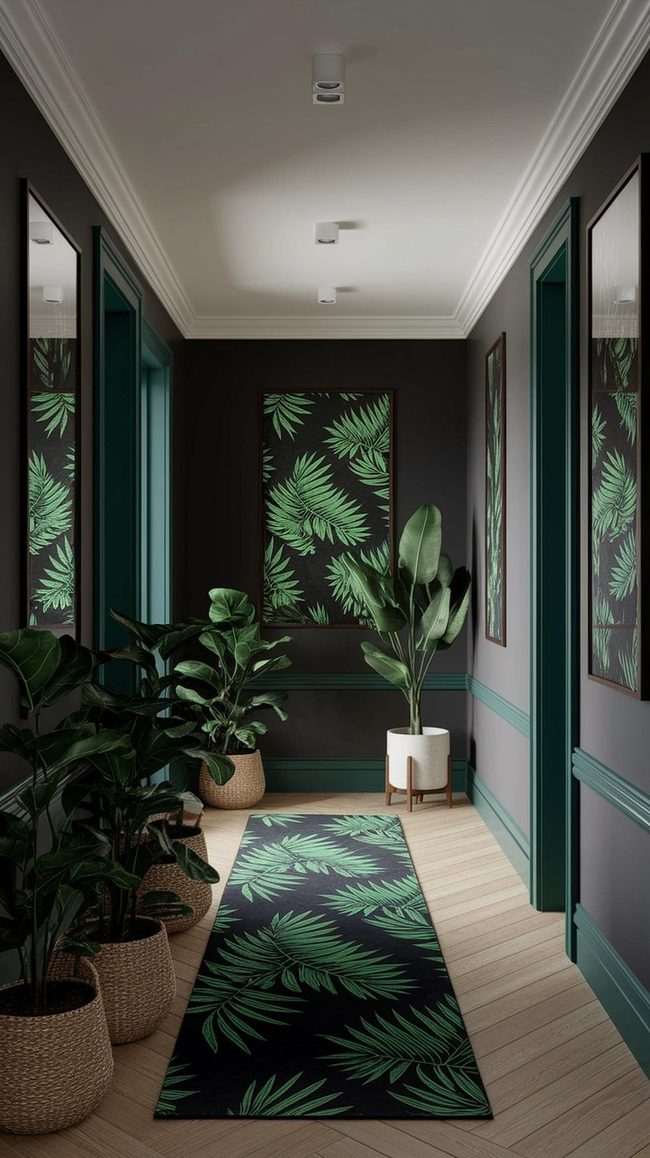
Green accents offer an unexpected way to brighten and lift a dark hallway, whether through painted moldings, potted plants, or accessories that bring nature indoors.
Deep green runners or botanical prints contrast beautifully against charcoal or indigo walls and add visual interest without overwhelming the space.
Glossy-leaf plants like snake plants or hanging ferns thrive in low light and reflect what light exists, adding both life and gently expressed luxury to the corridor.
These natural touches enliven the hallway and work in harmony with darker wall colors, making the space feel less heavy and more connected to the outsides.
I'd recommend choosing plants with shiny leaves whenever possible since they bounce light around the room more effectively.
The combination of green tones and reflective foliage brightens a dim hallway into somewhere that feels fresher and more welcoming.
Light Floors Against Moody Walls
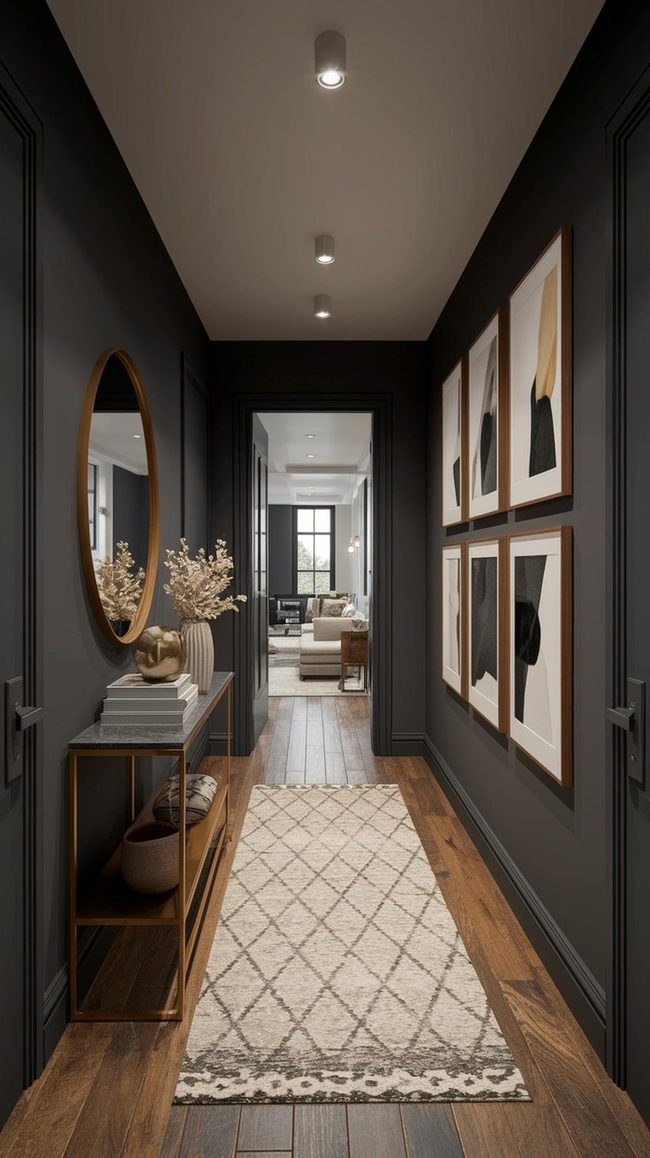
Dark hallways demand careful balance between light floors and moody walls to feel spacious and welcoming.
Pale tiles, washed wood, or light oak flooring paired with dark wall colors prevents the space from feeling cramped and heavy.
Streamlined furniture like slender consoles or floating shelves keeps traffic flowing smoothly without cluttering the passage.
Patterned rugs in cloudy tones add visual interest while maintaining an open feeling.
Grouped artwork arranged by color prevents visual chaos and draws focus along the walls.
Recessed lighting combined with strategically placed mirrors opens up the space and bounces light throughout.
Breaking up long hallways with small rugs or decor clusters establishes separate zones and makes the passage feel less endless.
Coral Walls Brighten Dark Hallways
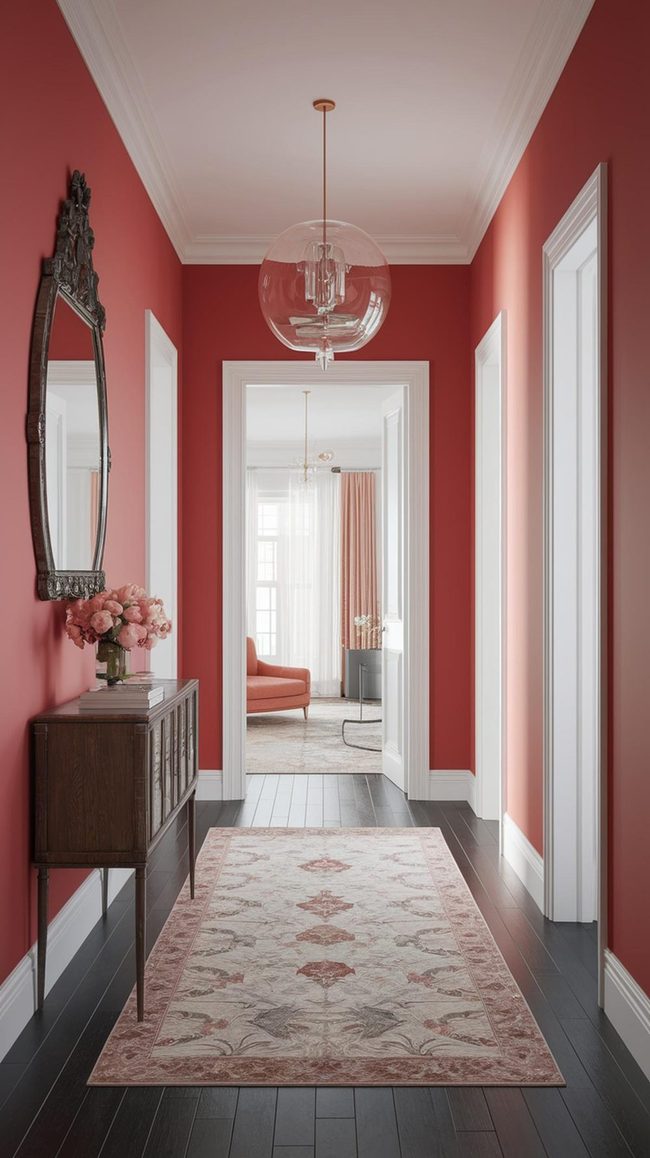
Painting a dark hallway with light-filled colors can completely change how the space feels and looks.
Airy coral or pale yellow work wonderfully because they warm up the area without feeling harsh or cold.
An accent wall at the corridor's end naturally draws the eye forward and makes the hallway feel longer and airier.
Pairing upbeat wall colors with more serious furniture keeps the space from feeling too playful while maintaining that pleasant warmth throughout.
Satin or semi-gloss finishes are ideal choices since they bounce light around the hallway and enhance the overall light-filledness.
I've seen how the right paint color can shift the entire mood of a dim corridor in ways that feel both steady and beautiful.
Choosing colors thoughtfully affects not just how the hallway looks but how it feels when moving through it.
Dark Hallway Matte Gloss Balance
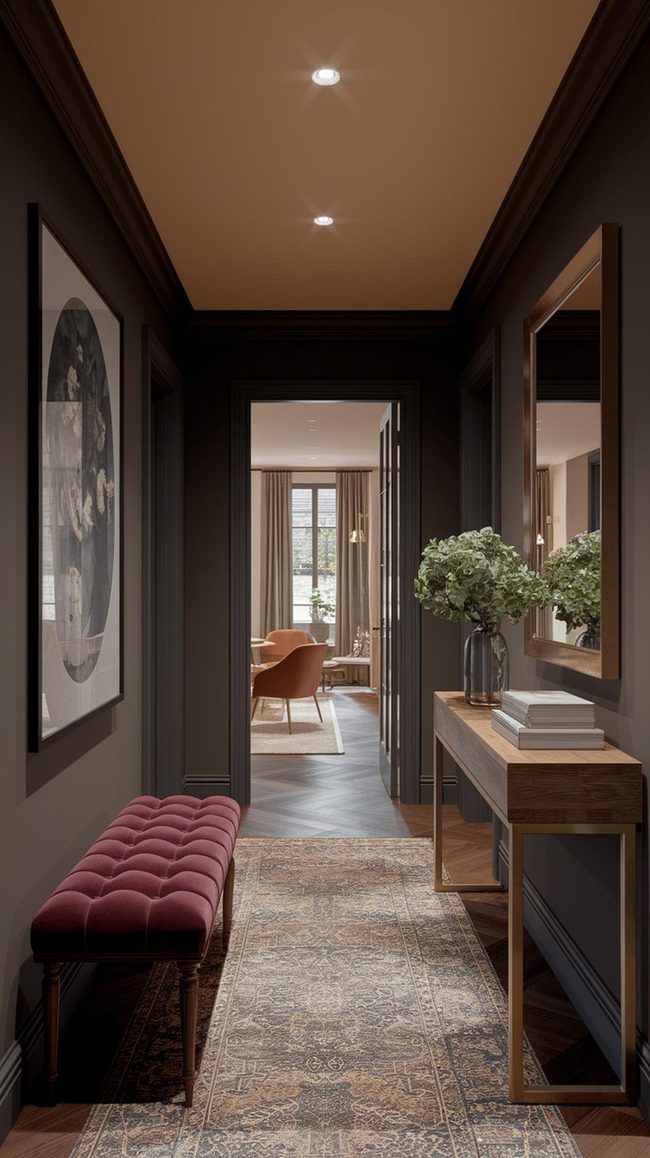
Mixing matte and glossy surfaces in a dark hallway brightens the space without overwhelming it, so balance the ratio to keep things visually calm.
Natural wood, velvet, and matte metals bring warmth to shadowy corners and prevent them from feeling empty.
Streamlined pieces like a narrow bench or slim console keep the hallway functional without crowding the area.
Patterned rugs add texture and soften the hard lines of the space.
Wall sconces and recessed lighting serve both efficient purposes and reflect light around the room, which is essential for maintaining brightness in darker hallways.
Gold-Lit Navy Hallway Transformation
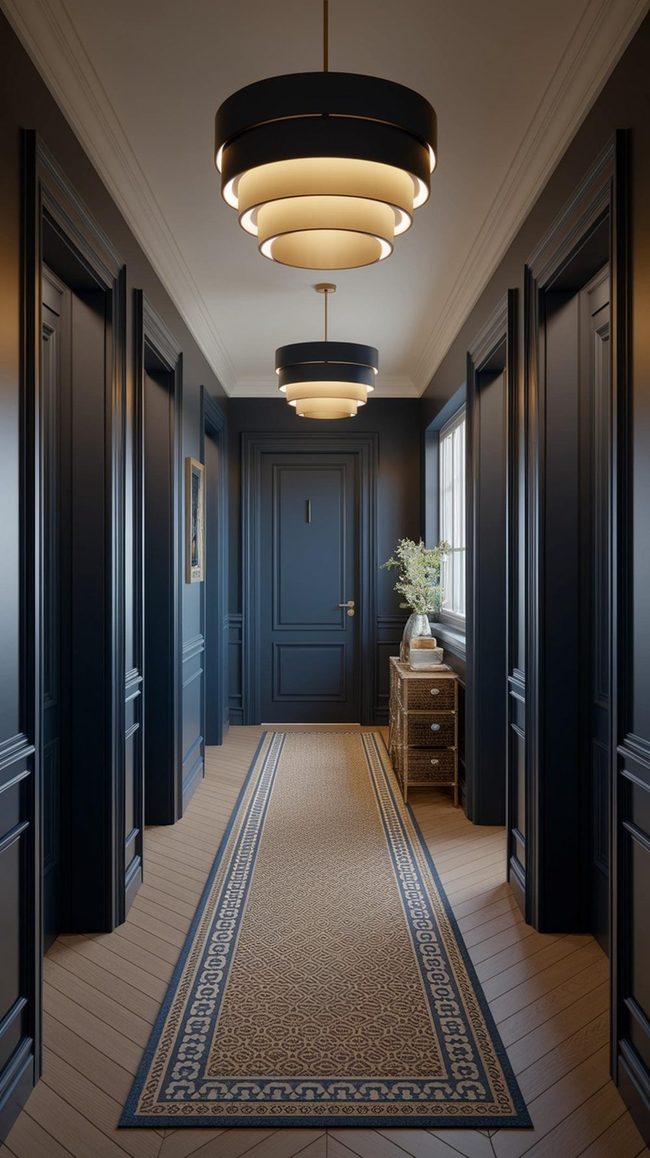
Hallways often feel dim and neglected, but warm lighting paired with textured fabrics can completely shift that atmosphere.
Gold-tinted wall sconces combined with layered light sources, from walls, ceilings, and tables, brighten even the darkest corridors while adding depth through rich materials like plush carpets.
Deep navy paired with warm white tones breaks up monotony and prevents the space from feeling bleak or unwelcoming.
I recommend installing dimmable lights so the mood adjusts throughout the day, morning through evening.
These overlooked passages set the tone for your entire home, making them worth investing in.
Simple changes to lighting and color spark spaces that feel layered rather than forgotten.
Light-Reflecting Mirrors Brighten Narrow Passages
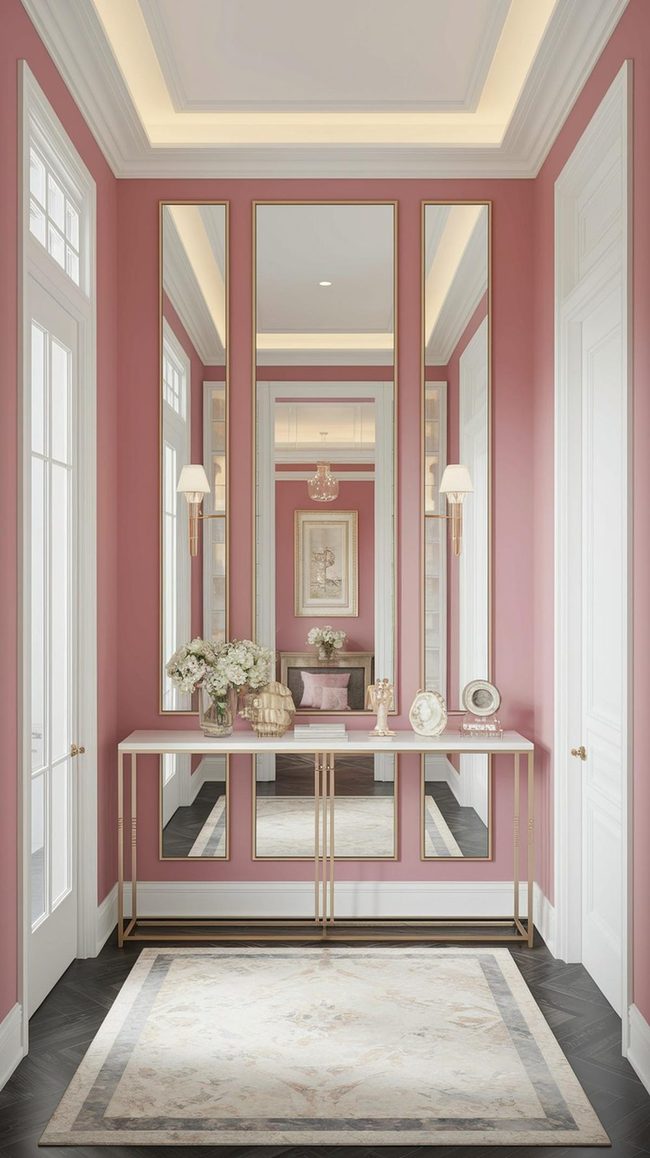
Mirrors strategically placed along walls bounce light throughout the space and make narrow passages feel wider and taller.
Metallic accents like reflective wall art and slim console tables amplify brightness without taking up room.
Paint matters too, so consider light colors such as warm white, muted in tone taupe, or muted pastels to brighten the environment.
Vertical artwork hung at eye level draws attention upward and enhances the sense of height.
Multiple light sources positioned throughout eliminate dark corners and harsh shadows.
Lightweight curtains allow natural light to filter through while keeping the area open and airy.
I recommend combining these approaches together since they work best when layered for maximum impact.
Glossy Dark Doors Matte Walls
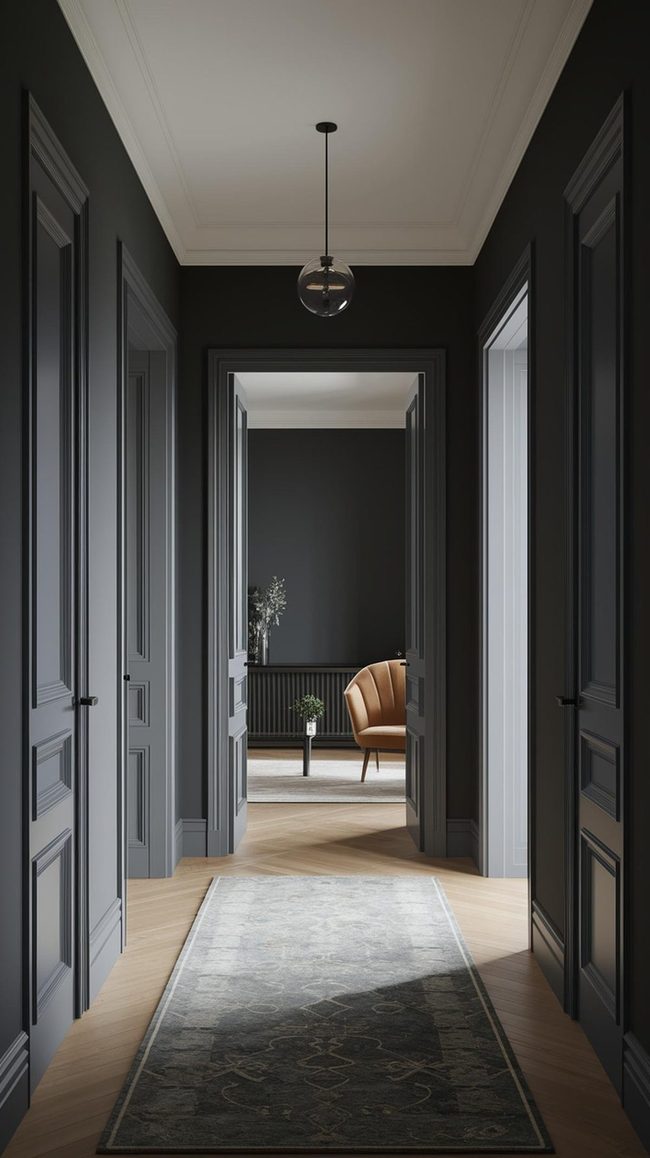
Dark hallway doors painted in glossy finishes offer striking contrast against matte walls and grab attention immediately.
Pairing open-lit, glossy door paint with dark wall colors creates modern sophistication, especially when finished with matte black hardware.
Matching doors to wall colors produces a seamless look that feels more understated and monochromatic throughout the space.
Paneled doors with molding add architectural interest while maintaining the hallway's minimal aesthetic over time.
Even small features like hardware and trim contribute to the overall story as people move through the corridor.
I recommend keeping all hallway doors in one unified color for the strongest visual flow.
Hallway doors deserve styling attention since they represent opportunities to enhance the entire space.
Gray Textured Walls Light Reflection
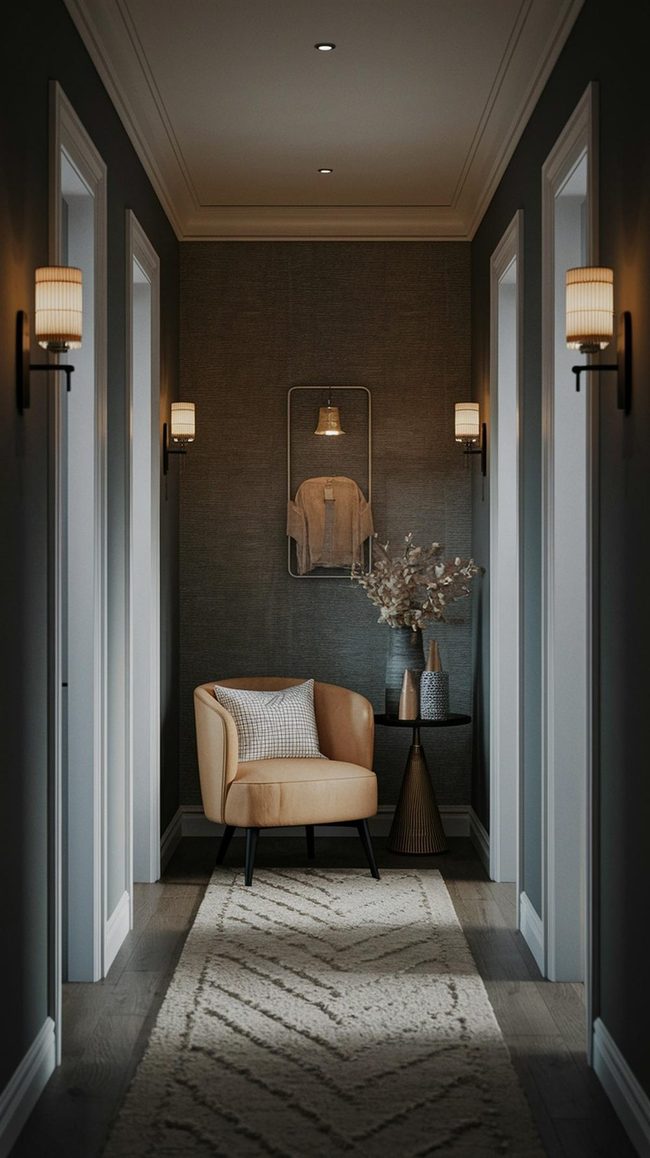
Textured wallpaper like linen, grasscloth, or faux plaster polishes dark hallways by catching light and adding visible dimension to otherwise flat walls.
Matte paints paired with these textured surfaces forge a polished finish that feels grounded and calm.
Gentle gray or muted navy tones enhance the atmosphere without relying on bold colors to brighten the space.
Mixing rough surfaces with smooth ones keeps the hallway interesting while maintaining balance.
A textured accent wall paired with smooth sidewalls prevents the area from feeling too busy.
I'd recommend sticking to one color palette when layering textures, as this ensures the hallway looks balanced in structure and refined rather than chaotic.
Golden Light Through Dark Hallways
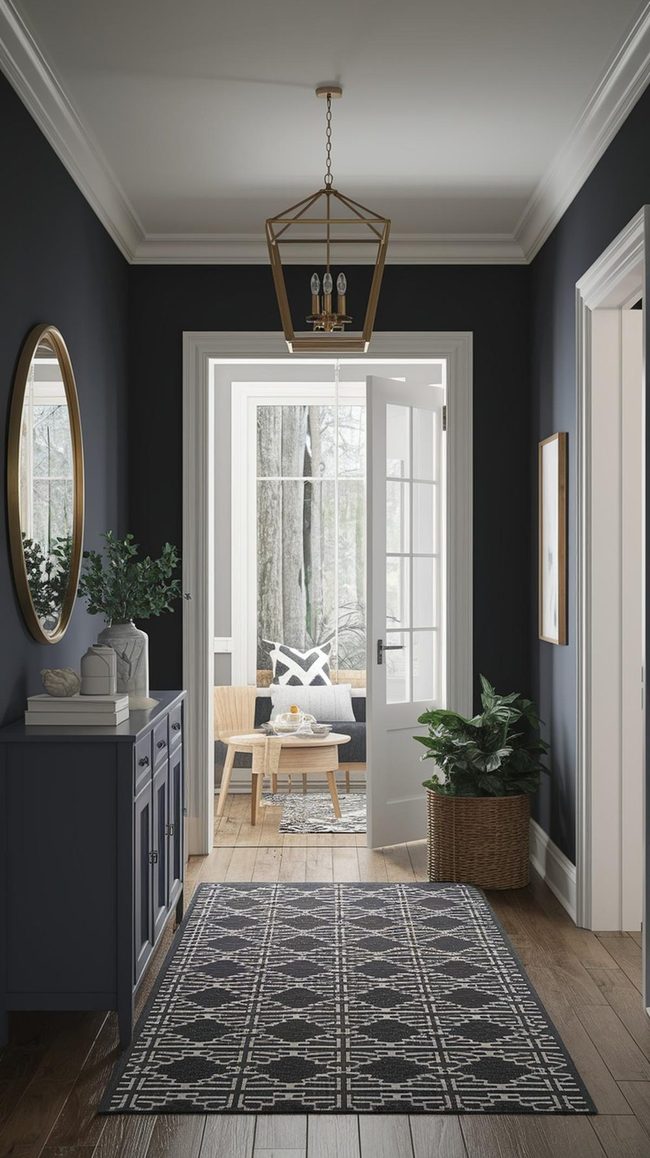
Lantern-style pendant lights and oversized wall sconces cast a warm glow through dark hallways, immediately shifting the atmosphere of an entryway.
Pair cream or beige walls with deeper console tables, darker rugs, and black-and-white patterned accents to balance the space visually.
Hidden-compartment benches and stylish storage solutions keep clutter out of sight while maintaining the room's clean look.
Small trays, candles, and striking artwork add personality without overwhelming the entrance.
Wood and metal textures layered throughout bring richness and warmth to the overall design.
The result is often that this combination of lighting, furniture, and accessories works well for making dim corridors feel both organized and welcoming.
Large Art Against Deep Charcoal Walls
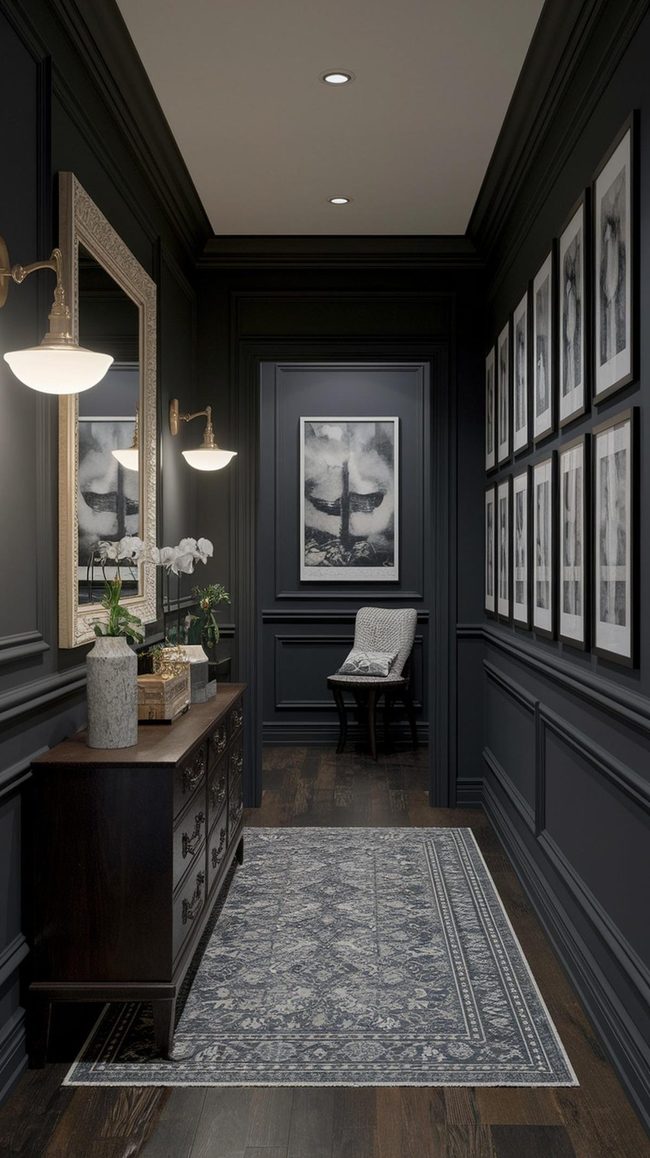
Dark hallways become instantly dramatic when you fill them with large art displays that demand attention against deep charcoal or navy walls.
Bold colored artwork practically jumps off these dark backgrounds, making across every piece feel alive and powerful.
Oversized paintings or gallery walls with matching frames keep everything looking considered and coordinated.
Strategic lighting like picture lights and spotlights directed at the art amplifies the impact and makes people stop to look.
I recommend sticking to two or three frame colors when building a gallery wall so the whole arrangement stays structurally consistent.
This styling revitalizes a plain hallway into a curated space that feels thoughtfully designed and impressive.
Dark Walls With Bright Contrast Hallway
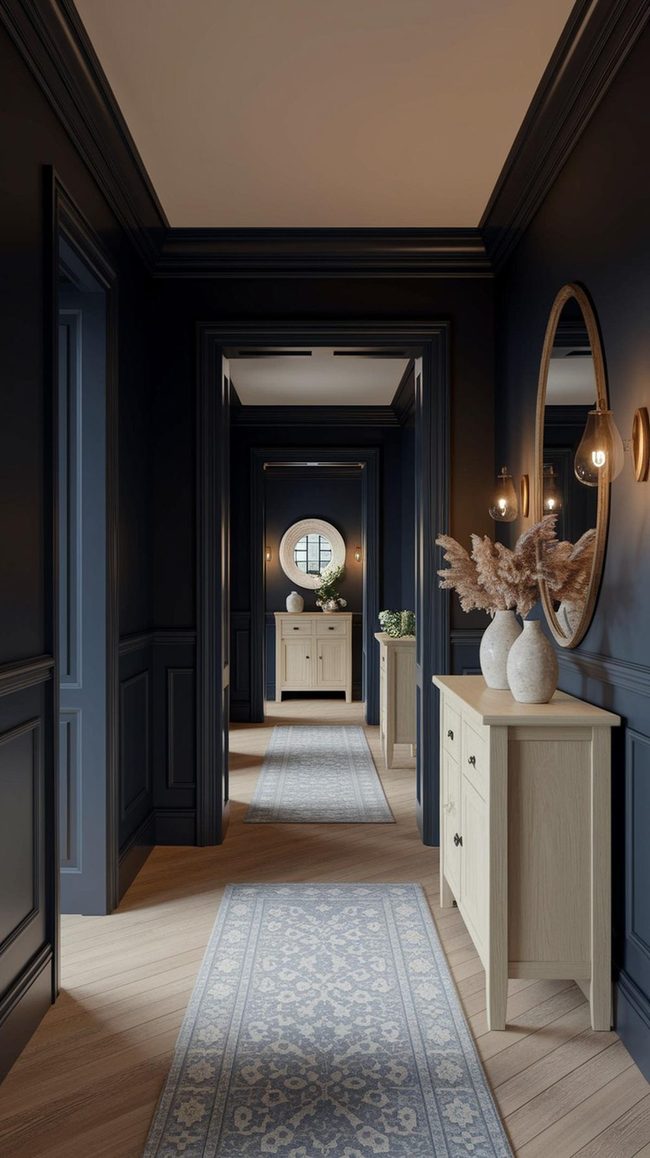
Dark hallway paint colors like muted navy, warm charcoal, olive green, and rich cocoa work beautifully without creating a gloomy atmosphere.
Pairing these shades with light-colored flooring and strategic lighting makes the space feel sophisticated and balanced.
Light cream furnishings and reflective metallic accents bounce light around the hallway and prevent it from feeling dim.
Pale wood consoles or mirrored side tables positioned against the dark walls keep the space airy and open.
I recommend focusing on contrast through your flooring, trim work, and light placement since these elements become especially important when working with darker paint.
Lucent, slim accent pieces maintain visibility and prevent the hallway from closing in.
This combination of dark walls with lighter elements and thoughtful lighting creates a refined hallway that feels both moody and welcoming.
Bold Art Lifts Windowless Hallways
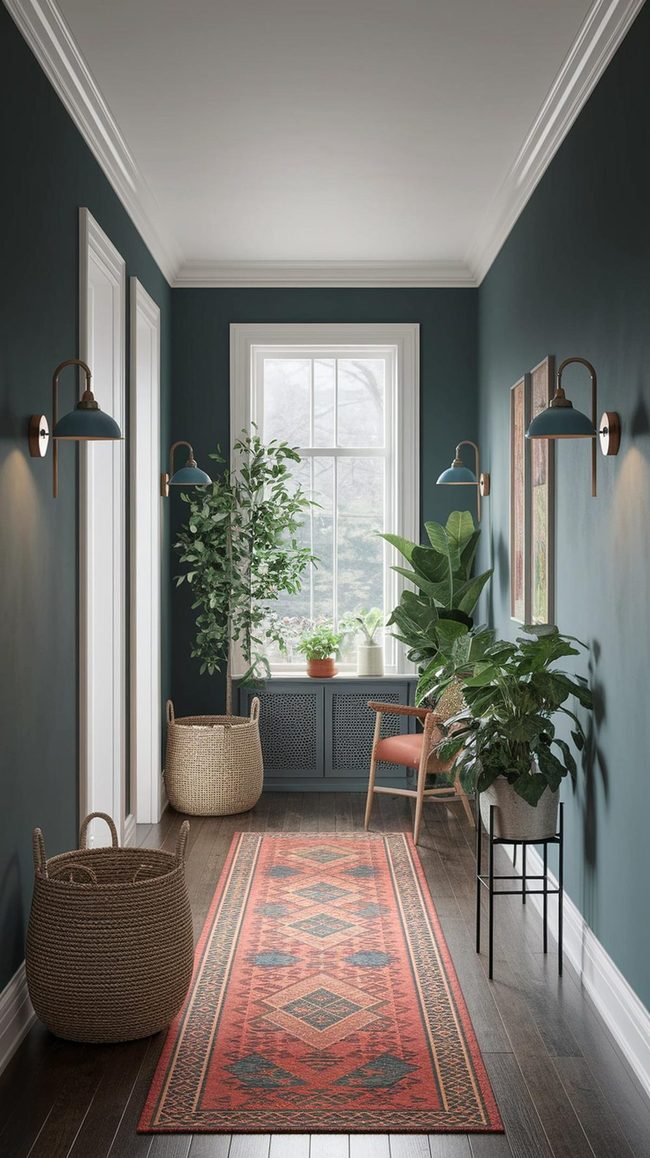
Bold artwork with light backgrounds immediately lifts a windowless hallway and brings visual interest to blank walls.
Potted plants and trees add living elements that instantly brighten the space.
Wall sconces installed along the sides provide essential lighting while keeping the area functional.
Layering textures through linen curtains, patterned runners, and woven baskets adds depth and warmth.
Airy neutral wall colors like beige, misty blue, and light charcoal work best as a base for the space.
Pairing these muted tones with bold cushions or accessories creates modern refinement without effort.
Designers often see this combination of layered materials, strategic lighting, and thoughtful color mixing brightens even the darkest hallways into welcoming passages.
Light Neutrals Brighten Narrow Corridors
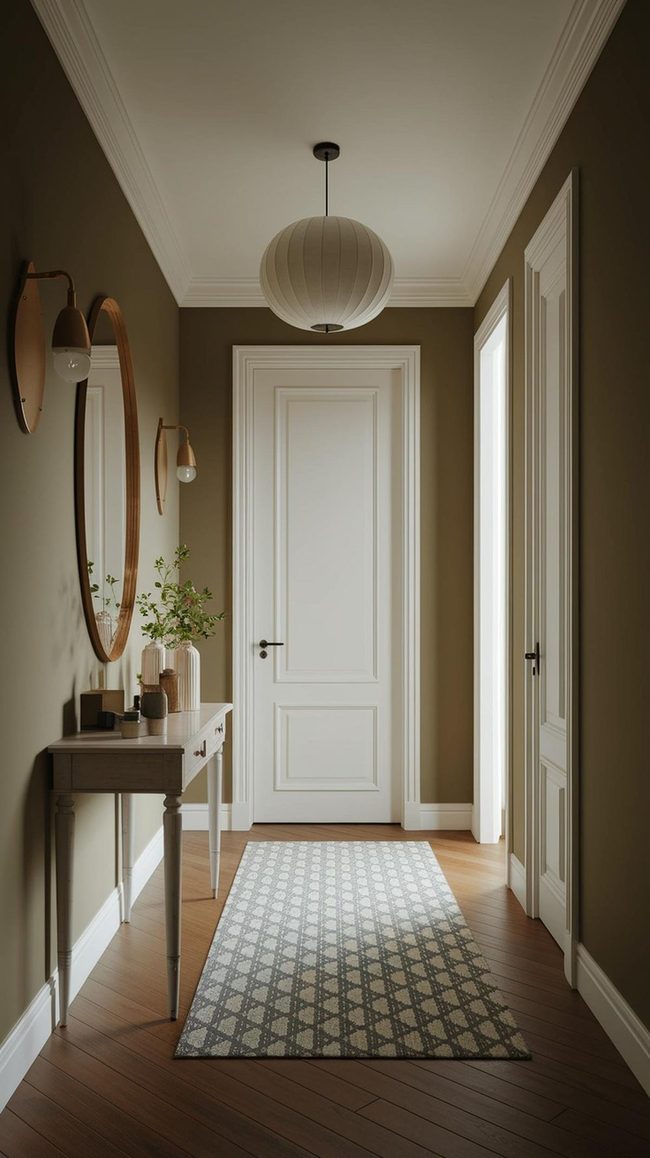
Dark hallways transform with the right paint choice, so take color selection seriously since it shapes how wide the space feels.
Light neutrals like taupe, dusty rose, or muted sage open up darker corridors and add airiness to narrow passages.
If darker shades appeal to you, pair them with high-gloss finishes or crisp white trim for warmth and dimension.
Maximizing light reflection matters most in hallway design, and I'd recommend testing paint samples under both artificial and natural lighting before committing.
Doors, moldings, and baseboards gain sophistication when painted in slightly darker or glossier versions of the wall color, creating fine-scale contrast.
Artificial lighting can shift how colors appear, so always evaluate samples in the actual hallway before making final decisions.
This ensures the shade works beautifully throughout the day and evening.
High-Gloss Dark Hallways Feel Spacious
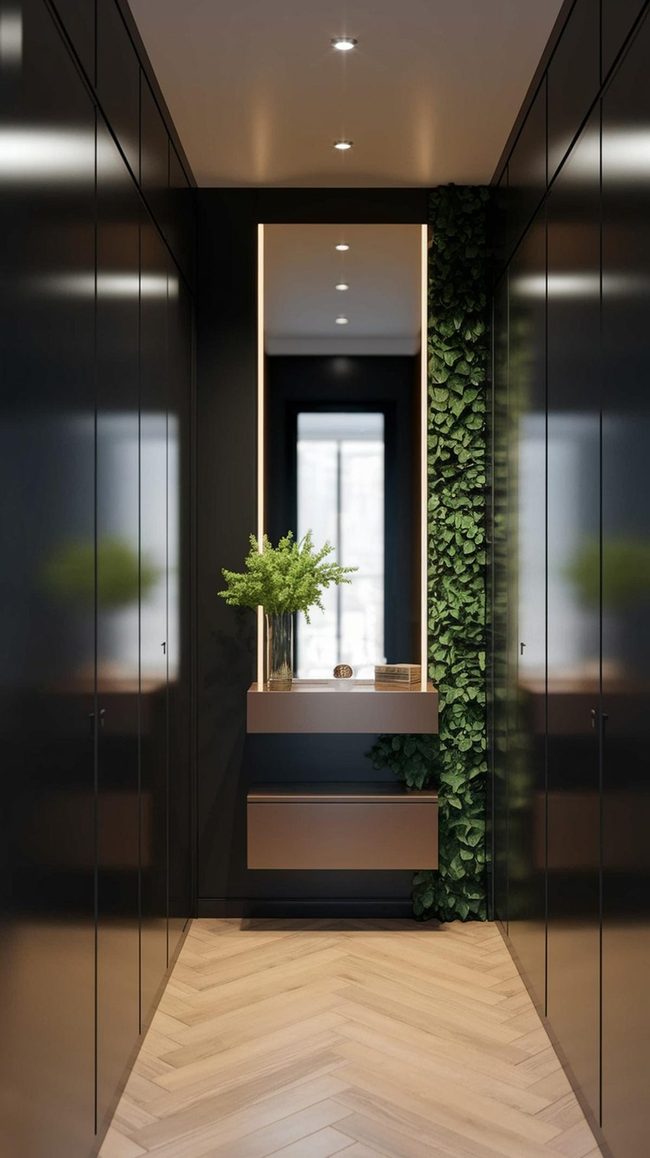
Polished surfaces and high-gloss finishes bounce light around tight, dark hallways and make them feel larger than they are.
Mirrors amplify this effect even further, reflecting light to brighten every corner.
Dark walls paired with these reflective surfaces draw unexpected depth and sophistication.
Slimline furniture like floating shelves and streamlined benches add storage and style without eating up precious floor space.
Small touches of bold greenery or metallics introduce texture and break up the monotony.
Vertical elements, think tall plants or artwork, draw the eye upward and stretch the space visually, which works especially well in narrow hallways.
I've noticed that layering these ideas together reimagines even the darkest entryway into something that feels open and thoughtfully designed.
Navy Hallway Paint With Satin Finish
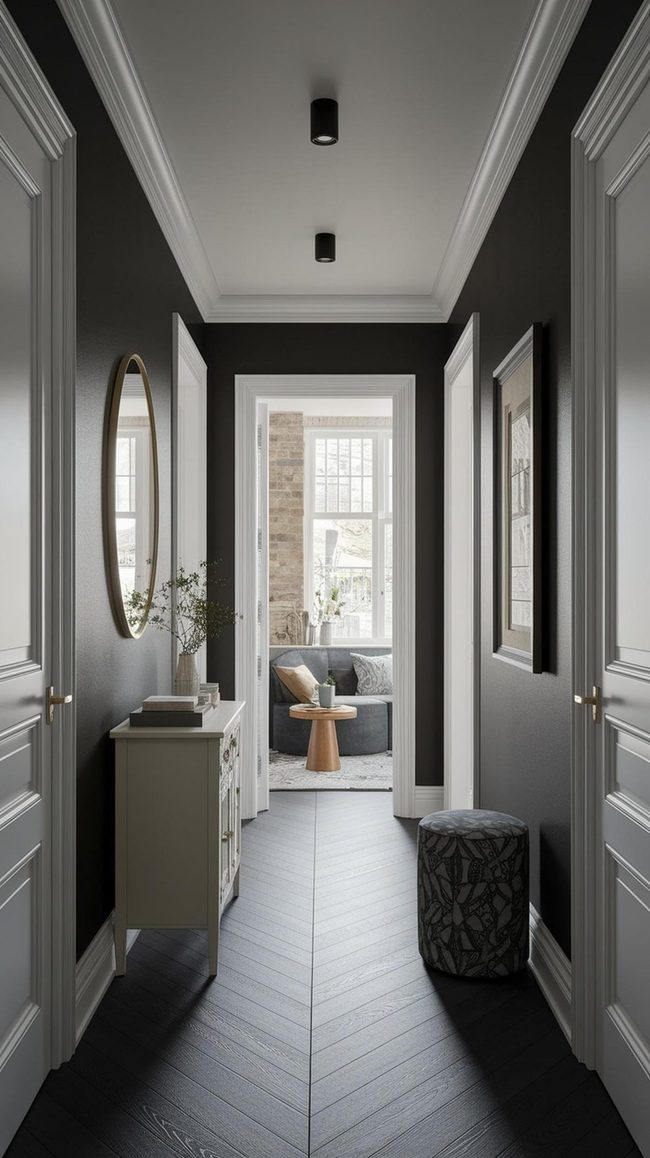
Dark hallway paint sets the tone for how the entire space feels, and dusty navy or olive green work beautifully as accents alongside crisp white or warm beige trim in modern homes.
Satin or semi-gloss finishes are superior choices because they bounce light around and add dimension to rooms without windows.
Cool and warm paint tones react differently under LED lighting, so it's worth considering how bulbs will interact with whatever color picks.
I recommend viewing paint samples on your actual wall at different times to see how light changes throughout the day.
Large sample patches mounted directly on the walls give far more accurate results than small paint chips.
Testing different spots helps avoid cramped or dull atmospheres.
Making a final choice requires seeing how the color truly performs in the space before committing.
Dark Metallic Botanical Hallway Walls
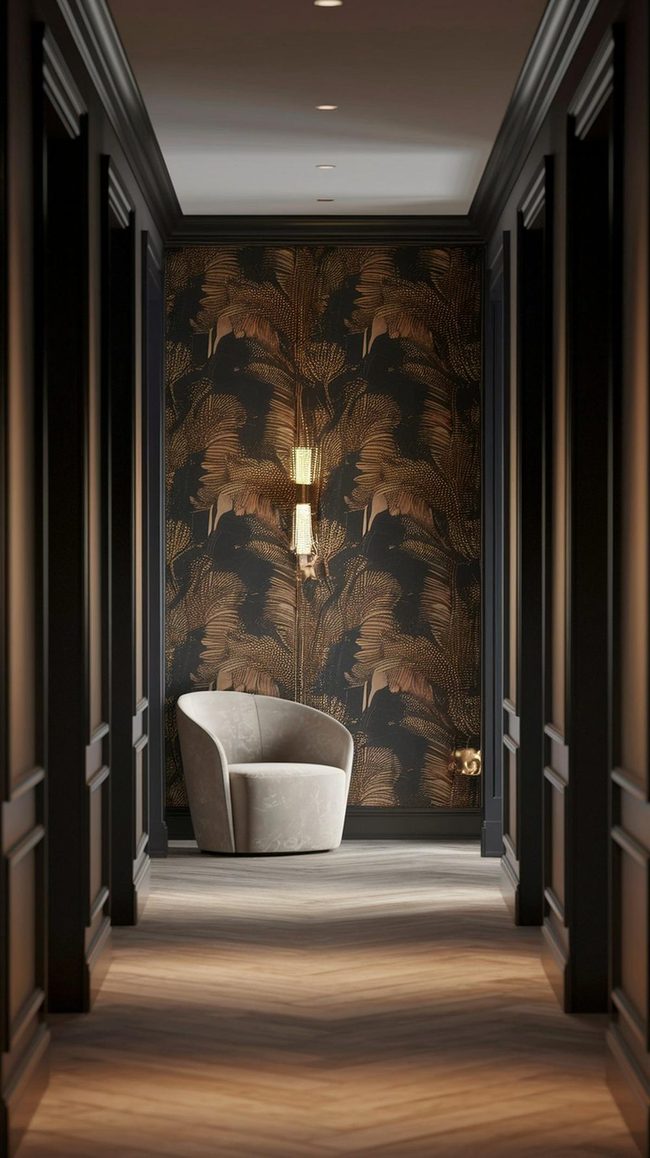
Metallic botanical patterns and shimmering abstract designs bring dimension to dark hallway walls while maintaining that moody feel everyone loves.
These wallpapers act as bold main elements that actually make narrow spaces appear wider without taking over the room.
Pairing this striking wall treatment with simple furniture and neutral flooring keeps the hallway looking strategic and polished rather than dark and dreary.
I recommend applying wallpaper to just one wall to avoid making the space feel cramped.
Minimalist furnishings let the patterned wall shine as the star.
This balance between drama and restraint gives hallways real character and style.
The result feels refined and purposeful, transforming an overlooked passage into somewhere worth noticing.
Light-Filled Stairwell With Pendant Drama
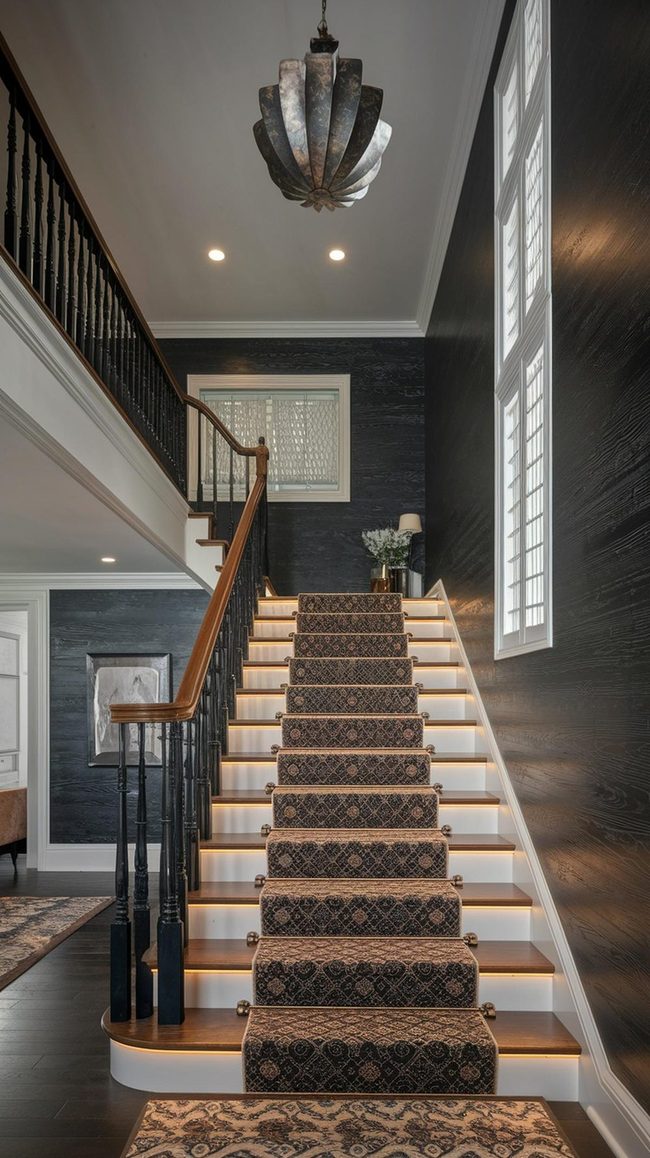
Dark stairwells often feel unwelcoming, but thoughtful design choices can turn them into striking key features.
Paint walls and risers in light colors to immediately brighten the space, and consider a patterned runner to add visual interest.
LED strips tucked beneath within every one step or along railings provide softly defined illumination without overwhelming the area.
A dramatic pendant light suspended above draws the eye upward and further dispels darkness.
Light-colored wood spindles or crisp white balusters make a significant impact on overall brightness.
Blending materials like wood and metal throughout creates a more welcoming atmosphere.
I believe these combined elements work well together to transform a gloomy passage into an appealing design feature.
Morgan Huxley
Founder & Creative Director
Expertise
Interior Design & Bold Décor Concepts, Creative Color Applications & Artistic Details, Budget-Friendly Styling, Sustainable Design Practices
Education
Parsons School of Design, New York, NY
New York Institute of Art and Design (NYIAD)
Morgan Huxley is a designer with a passion for bold interiors that feel personal and inviting. As the founder and creative director of [Brand Name], he helps homeowners bring color, texture, and personality into their spaces. With a degree from Parsons and a decorating certificate from NYIAD, he blends artistic expression with practical design solutions.
Morgan believes that great style shouldn’t be out of reach. He shares budget-friendly tips, sustainable ideas, and creative design tricks to make any home feel elevated.
When he’s not designing, you’ll find him exploring NYC’s art galleries, street murals, and food spots for fresh inspiration.