
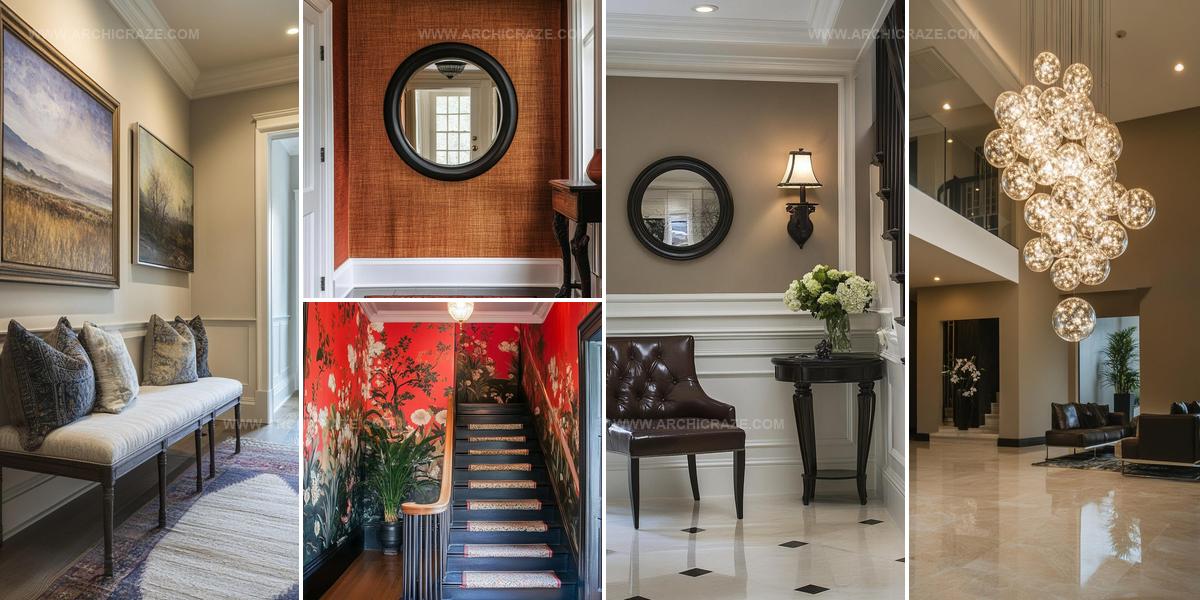
13 Foyer Styling Concepts That Welcome Guests Home

Foyer styling concepts deserve attention because this entrance space sets the mood for everything beyond.
When guests cross that threshold, what greets them speaks volumes about the home.
A well-considered approach to this area can make even modest spaces feel welcoming and sophisticated.
Simple changes often yield impressive results without requiring extensive renovations or overwhelming budgets.
The right balance of function and beauty makes daily comings and goings more pleasant for everyone who lives there.
Smart design choices in this transitional zone solve practical problems while creating visual interest that draws people further inside.
So whether the space is compact or generous, there are countless ways to make it work harder and look better for you.
Raw Cedar Plank Console
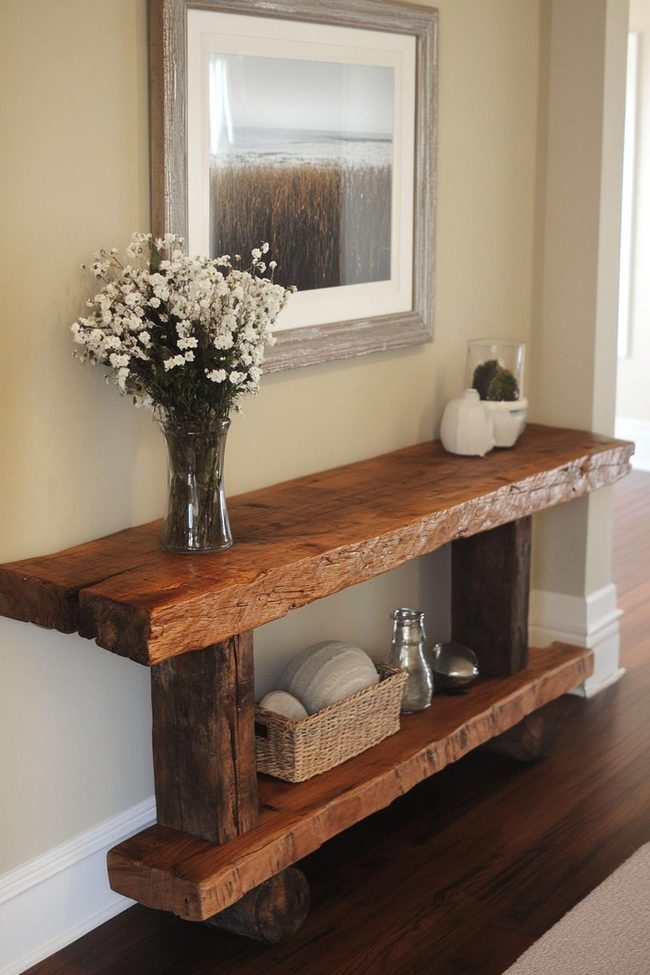
Substantial wood console table serves as the perfect anchor for a rustic foyer, and you can build one yourself or shop for reclaimed styles that instantly establish organic charm throughout your entry.
For a DIY project, raw cedar planks offer that distinctive reddish-brown tone and natural grain pattern that screams rustic, and you can sand the surface smooth or keep its raw, uneven texture for added character.
Keep your console about 36 to 42 inches tall so it sits comfortably on your wall without dominating the space, and aim for 40 to 60 inches wide depending on what your entry can handle.
Four squared wood legs serve as sturdy support, and staining them a darker shade than the top creates nice contrast and visual interest.
For shelving, reclaimed barn wood planks work beautifully when you distress them with light sanding and gray stain, then fasten them securely with 4 to 6 inch screws.
If shopping feels easier, look for consoles made from elm, pine, or mango wood with their natural whorls and knots, and seek out pieces featuring vintage-style iron bases or hammered tin doors that mix industrial edge with warmth.
Once your console is in place, layer it with weathered boxes, stacked leather-bound books, and small animal sculptures like roosters or deer that bring farmhouse personality to the space.
Rugs Divide Open Foyer Spaces
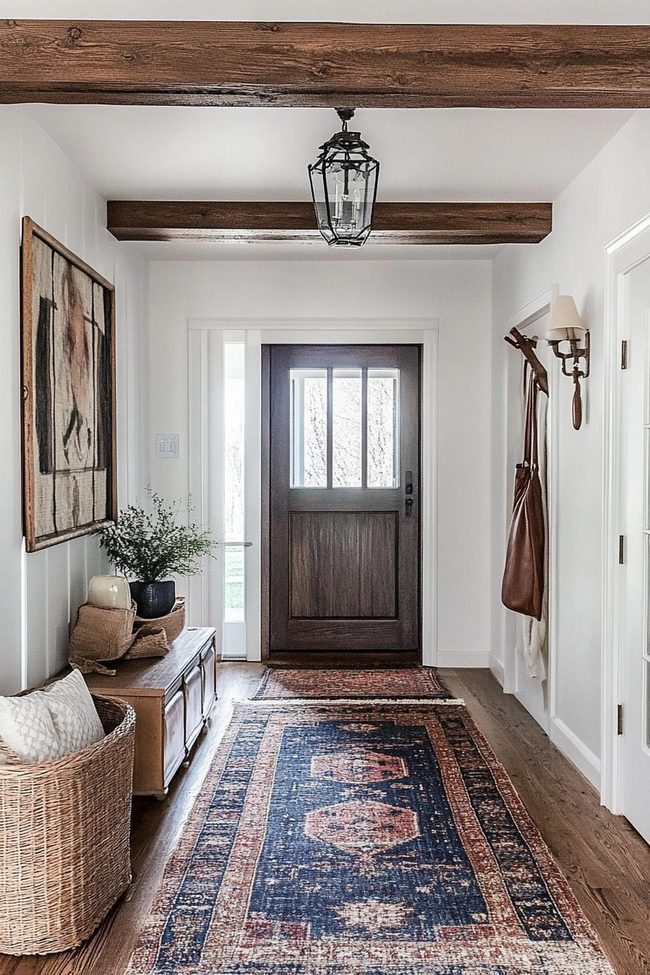
Area rugs serve as one of the most striking ways to divide your foyer into distinct zones, especially when you're working with an open, sprawling layout that needs clear boundaries.
Start by placing a well suited to daily routines entry rug right in front of your door to anchor the welcome area, and choose low-pile door mats made from natural coir fiber since they scrape shoes clean and soak up moisture while staying safe underfoot with nonslip pads.
Next, layer a rug beneath your console table or bench to carve out a separate vignette space, and in high-traffic areas go for durable wool or wool-synthetic blends that resist stains well and can handle patterns like trellis, floral medallions, or borders.
For your seating zones with chairs or a bench, add another rug underneath where delicate silky viscose or velvet options work beautifully since these spots get lighter use and benefit from that added texture and sheen.
If your foyer flows into surrounding living spaces, switch up your rug styles and patterns between zones, such as using a bold black and white graphic print in the entry and then moving to a scrollwork pattern in the adjacent living area, letting the different shapes help divide the connected spaces.
Black And White Geometric Wallpaper
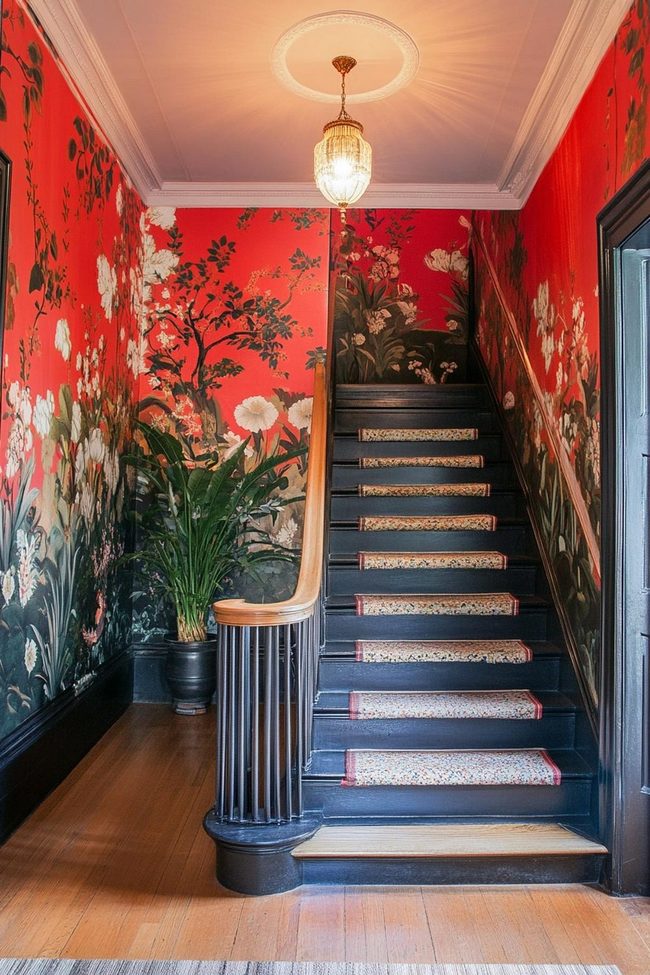
Bold, graphic wallpaper on one or more walls of your foyer delivers serious visual impact in this transitional entry space, and you have endless artistic styles to choose from.
Oversized damask patterns in contrasting colors instantly elevate a formal look, while Chinoiserie scenes with pagodas and birds bring exotic flair, and contemporary geometric patterns like herringbones and large stripes establish modern energy.
High contrast black and white or metallic silver and gray prints add smooth, bold statements, and whimsical oversized floral blooms, jungle motifs, and tropical leaves offer a playful, bohemian vibe that suits homes with vintage eclectic character.
For coastal homes, papers with shells, sea fans, or distressed nautical maps evoke seaside living when paired with sophisticated taupe and navy color schemes.
Scale matters tremendously, choose exaggerated oversized motifs so the pattern doesn't get lost, and remember that your foyer is the place to go bold without hesitation.
Papering just one wall adds a strong statement rather than an overpowering busy look, so consider the end wall or the wall behind architectural features like a staircase to frame the view from your front door.
Professional installation gives you the most flawless result with precise pattern matching and invisible seams, though peel-and-stick removable papers work well for renters and require less wall damage.
Framed Art Clusters Transform Foyers
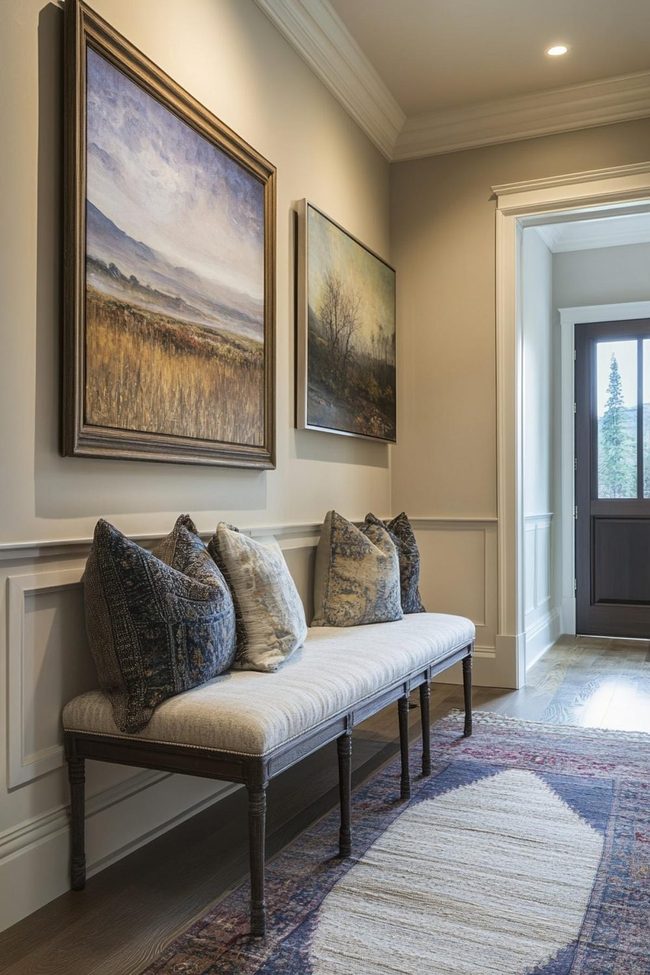
Art gallery wall stands out as one of the most striking ways to transform a foyer, and it works by combining various sized framed prints, paintings, and photographs into a creative cluster on one wall.
Start by measuring your wall space and sketching out an uneven grid pattern that feels natural rather than rigid.
Hang your largest artwork pieces first to anchor the entire arrangement, then build outward by positioning medium and small frames around those anchor pieces.
Mixing different frame sizes, colors, and styles adds richness and prevents the wall from feeling monotonous.
Consider adding three-dimensional pieces like wall sculptures or shadow boxes to give your arrangement depth and dimension.
Leave some breathing room between groupings so the wall doesn't feel packed or overwhelming.
Aim to cover roughly two-thirds of the wall while keeping the bottom third open, which grounds the space and keeps things from looking cluttered.
For smaller foyers, plan for about 25 to 30 pieces total, while larger foyers can handle 50 or more framed items.
When choosing your artwork, select pieces that match your personal style: black and white photography brings a timeless quality, colorful abstract paintings add energy, family photos showcase your memories, and pretty prints serve as nice filler around your larger anchor pieces.
Creamy Whitewashed Brick Entryway
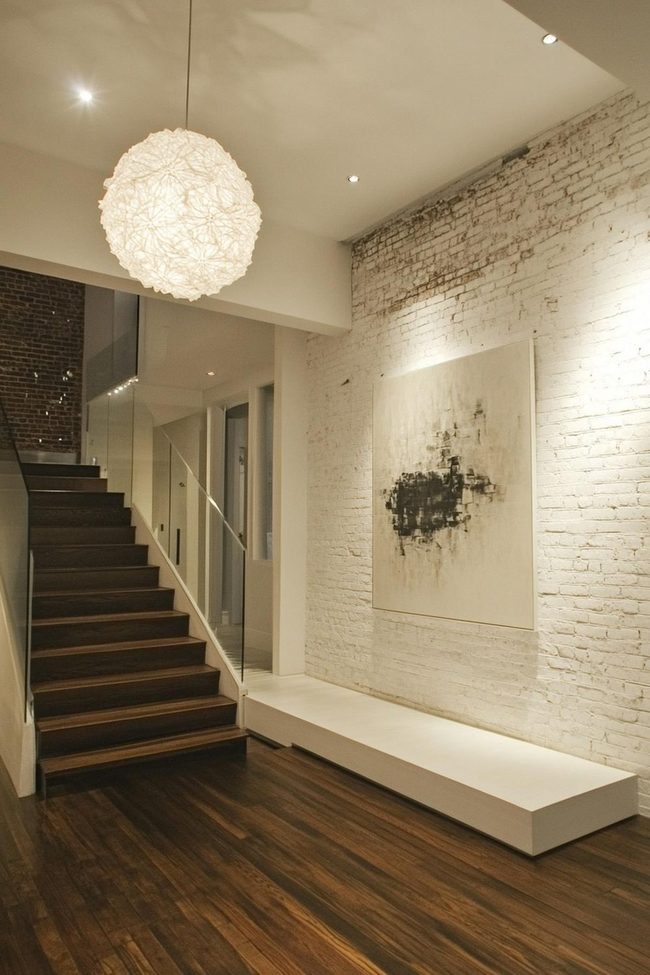
Whitewashed brick walls command attention as a raw and refined backdrop in modern farmhouse foyers, with creamy painted bricks displaying an authentic timeworn look and delicate varied hues that peek through to form a neutral canvas perfect for your console table and entryway pieces.
In new construction, work with your builder to incorporate exposed partial brick walls during the initial building phase, focusing the brick around fireplaces, alcoves, and architectural accents since installing it early is far easier than adding it later.
For existing homes, you can expose interior brick by attentively removing a portion of drywall and cutting out inside corners to minimize damage, then smoothing the cut edges with plaster so the bricks sit flush.
Before exposing any brick, examine its condition closely because crumbling, cracked, or deteriorating bricks will need replacement, and while salvaged bricks can fill holes, they may not match exactly.
Once exposed, thoroughly clean the bricks with a stiff wire brush and rinse them completely with a hose, then allow 2-3 days of drying time before starting your whitewash.
Tall Green Plants Frame Foyer
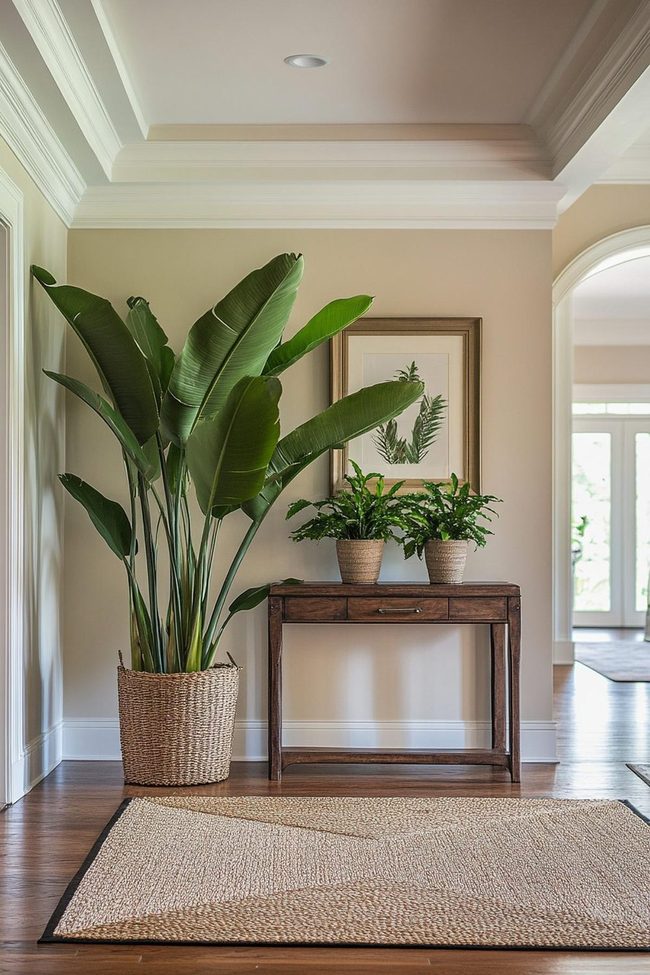
Lush tropical plants in dense clusters bring about the most dramatic entrance, and you can achieve this with tall statement varieties like spiral snake plants, cascading philodendrons, or bamboo palms that function as living sculptures.
Place these impressive heights in large wicker baskets lined with coconut fiber or shredded bark, positioning them in opposite corners to frame your foyer and bring the high-energy colors and forms of outside nature right into your space.
Medium-sized fronds such as bird's nest ferns, parlor palms, or asparagus ferns in ceramic pots work nicely between the tall backdrop plants, and their arching forms contrast beautifully with the vertical greenery.
Smaller 4 to 6 inch potted succulents like mini cacti, aloe vera, and echeveria add sculptural rosettes along console tables or shelves for visual punctuation.
Creating staggered heights and depth means resting plants on slim pedestals, pillars, or plant stands in iron, wood, and stone, and switching up shapes and finishes adds textural appeal throughout your entrance.
Hanging air plants mounted to wood beads or suspended from macrame holders resemble wild tangled vines that suit tropical decor perfectly, and you can let them trail down from ceiling hooks for a natural effect.
Crystal Cascading Foyer Chandelier
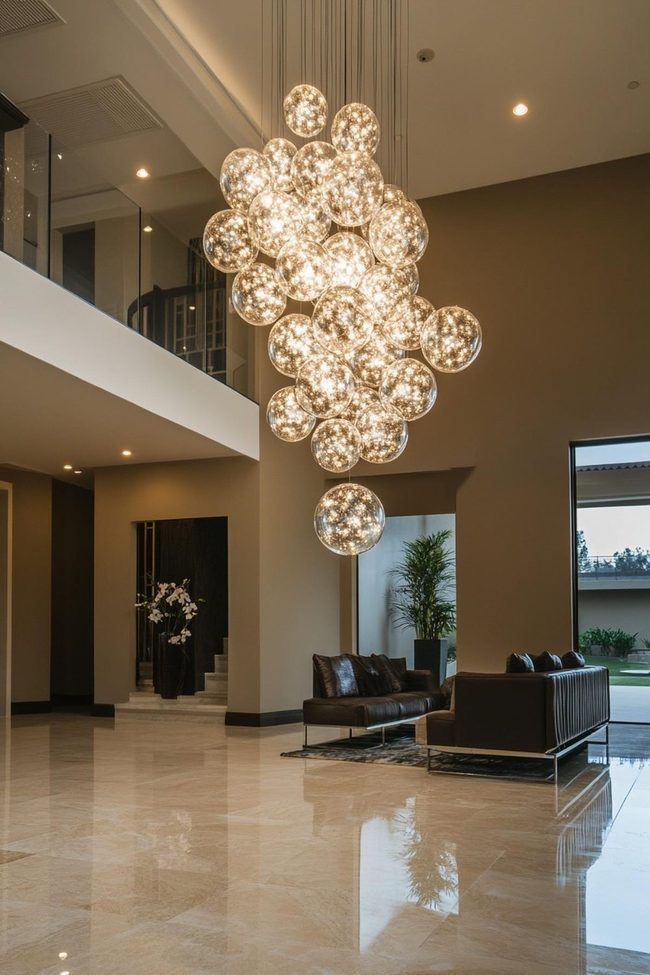
The glamorous chandelier hanging in your entryway makes one of the most striking design statements you can achieve, and its dazzling presence commands attention the moment someone walks through your door.
Cascading crystal versions deliver the ultimate sparkle, with 200-400 individual crystals arranged in multiple tiers that catch light beautifully and draw the eye upward.
Czech crystal offers the highest quality option, though crystal-cut glass beads provide an affordable alternative with impressive refraction and shine.
For a more modern approach, consider spheres or curved glass shapes instead, perhaps a grouping of three to five frosted balls for a chic, contemporary look, or explore curved ice-drop designs and abstract forms.
Metal finishes elevate the overall sophistication, so opt for silver, gold, brass, or wrought iron, and mixing two tones like antique bronze with silver candle holders adds extra polish and interest.
Size matters when selecting your fixture, so measure your space thoughtfully and match the chandelier width to your foyer, smaller spaces work best with 24-30 inch widths, medium areas suit 32-38 inch sizes, and larger grand entries can handle dramatic 40-48 inch pieces.
Oversized Beveled Mirror Frames
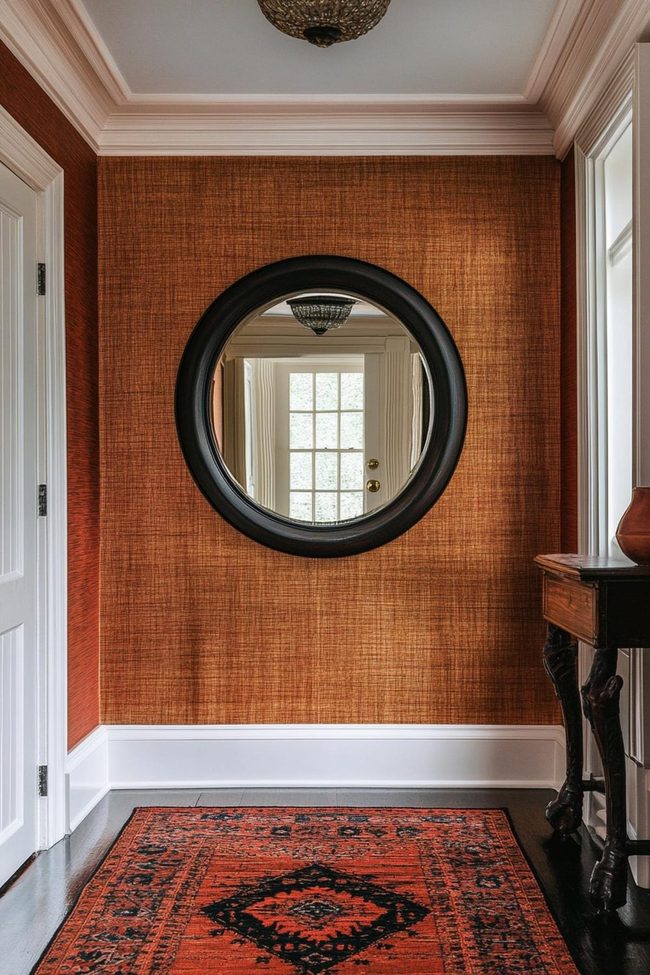
Oversized statement mirrors deserve a prime spot in your foyer because they immediately catch attention and make the space feel larger than it actually is.
Round, oval, or rectangular shapes every bring their own presence, and beveled edges add depth and architectural character that elevates the whole room.
Go big with sizes like 36 by 60 inches or larger, making sure the mirror suits your wall proportions so it doesn't look lost in the space.
For a traditional foyer, hunt for antique-inspired frames with carved features and intricate metalwork like scrolled filigree or leaf designs that bring classic charm.
Hang your mirror above a console table or sideboard where it works beautifully with the furniture below, and flank both sides with wall sconces (candlestick-style for traditional rooms or sleek modern designs for contemporary spaces) to frame everything with warm light.
You can also pair your statement mirror with other artwork like a canvas print nearby or bring about a gallery wall with four to six same-sized mirrors arranged in a mix of vertical and horizontal positions for a graphic, modern look.
If you want extra glamour, look for an antique-inspired mirror with crystal edging or accents that catch and reflect light across your foyer.
Position your chosen mirror in a prominent spot facing the entry door so visitors see it first, and this single decorative element becomes the room's most striking feature as they walk in.
White Crown Molding Architectural Trim
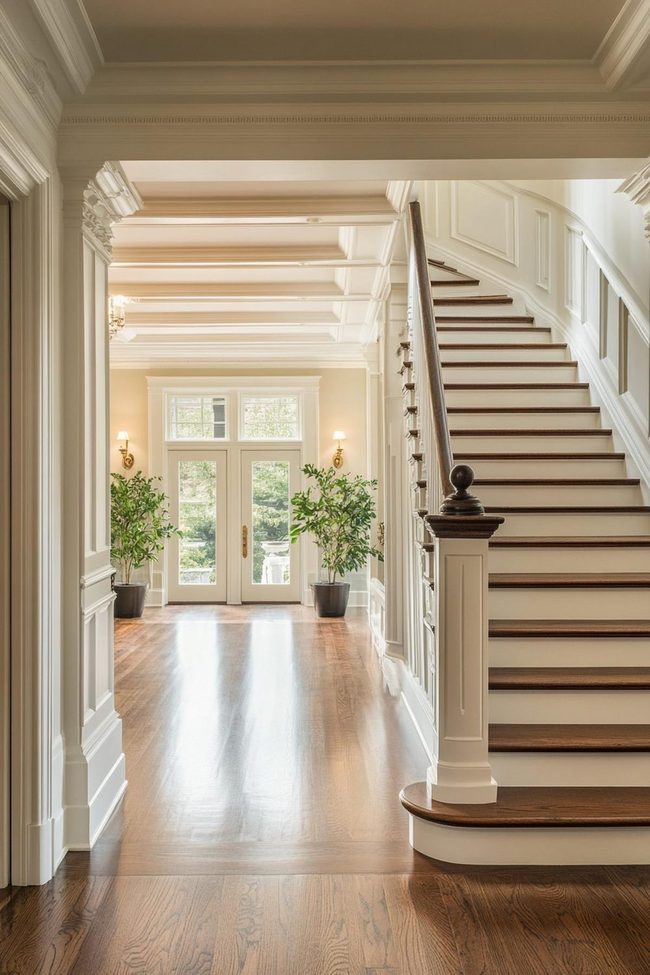
Crown molding where walls meet the ceiling is one of the most striking upgrades you can make to a foyer, and it instantly communicates elegance and sophistication while defining your space's proportions.
Standard ceilings between 8-10 feet tall work best with 4-6 inch widths, though larger foyers can accommodate 8-12 inch moldings, just remember to measure so the trim projects at a 45 degree angle.
High quality wood molding in timeless patterns like dental, crosshead, or foliate designs offers the most authentic look, while ornate carved options bring grandness, though polyurethane foam molding captures real wood detail at a lower cost and installs easily.
Making your molding pop requires contrast with wall color, whether you go slightly darker or lighter (think well-lit white crown on pale blue walls or espresso trim on warm tan), and if you prefer a monochrome approach, choose a high-gloss molding that echoes accent shades elsewhere in the room.
In smaller foyers with lower ceilings, running the crown close to the ceiling exaggerates height and draws the eye upward, while contemporary spaces shine with ultra-wide crown in high-gloss black or white.
White Ceramic Planters With Trailing Ivy
Floor-to-ceiling shelving updates your foyer into a impressive vertical display that commands attention the moment someone walks through your door, and installing these towering shelves along a non-window wall give rise tos a sculptural statement that speaks to modern design.
Anchoring thick wood boards directly to wall studs ensures stability, and boards spanning 14 to 16 inches deep hold heavier decorative objects without worry.
LED lighting tucked along the top and bottom washes the walls in an even glow and highlights your display pieces beautifully.
Keep the styling minimal and resist the urge to overcrowd, arrange items asymmetrically in groups of three or five and leave plenty of breathing room so in all piece can be admired on its own.
Acrylic risers lift smaller sculptures or decorative bowls to add depth, while hammocked gold vases, geometric white ceramics, and smooth wood carvings all shine on modern shelves because of their simple organic shapes.
Books grouped by color become part of the display, and you can face out hardcovers with eye-catching jackets or let multicolored spines give rise to a fun spectrum against dark shelves.
Green plants in smooth ceramic or metal pots at varying heights bring life to the stark framework, and trailing ivy, ferns, orchids, and air plants soften the contemporary feel.
Exposed Oak Beam Entryway Storage
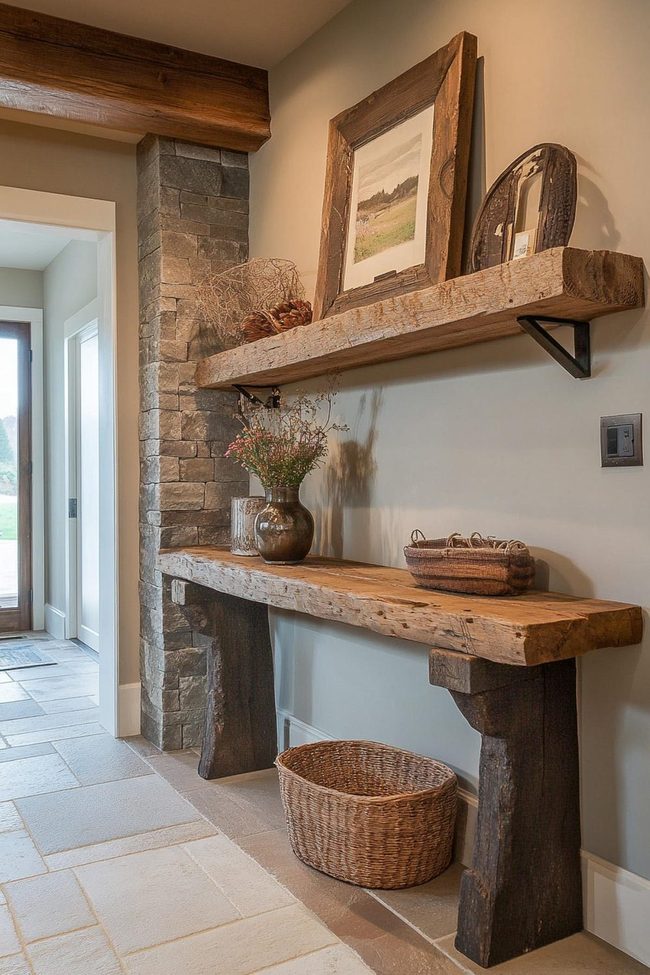
Raw wood beams stretching across your foyer an immediate visual punch that sets a rustic tone from the moment someone enters your home, and you can transform these architectural elements into functional shelving by selecting beams at least six inches deep and as wide as your entryway.
Dry oak, cedar, and Douglas fir naturally display worn patinas that work beautifully for this purpose, so cut your beams to consistent lengths with 45-degree angle corners and secure them firmly into wall studs using three to four-inch screws while pre-drilling holes to prevent splitting.
For a chunky appearance, rest beams on natural brackets that extend four to six inches below the wood for proper support, or go with smaller floating shelves attached directly to studs using at least three evenly spaced metal brackets for that recessed effect.
Sand any rough edges until smooth, wipe away dust, and finish your wood with stain or paint in colors that complement your walls, aged gray s a beautiful weathered barnwood look on oak, and you can enhance the natural grain by rubbing the planks with liming wax to highlight defined lines.
Once your shelves are secured, styling them with weathered found objects and eclectic collections makes them shine, whether you display seashells, sea glass, rocks, or pinecones you've gathered on nature walks.
Carved Stone Columns Frame Foyer
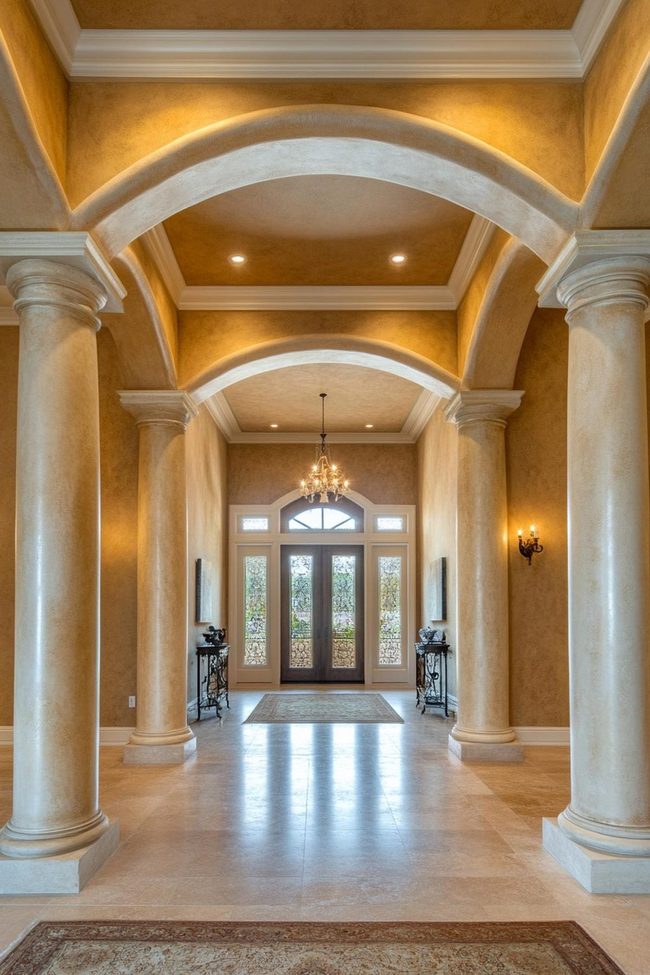
Soaring columns and graceful arches command immediate attention in your foyer and establish a sense of grandeur that sets the tone for your entire home.
Classical rounded columns at least 10-12 inches in diameter topped with ornate capitals carved with acanthus leaves or scrolls bring instant elegance, while fluted designs and embossed patterns add layers of intricate detail throughout the space.
Positioning columns in pairs or threes to frame doorways, console tables, or archways creates a Greek Revival atmosphere that visitors observe the moment they step inside.
If you prefer a more modern look, square-edged pillars in glossy white or deep espresso stain deliver contemporary sophistication without the classical flair.
Arched openings between rooms offer another refined way to add architectural character, especially when you define curved pathways with wide columned frames or contrast paint to spotlight the shape.
Recessed niches beneath these arches become perfect spots to display collections or greenery, while wall sconces and vertical up-lights cast dramatic shadows that emphasize the dimensional trim work.
Freestanding arches, whether whitewashed garden designs topped with trailing vines or salvaged door frames propped on columns, stand as striking features on their own.
Working these elements into your foyer tells your that your home values style and character from the very first moment they arrive.
Wooden Panel Walls Add Heritage Character
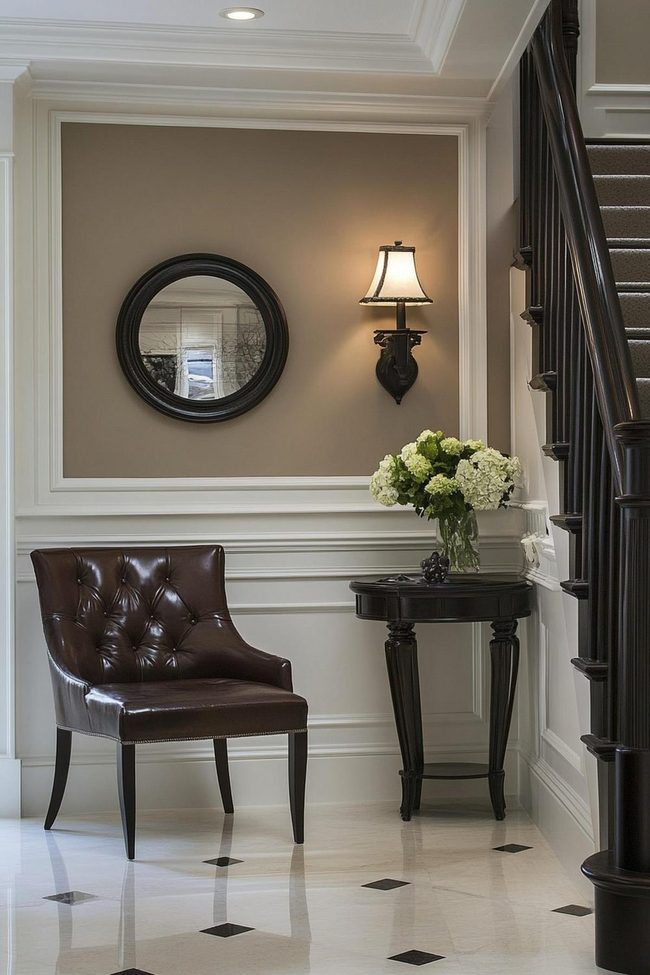
Raised panel wainscoting with its layered molded frames and dimensional center panels establishs the most striking visual statement, offering classical symmetry and ornamental appeal that catches attention immediately in your foyer.
Recessed panel wainscoting takes a lighter approach with flat center panels set within raised trim, giving spaces a casual cottage feel perfect for farmhouse homes, while beadboard wainscoting with its evenly spaced vertical indentations works beautifully in contemporary settings, whether whitewashed for a beach house look or stained dark walnut for modern appeal.
Proper proportions matter when you're planning your installation, so measure your foyer intentionally and scale panel heights and widths accordingly, standard 32-36 inch heights suit normal ceilings, two-story foyers can go up to 60 inches tall, and smaller spaces need narrower 24-30 inch panels to avoid feeling cramped.
Quality wood choices like oak, maple, cherry, or mahogany with medium to dark tones contrasted against light walls establish authentic elegance, though painted options in light blue, sage green, or airy gray also deliver sophisticated results.
Getting the installation right requires precise measurements and careful cuts to align panels properly over drywall, and you could need to take time caulking and smoothing seams for seamless walls.
Riley Summers
Co-Founder & Home Styling Expert
Expertise
Smart Space Planning & Layout Optimization, DIY Home Projects & Budget-Friendly Décor, Trend Forecasting & Sustainable Design, Practical Styling Solutions for Every Home
Education
New York School of Interior Design, New York, NY
Riley Summers knows that a well-designed home isn’t just about looks—it’s about function, comfort, and personality. As co-founder of [Brand Name], she specializes in smart space planning, trend-forward décor, and sustainable styling solutions.
With a background in interior architecture from NYSID, Riley helps homeowners maximize their spaces with clever layouts and easy DIY projects. She loves sharing budget-friendly decorating ideas that make high design accessible.
Outside of work, she enjoys strolling through NYC’s neighborhoods, discovering new design trends, and savoring a great cup of coffee.