
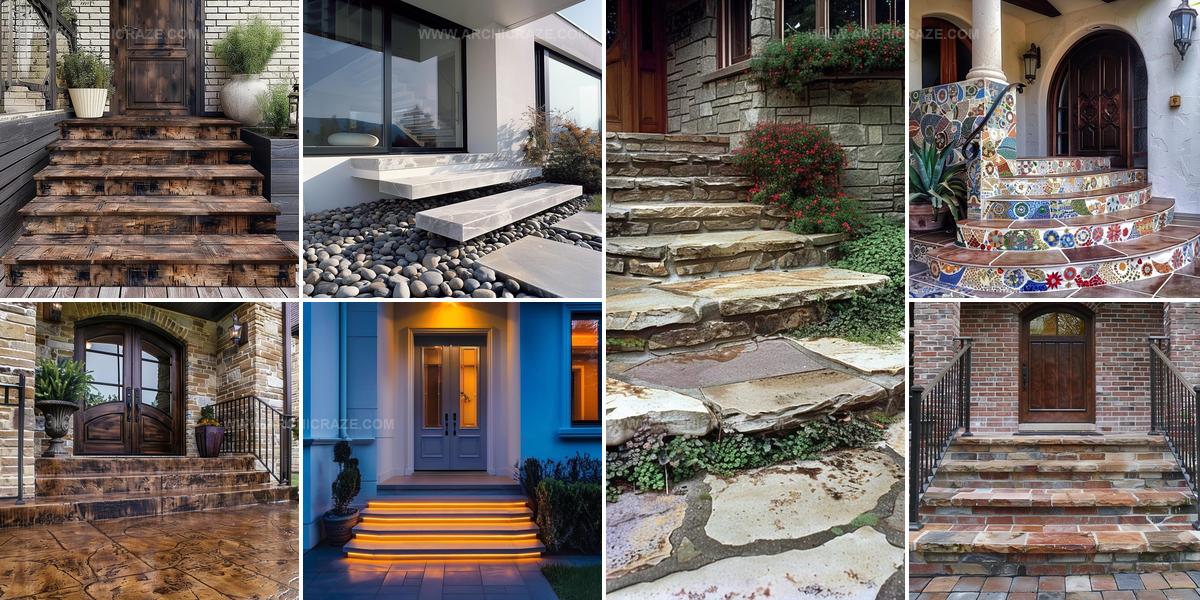
10 Front Porch Stair Ideas That Welcome Guests Home

Front porch stair ideas can completely change how welcoming the entrance to a home feels when someone arrives.
Steps leading up to a porch serve both practical and aesthetic purposes, bridging the gap between ground level and elevated living spaces.
Whether a house sits high off the ground or requires just a few risers, the design choices available range from classic to contemporary.
Materials like wood, stone, concrete, and brick each offer distinct advantages in durability and visual appeal.
The style selected should complement the architectural character of the residence while meeting safety requirements and personal preferences.
Handrails, lighting, and decorative elements add layers of functionality and charm beyond basic construction.
Making thoughtful decisions about porch stairs will enhance curb appeal and ensure you enjoy a beautiful, safe entryway for years ahead.
Red Brick Steps Old World Charm
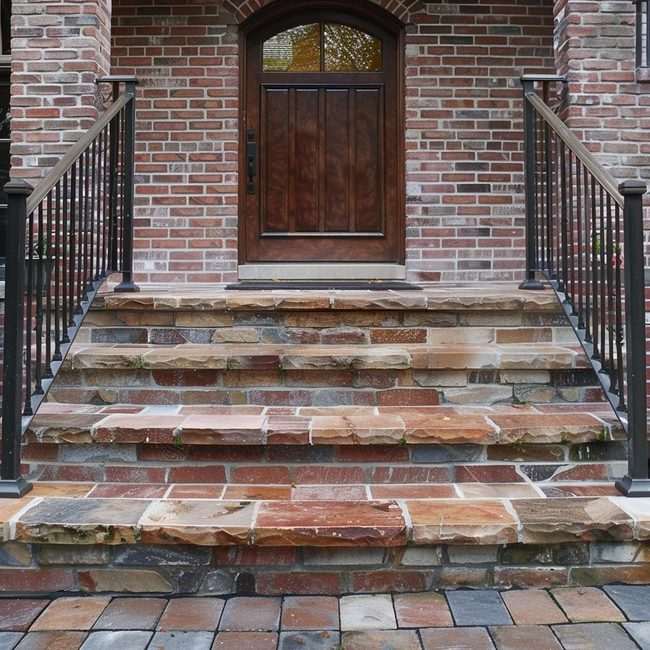
Brick and natural stone steps deliver an immediate sense of permanence and old-world sophistication that makes your entrance feel established and refined.
Brick comes in timeless shades like red, brown, and charcoal, and you can choose between traditional clay bricks or modern perforated varieties that handle drainage well.
You might arrange standard bricks in a running bond pattern or experiment with herringbone designs for something more distinctive.
Natural stone options like bluestone or flagstone offer beautiful striations in grays, tans, and blues, and selecting thicker slabs gives you better durability over time.
You can go bold with oversized slabs for a colossal impact or use smaller cut pieces for a more geometric, refined look.
Both materials require minimal upkeep and stay looking great when you sweep away debris regularly and apply a good sealant to prevent stains.
When you pair stone or brick steps with wrought iron railings and an arched front door, you get that quintessential European charm that sets the tone for your whole home.
Let these hardy, beautiful materials do the work of giving visitors their first impression of who you are.
Led-Lit Stairway Entry Appeal
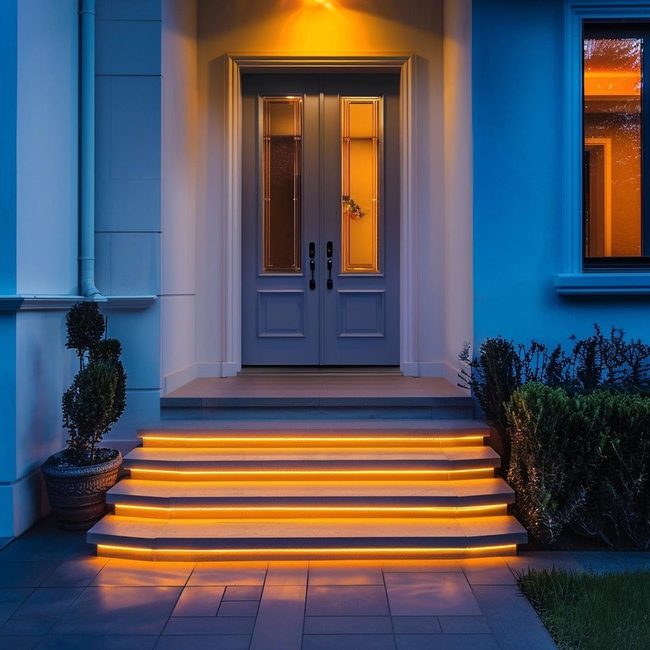
Installing proper lighting on your front entry stairs them from a basic walkway into a striking nighttime feature that welcomes you and your guests with both safety and style.
Recessed step lights nestled between stairs or wall-mounted sconces flanking the sides offer two very different looks depending on what appeals to you, while warm LED fixtures deliver energy efficiency and a pleasant glow that won't strain your budget.
Consider adding strip lighting underneath railings for a low-key radiance that guides people safely along the path, and pair any fixtures with timers or photosensors so your stairs light automatically as darkness falls.
Make sure to choose fixtures rated for damp outdoor conditions and position lights to shine downward, preventing annoying glare that detracts from the overall effect.
Keeping your lighting fixtures free of dirt and debris helps them perform at their best and ensures the glow remains as luminous and welcoming as intended.
Beyond the lighting itself, maintaining your stairs in good condition shows visitors you care about your home's first impression, so sweep away leaves regularly and fix any damage promptly so the entire entryway feels both safe and special to everyone who climbs those steps.
Colorful Glass Tile Staircase
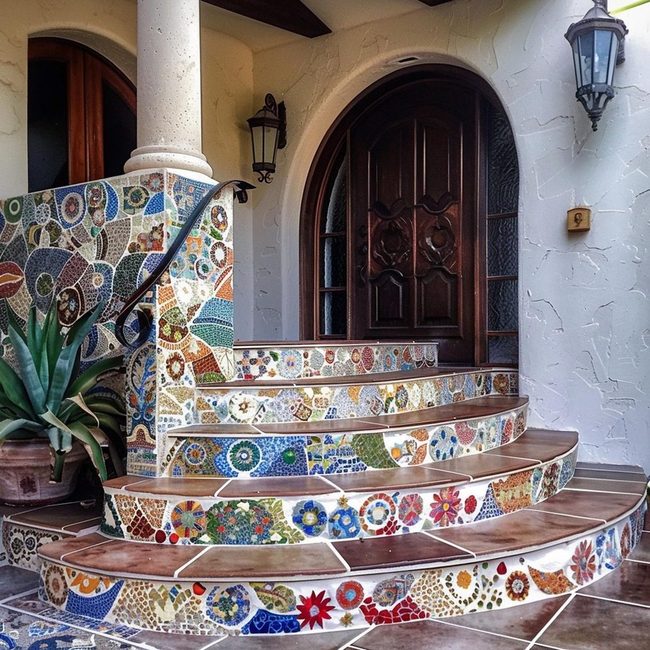
Nothing stops visitors in their tracks quite like a staircase covered in mosaic tiles, glass and ceramic pieces in countless colors arranged into bold patterns, sweeping curves, or intricate medallion designs that turn an ordinary entryway into something spectacular.
You can go with mosaic tiles alone or mix them with wrought iron, stone, or granite for extra visual interest and contrast.
Paper-backed tiles are simpler to handle during installation, and their small size naturally fits the angles and tricky dimensions of stairs better than larger materials.
For garden staircases, pick exterior-rated tiles that have non-slip grit built in so people stay safe while climbing.
Installing tiles over cement stairs that are reinforced with rebar keeps everything stable and secure.
When you use the right grout for your climate and seal the tiles once a year, you prevent water from seeping in and causing damage over time.
Your staircase stops being just a functional piece of the home and becomes a genuine centerpiece that makes every single visit feel a bit more special and memorable.
Black Iron Staircase Sculpture
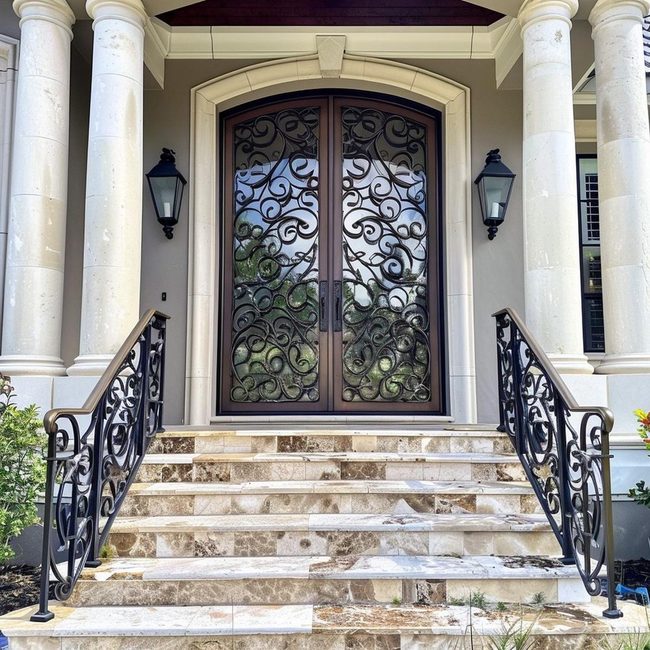
Ornate wrought iron railings transform your front steps into functional sculpture, with graceful curls, bold angles, and dramatic fleur-de-lis shapes that command attention immediately.
You can match these decorative accents to your home's style, whether you prefer traditional New Orleans motifs or contemporary patterns that echo historic European architecture.
To keep your ironwork looking sharp and rust-free, use black paint or stained metal finishes, and on cast iron stairs, apply heat-resistant paint rated for radiator temperatures.
Security matters just as much as style, so have rails firmly bolted every few feet to sturdy newel posts for stability.
LED spotlights do wonders for highlighting the intricate iron designs and showcasing them after dark.
Beyond being functional, wrought iron brings genuine artistry and refinement to your exterior stairs.
Reddish-Brown Wood Steps
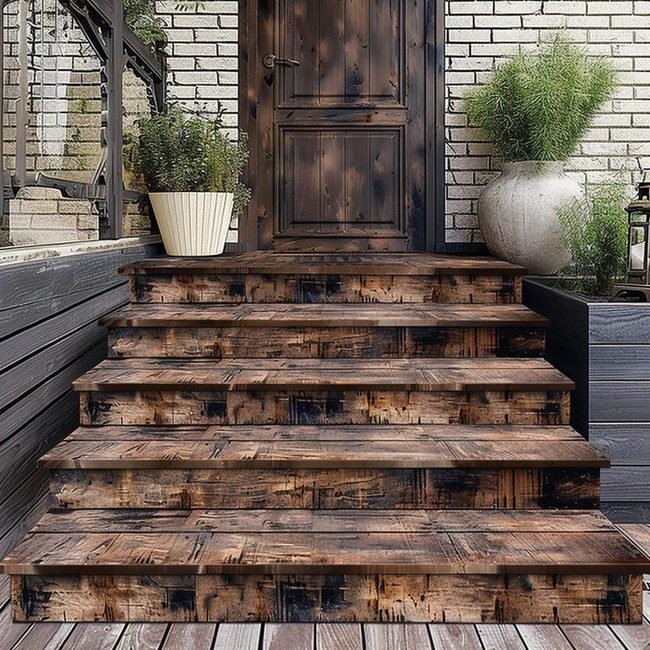
Wood brings warmth and natural beauty to your front steps, making them both timeless and modern at once.
Rustic wood planks offer varied grains and textures that add depth and keep your entryway looking interesting.
Wider planks in weather-resistant woods like Cumaru or Ipe work best since these tropical hardwoods have dense grains built to handle patio conditions and rain.
Reddish-brown tones lean toward traditional style while gray-toned wood suits a more contemporary feel.
You can lay boards perpendicular to your entryway for a modern appearance or parallel for a snug cottage vibe, and alternating the grain direction boosts the visual appeal.
Compressed wood layered with fiberglass gives you added durability while keeping that authentic wood charm intact.
Pairing your wood steps with wooden railings or copper lanterns creates a coordinated look that ties everything together.
This combination of natural style and lasting function makes wood a smart choice for any front entrance.
Natural Stone Steps Through Patio
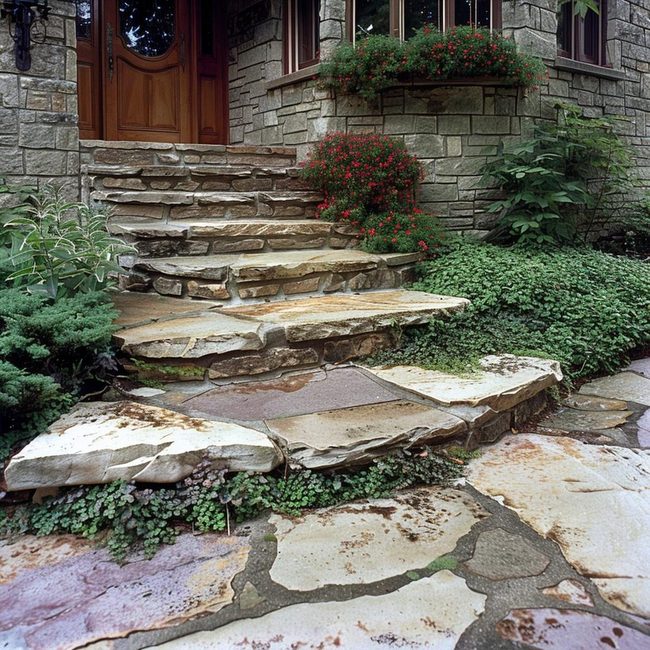
Natural stone pathways made from flagstone, bluestone, slate, and sandstone bring an old-world charm right to your home's entrance with their irregular shapes and earthy appeal.
Larger, thicker stones work best for steps since they handle foot traffic better, while you can fill the spaces between them with smaller pieces to form a complete walkway.
Installing these stones properly means burying them about one-third deep into the ground and tamping them down firmly so they stay in place, then packing stone dust into the joints to prevent any shifting over time.
If you want a softer, more natural feel, planting creeping thyme or Irish moss between the stones adds greenery and texture that softens the hard surfaces.
Keeping your flagstone path in good shape means staying on top of any cracks or sunken areas before they become bigger problems.
The whole setup doesn't require much maintenance once it's done right, and it genuinely improves how your home's entrance looks and feels.
Gray And White River Pebbles Entryway
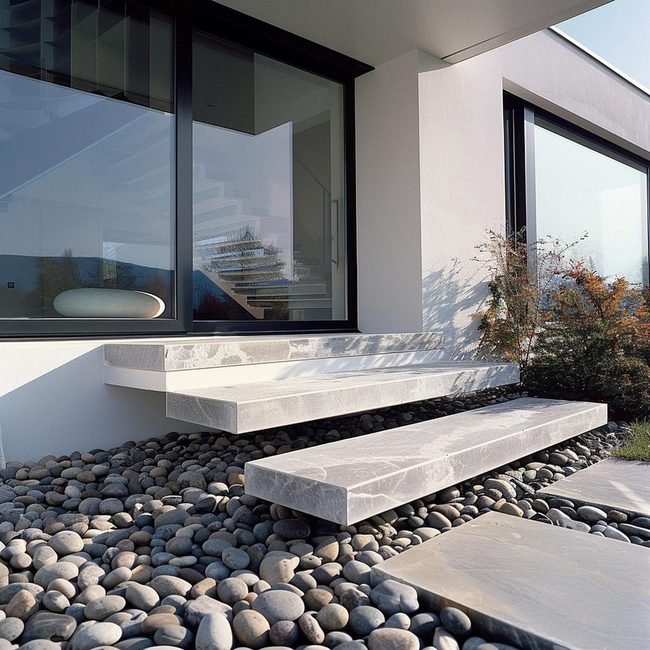
Smooth river rocks in shades of gray, tan and white scattered across your entryway steps bring an organic, natural look that feels open and free, while bolder options like brightly colored Mexican beach pebbles in azure, cinnamon and seafoam make an eye-catching statement as people walk up to your door.
If you prefer something more orderly, crushed gravel offers uniform sizes and comes in many color choices for a cleaner appearance.
Installing a concrete or pressure-treated base with landscape borders keeps the loose material where it belongs, and leaving about an inch between the pebbles and the border allows water to drain properly.
A light spray of water on the steps prevents dust from building up, and adding pathway lights along the edges makes them shine once the sun sets.
Keep in mind that wet pebbles can get slippery, so you can want to monitor this during rainy seasons and refresh your pebbles or gravel once a year or whenever they start looking worn.
These textured steps greet visitors with a relaxed, casual charm that sets a friendly tone right from the start.
Gray Stamped Concrete Steps
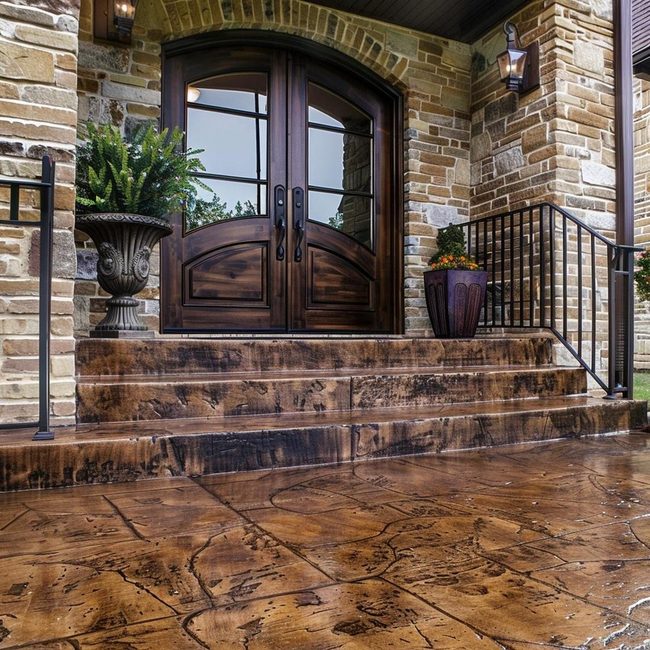
Stamped concrete offers an affordable way to give your front steps a polished, designer appearance by mimicking expensive materials like brick, stone, wood, and tile without the hefty price tag.
Workers pour a concrete base and press it with impression molds while it's still muted, then enhance the surface with staining, pebble inlays, and engraving to add depth and character.
You can choose from earthy shades such as slate gray, warm terra cotta, or cool blue to match your home's style.
One major advantage is its strength and longevity, stamped concrete resists cracking, peeling, fading, and staining far better than many natural materials.
Keeping your steps looking fresh requires just occasional pressure washing and resealing, making maintenance simple and straightforward.
Because it delivers that high-end aesthetic at a fraction of premium material costs, stamped concrete is perfect if you want quality results on a tight budget.
Stone Planters Frame Your Entrance
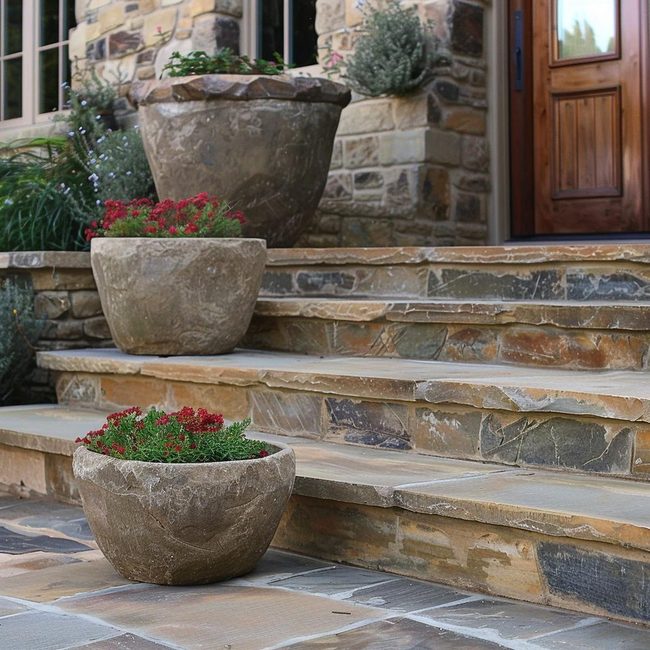
Stone planters filled with open annuals like petunias, marigolds, and geraniums sit on either side of your front door stairs and immediately catch attention with their blooming colors and lush greenery that soften the hard edges of your entryway.
You will want to choose substantial planters made from attractive materials like bluestone, limestone, or concrete, and decorative urn shapes work well if you prefer a timeless aesthetic.
Set in all planter on a bed of pebbles to help water drain properly, then fill them with potting soil mixed with water-retaining polymers so your plants stay healthy throughout the season.
If you like plants that come back year after year, consider perennials such as daylilies, lavender, or ornamental grasses instead of annuals.
Make sure your planters have drainage holes drilled into the bottom to prevent water from pooling around the roots.
Refreshing the soil and swapping in new plants as seasons change keeps your entrance looking fresh and welcoming to anyone who visits.
These handsome stone containers bring life and warmth to your front door and show visitors that you care about how your home looks from the curb.
Mediterranean Terracotta Tiles Front Entry
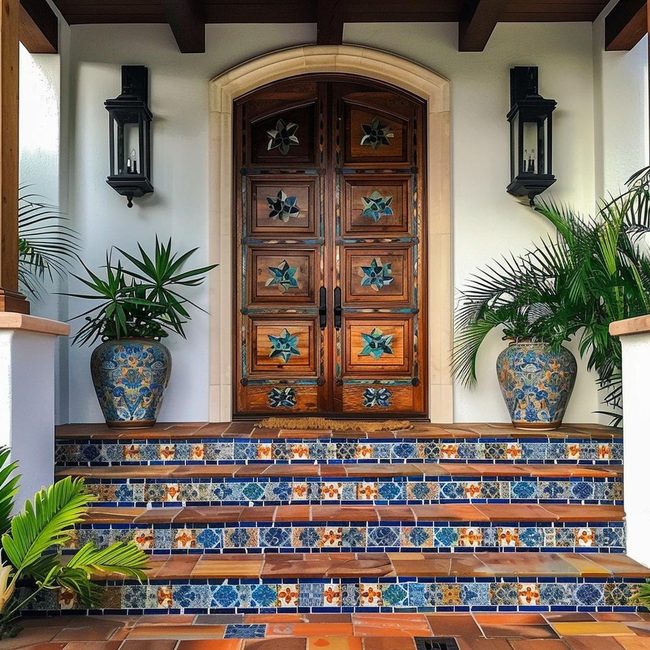
The entryway becomes an instant showstopper when you install bold tile patterns on your front steps, and mosaic or Moroccan designs offer endless ways to bring color, shape, and texture to this visible entrance.
Spanish tile in rich terracotta or cobalt blue gives off Mediterranean vibes that catch attention from the street, while a dynamic diamond or square pattern makes a powerful statement right at your door.
For an arts-and-crafts feel, handmade subway tiles or encaustic tiles with intricate pictorial patterns work beautifully and add personality.
Beyond aesthetics, you are able to want textured tiles with grit to keep the surface safe and slip-resistant for everyone.
Porcelain and ceramic tiles prove more durable and hold up better to frost than natural stone options.
We recommend laying tile on a concrete base reinforced with rebar to ensure it stays stable and secure over time.
Polymer-based grout allows the tiles to expand and contract naturally, and keeping grout lines clean preserves those intricate designs you've chosen.
Playing with shape, color, and pattern on your front steps lets you turn your entry into something that truly reflects who you are.
Riley Summers
Co-Founder & Home Styling Expert
Expertise
Smart Space Planning & Layout Optimization, DIY Home Projects & Budget-Friendly Décor, Trend Forecasting & Sustainable Design, Practical Styling Solutions for Every Home
Education
New York School of Interior Design, New York, NY
Riley Summers knows that a well-designed home isn’t just about looks—it’s about function, comfort, and personality. As co-founder of [Brand Name], she specializes in smart space planning, trend-forward décor, and sustainable styling solutions.
With a background in interior architecture from NYSID, Riley helps homeowners maximize their spaces with clever layouts and easy DIY projects. She loves sharing budget-friendly decorating ideas that make high design accessible.
Outside of work, she enjoys strolling through NYC’s neighborhoods, discovering new design trends, and savoring a great cup of coffee.