
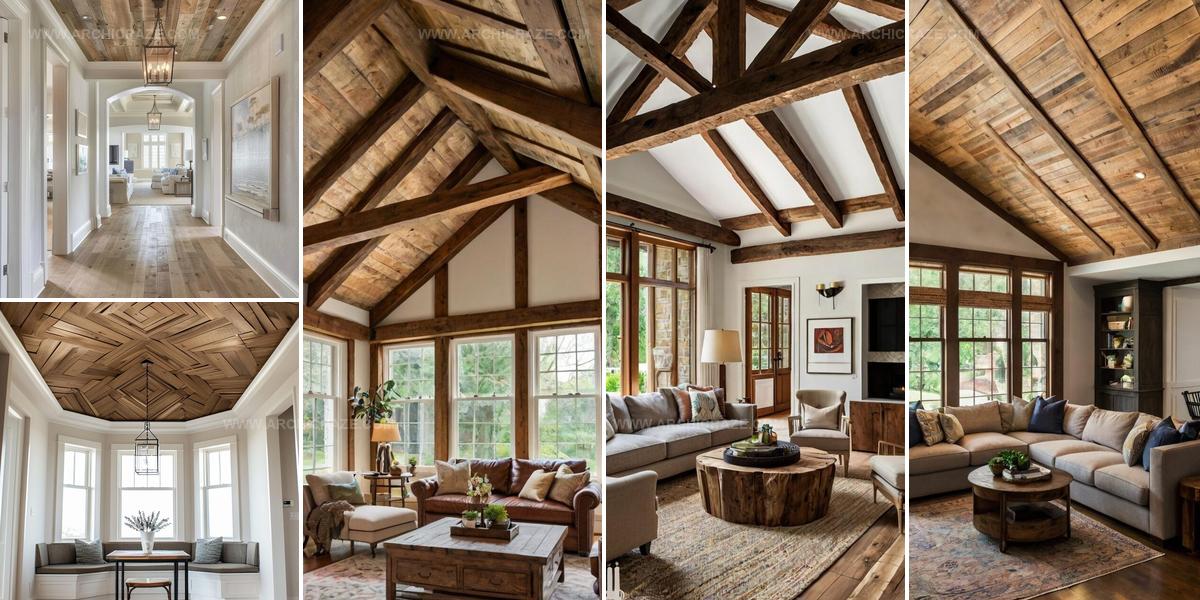
13 Beautiful Wood Ceiling Ideas That Add Warmth

Gorgeous wood ceiling ideas can completely change how a room feels and add warmth that few other materials provide.
Wood overhead brings natural beauty into any space while creating visual interest above eye level.
The options range from rustic beams to sleek planks, ensuring something fits every style preference and budget.
Homeowners often overlook what happens up top, but that surface holds incredible potential for making bold statements.
When you select the right approach, comfort and elegance blend seamlessly throughout the entire room.
Modern techniques have made installation easier than ever before, opening doors for ambitious projects.
Consider what speaks to the aesthetic vision for each space, then watch confidence grow as transformation unfolds.
Wooden Beams Meet Clean Drywall
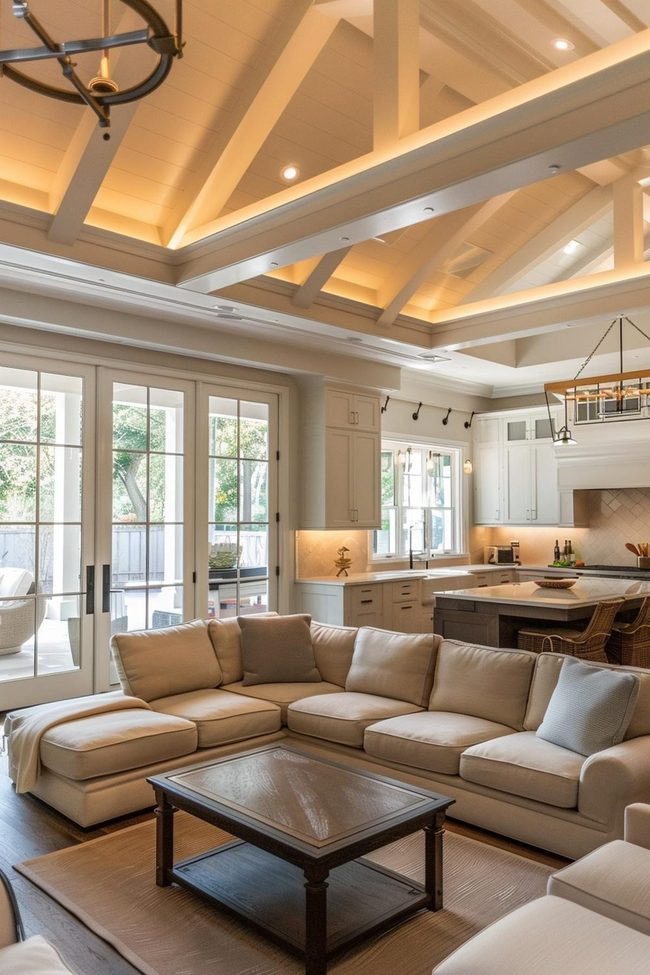
Open wood beam ceilings stand out as a striking way to add character overhead while keeping things neat and modern.
Solid wood beams run across the length and width of your ceiling in even intervals, and delicate trim work hides where the beams meet the drywall below.
You get the best of both worlds here, the polished feel of a plain ceiling mixed with natural wood warmth.
Getting the proportions right matters most, so aim for beams that take up no more than one-third of your total ceiling space to avoid a heavy appearance.
Most rooms look best with beams about 9 to 12 inches wide and spaced 24 to 48 inches apart.
How you handle color also shifts the whole effect, so try staining your beams a few shades darker than the ceiling for clear definition, or go monochromatic by keeping everything crisp white.
When you nail the right beam width, spacing, and color choice, you end up with a balanced look that blends clean modern style with rustic wood charm.
Geometric Lumber Panel Architecture
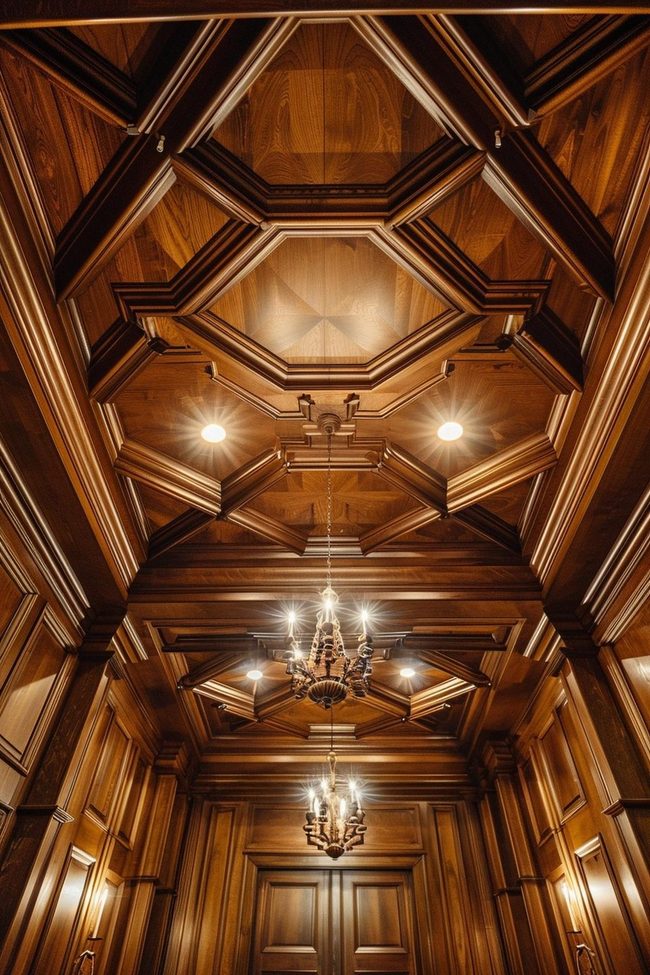
Wood panel ceilings command attention from the moment you look up, with their geometric sections dividing the space into distinct architectural zones that immediately elevate any room's sense of formality and sophistication.
You can play with contrasting wood tones to make eachsection pop, or go the route of carved medallions in the center of panels that serve as real attention-getters overhead.
Crown molding frames everything together and brings that polished, structured appearance that works beautifully in historic settings, where larger hexagonal, octagonal, or square panels paired with plaster corbels and masonry add real dimension to the space.
If your home leans more contemporary, the same concept translates easily through a simpler execution, think long rectangular sections outlined with recessed lighting or narrow trim work that keeps everything feeling modern and balanced.
Matching your wood tones across all panels maintains a clean, unified look while still adding visual interest through those divided sections alone.
These ceilings shine brightest in dining rooms, foyers, and libraries where their architectural character really belongs.
Whether you favor ornate historical or streamlined modern simplicity, wood panel ceilings deliver sophistication that makes people see what's above their heads.
Geometric Natural Timber Ceiling Sections
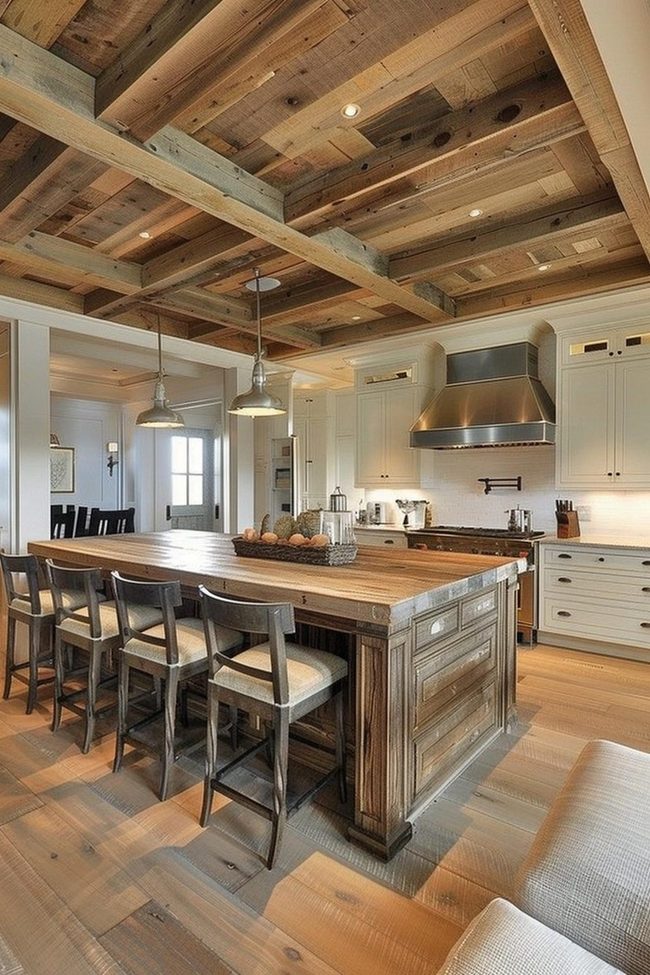
Coffered wood ceilings stand out as a refined take on traditional wood paneling, with their geometric grid of sunken squares and rectangles drawing the eye upward immediately and establishing a formal, sophisticated mood that works beautifully in dining rooms, studies, and entryways.
What makes these ceilings so visually interesting is the interplay of alternating rounded plaster or masonry coffers with flat wood plank sections, all framed by intricate molding and trim work that defines throughout individual space with depth and texture.
You can enhance this architectural feature even more by adding decorative touches like medallions, corbels, or stained glass elements that serve as eye-catching embellishments throughout the design.
When sizing your coffered ceiling, aim to have the coffers occupy roughly one-third of the total ceiling area so the proportions feel balanced and appropriate to your room's dimensions.
Keeping your molding and wood tones consistent throughout the installation ensures everything flows together smoothly without any jarring visual breaks.
Because of their structural nature and lasting appeal, well-designed coffered ceilings add a striking but still graceful architectural element that remains impressive for many years.
The combination of geometric precision and ornamental design touches makes this ceiling style a timeless choice if you want to elevate a space with both height and character.
Angled Lumber Planks Steal Attention
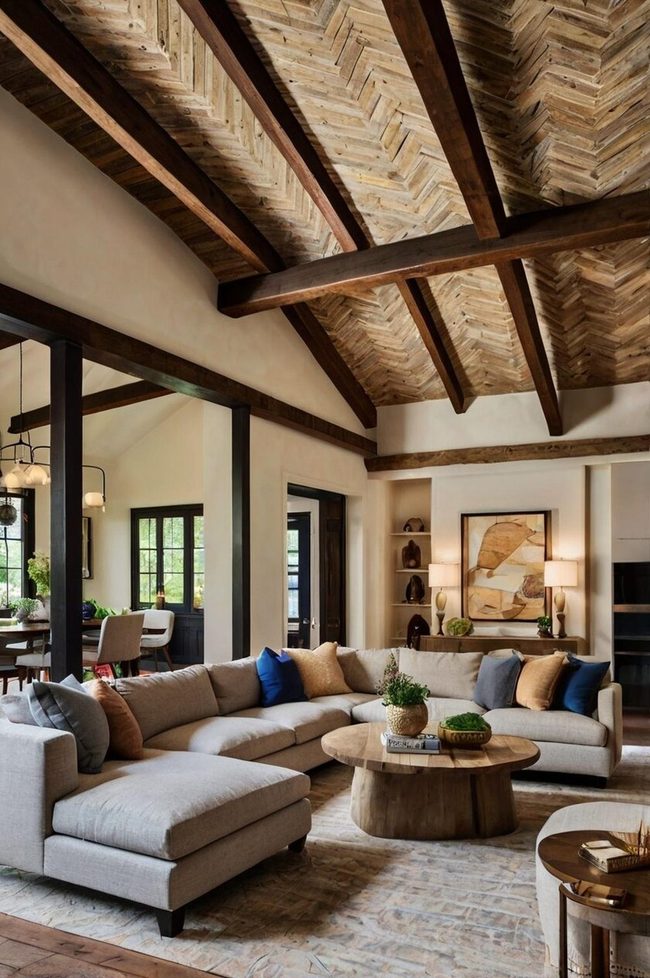
Herringbone patterns on ceilings are absolute showstoppers that transform any room with their dramatic zigzag design, offering the same sophisticated appeal as fine jewelry but for your fifth wall.
Installing herringbone overhead adds movement and polish, particularly in dining rooms or entryways where you want people to observe immediately, and you can achieve this look using real wood planks cut at 45-degree angles or easier-to-install veneer panels.
Lighter woods like maple keep the space feeling fresh and airy, while darker options such as mahogany or cherry deliver a more luxurious feel.
To make sure your herringbone ceiling steals the show, keep surrounding elements simple, neutral walls and minimal furniture allow the pattern to command attention without competing for space.
For something extra special, vary the stain colors within your herringbone design by mixing light and dark planks, which builds depth and keeps the eye engaged as it travels across the pattern.
Lighting deserves equal consideration because a statement chandelier positioned at the center of your herringbone ceiling creates a powerful anchor point that leaves visitors genuinely impressed.
This combination of geometric ceiling design and strategic lighting brings your room from nice to remarkable without requiring trendy or complicated additions.
Soaring Peaked Walnut Beams
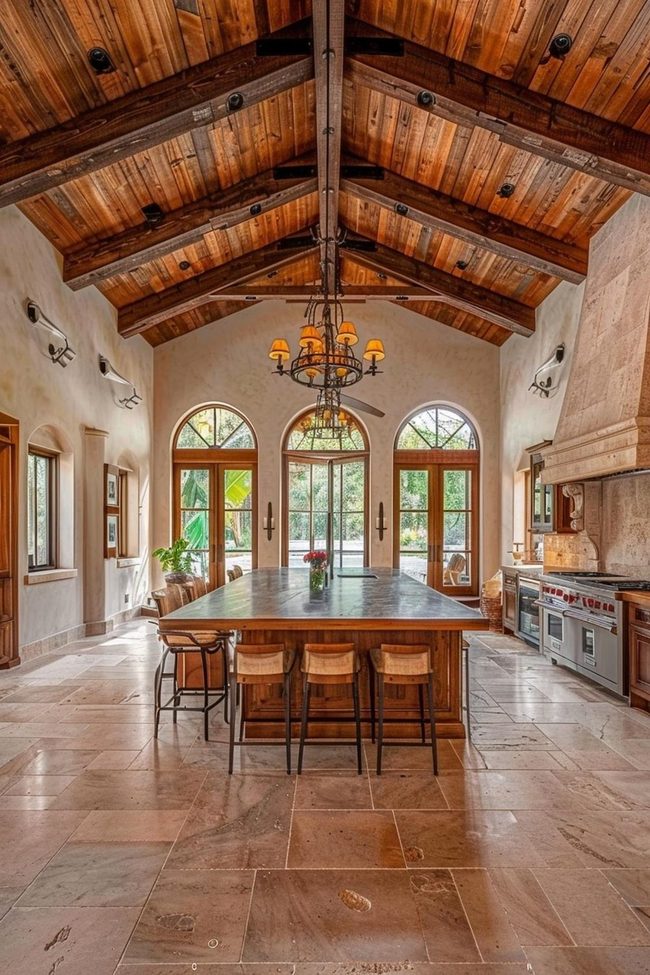
Vaulted wood ceilings with soaring peaks and exposed beams make an immediate dramatic statement in any room, and the height alone reshapes a space to feel far more open and grand than it actually is.
Your eye naturally travels upward along the wood framework, following the contours up to the center peak, which works especially well in large open concept areas where you can take in the full architectural impact from corner to corner.
Living rooms with tall stone fireplaces often feature these ceilings, though master bedrooms look equally striking with this treatment.
If you want that grand lodge feeling, space wide wood beams about 2 to 3 feet apart throughout the vaulted area, or go for a cleaner, less rustic look by installing narrow 1×4 inch boards running vertically across the entire space.
Either approach frames your room in natural wood beauty and draws attention upward, making even modest square footage feel more expansive.
It does require extra investment and installation work, but if you love bold architectural design, the payoff is absolutely worthwhile.
Natural Walnut Ceiling Architecture
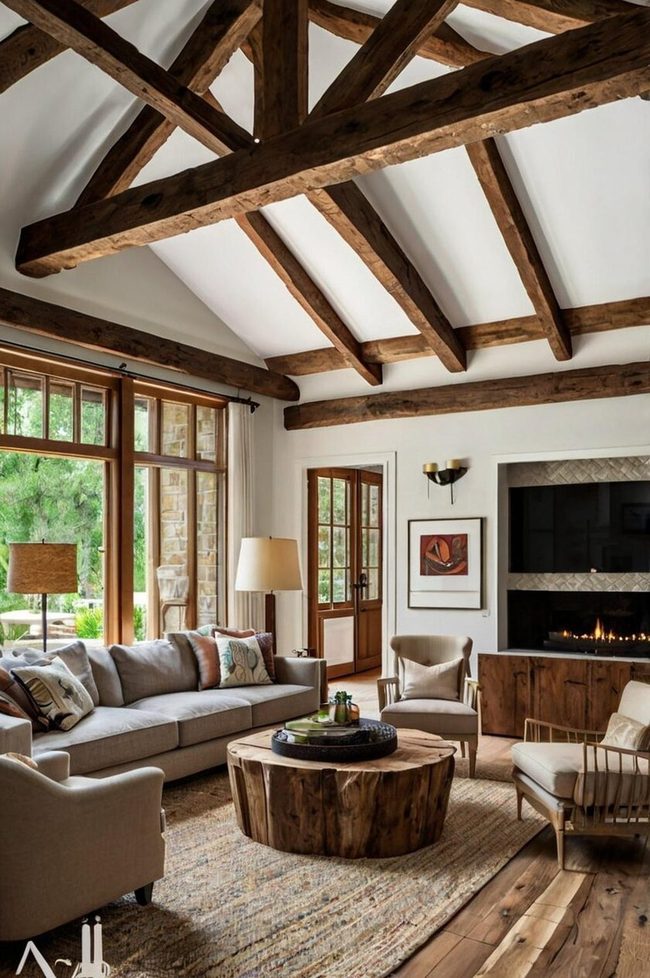
Exposed wood beams deliver instant character and warmth to any room, whether you're working with vaulted ceilings, kitchens, or modern living spaces, and the visual impact shifts based on the style you choose.
Rough-hewn, chunky beams bring a rustic cabin feel, while smooth, stained timbers suit contemporary homes and blend naturally with modern furniture.
You can amplify the farmhouse aesthetic by pairing whitewashed beams with shiplap walls and vintage lighting, or go bold in a modern space with dark walnut beams against crisp white walls for striking contrast without heaviness.
How you space your beams matters too, wide gaps between them keep the room feeling open and airy, whereas closer spacing builds drama and warmth.
If your budget won't stretch to real wood, lightweight polyurethane faux beams offer surprising authenticity and won't strain your walls.
Pendant lights or Edison bulbs hanging from the beams add an industrial-meets-natural element that really stands out.
Balancing the wood's organic texture with your room's overall style ensures everything feels intentional rather than random.
We find layout strategy works best when you let the beams be the anchor point and build the rest of your decor around their tone and warmth.
Smooth Natural Timber Planks Overhead
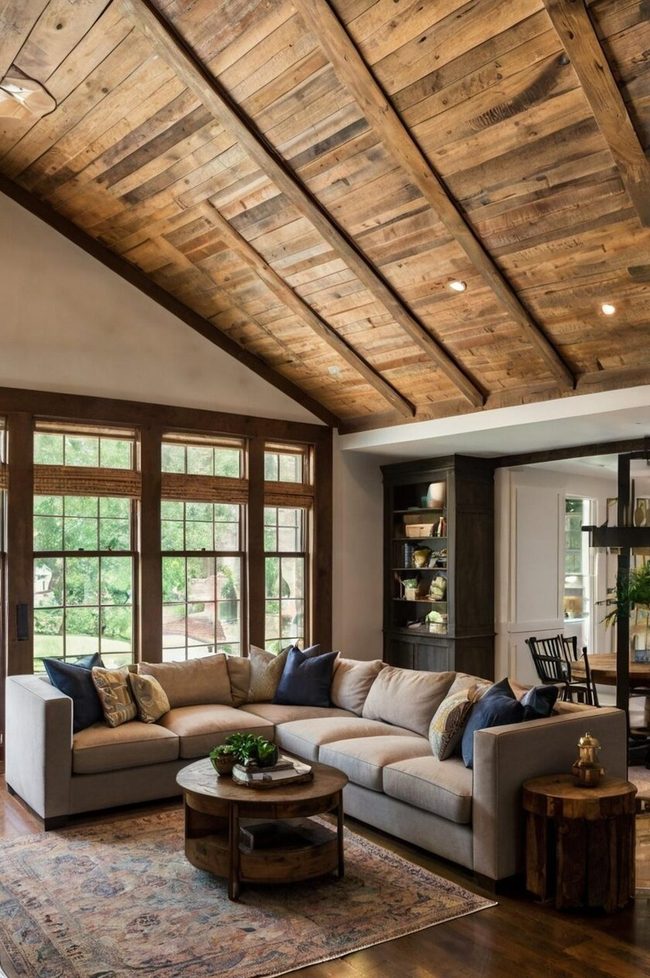
Overhead wood planks make a statement without the bulk of traditional beams, and you have plenty of ways to make them work for your space.
Horizontal boards feel modern and make rooms seem wider, while vertical planking draws attention upward and helps low ceilings feel taller.
Light woods like pine or ash bring in a fresh, airy Scandinavian style, and darker finishes such as ebony-stained oak build a moodier atmosphere.
Paint opens up even more options, white planks keep things clean and simple, while bold navy or charcoal delivers unexpected personality.
A matte finish lets the wood grain show through without looking shiny.
When the planks meet your walls, decorative trim or crown molding in a contrasting stain or metallic finish adds a polished, upscale element.
Recessed lighting tucked between the planks delivers diffused illumination that shows off the wood's texture without making the ceiling feel crowded.
Design solution gives you a refined overhead look that balances visual interest with everyday function.
Weathered Timber Ceiling Statement
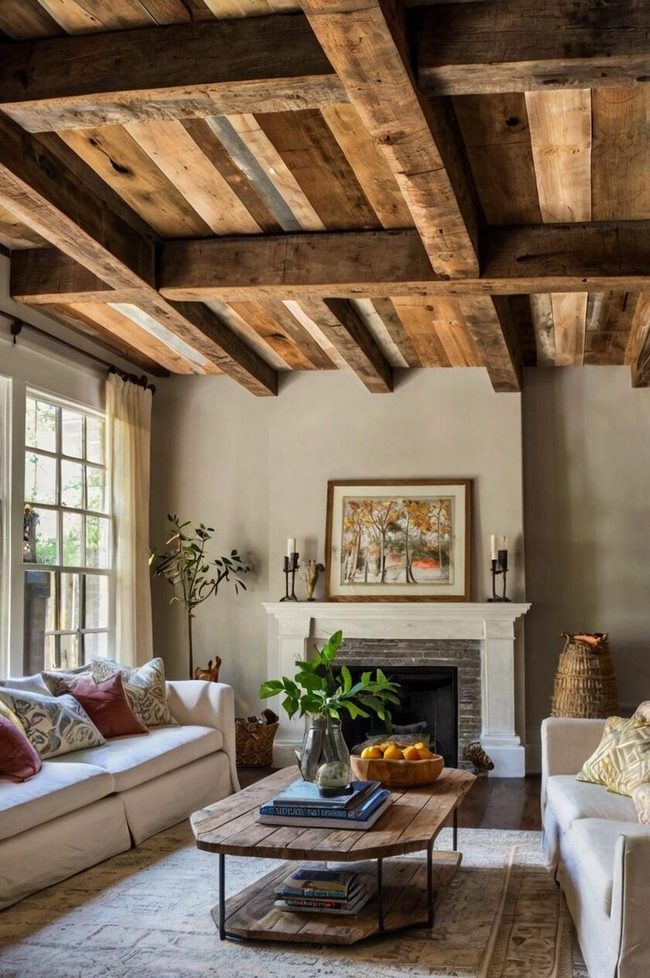
Reclaimed wood ceilings showcase genuine history through every knot, crack, and weathered groove, and they represent a sustainable choice that keeps waste out of landfills.
Hunt through local salvage yards to find barn wood, old fence planks, or factory floorboards that speak to your space.
Raw wood delivers a rugged, organic feel, though you can also lightly sand and seal it to bring out its natural patina without overdoing the polish.
Mix different wood species and finishes for a boho approach, or stick to one type like barn oak if you prefer something more unified.
During installation, you have flexibility, try a patchwork layout with uneven board widths for visual interest, or line them up neatly for a refined look, since imperfections become part of the beauty either way.
Black steel beams and exposed ductwork pair well alongside the wood and add an edgy balance to its warmth.
Modern spaces work with reclaimed wood too when you combine it with sleek metals or monochrome decor.
A clear matte sealant protects the surface and keeps that authentic, lived-in character intact.
Timber Planks With Interlocking Seams
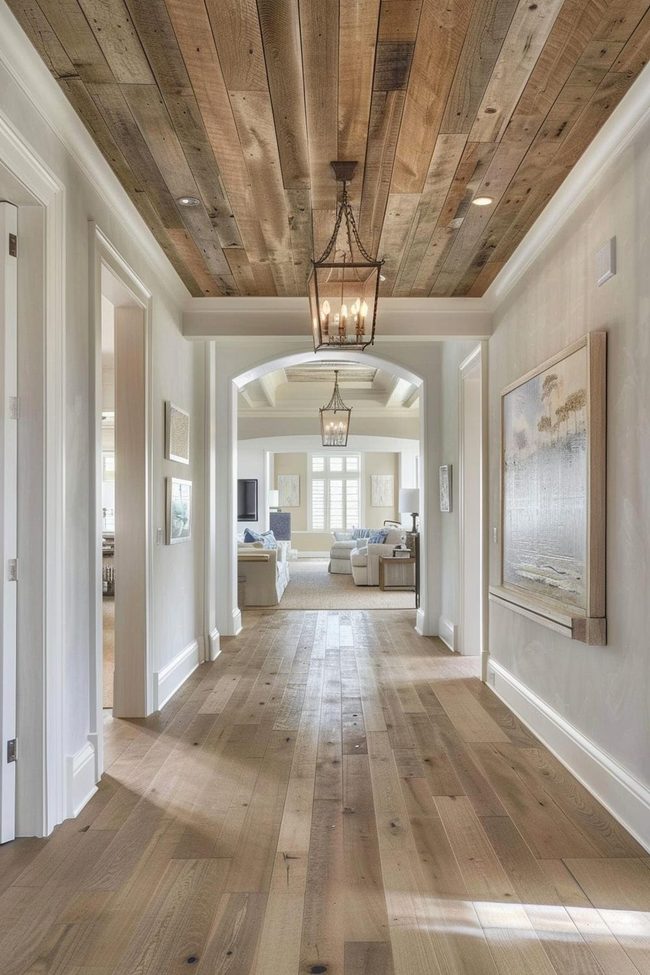
Tongue and groove wood planks stand out as one of the most popular ceiling choices, and wider planks ranging from 6 to 10 inches deliver a particularly striking visual effect that commands attention.
Narrow planks between 2 to 3 inches introduce a more delicate and refined look if you prefer something understated.
You can select from natural wood types like pine, cedar, fir, and oak, then stain them to match your preferred color or keep them in a natural brushed finish that shows off the wood's beautiful grain patterns.
You can tell this works because the tongue and groove joinery system, which locks eachboard tightly together and produces seamless wood ceilings with clean continuous lines.
Those interlocking planks have tight seams that resist warping or sagging, and a properly installed tongue and groove ceiling can last at least 50 years.
This traditional technique has proven itself over time and works well whether you're going for a casual cottage feel or something more polished.
We recommend tongue and groove planks when you want a timeless look with clean lines and lasting quality that won't disappoint.
Soaring Cedar Rafters Above
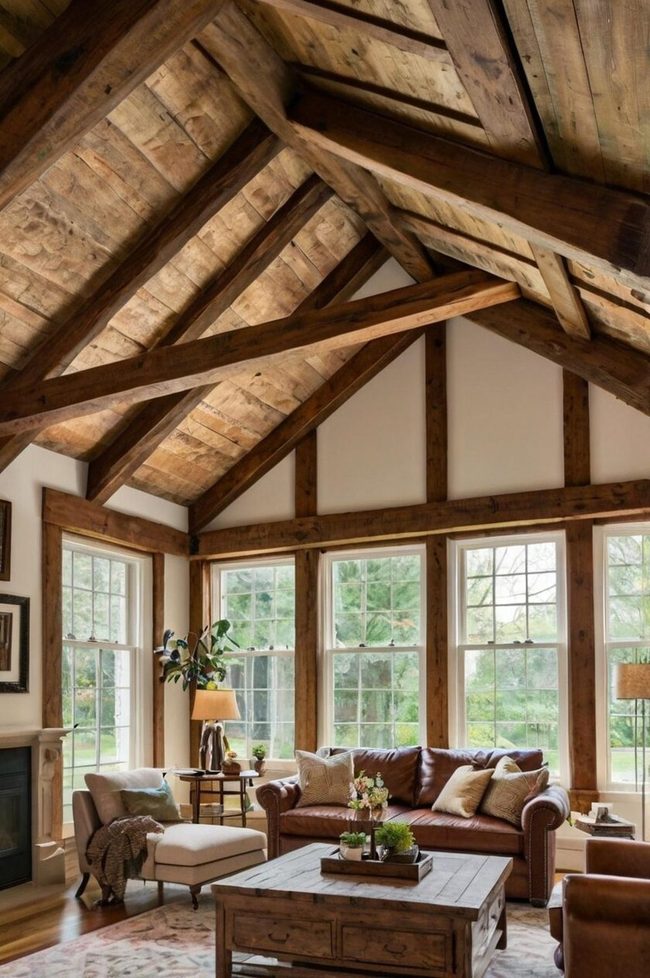
Cathedral wood ceilings offer an open, expansive feeling that lifts your gaze upward and makes any room feel significantly larger than it actually is.
Unlike vaulted ceilings with their peaked shapes, cathedral ceilings feature a single continuous plane where walls meet gently sloping wood rafters that rise toward the center.
Exposed rafters running in clean horizontal lines become an architectural statement and anchor the whole design.
When you stick with narrow wood planks no more than 4 inches wide, you keep the look minimal and refined.
Unfinished cedar paired with small spotlights or whitewashed pine boards deliver an airy quality that feels light and open.
A delicate crown molding where the walls and ceiling meet adds just enough decoration without overdoing it.
Natural or artificial lighting plays across these angled surfaces and enhances the room's sense of height and space.
With the layout, works particularly well for great rooms and master suites where you want both grandeur and calm.
Metal And Timber Ceiling Mix
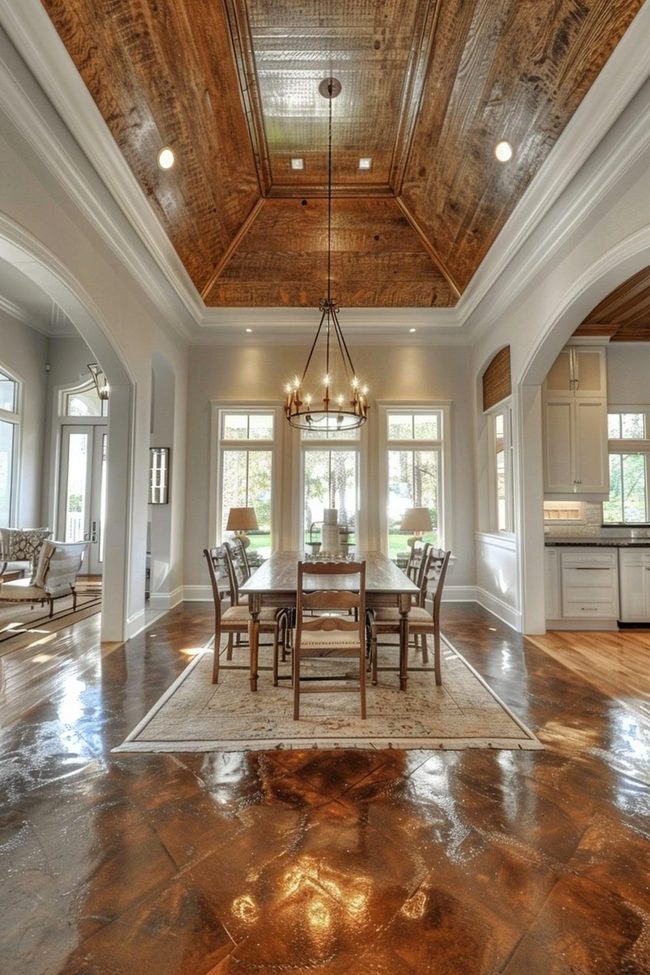
Tin and wood ceilings together offer something visually striking that works in almost any room, the pressed metal sheets have that antique, art deco look while natural wood planks, beams, or panels bring in warmth and real texture that stands out overhead.
One fun way to mix these materials is by adding wood borders along the edges of tin ceiling tiles, which helps define your space and ties in other wood architectural elements nicely.
If you want a retro diner vibe, you can install a checkerboard pattern with alternating wood and tin squares for maximum visual interest.
Central ceiling beams also fit well within linear tinwork patterns, and the contrasting metals paired with natural grain look great against every other.
This combination works for renovating old spaces or adding antique style to newer homes since both materials adapt to different ceiling layouts easily.
Wood and tin together bring a vintage feel that balances industrial edge with natural warmth, making your overhead space both artistic and functional.
Whether you're looking for something that makes a statement or simply want to enhance how a room feels, focusing on what's above you opens up plenty of design possibilities.
Angled Maple Planks Above
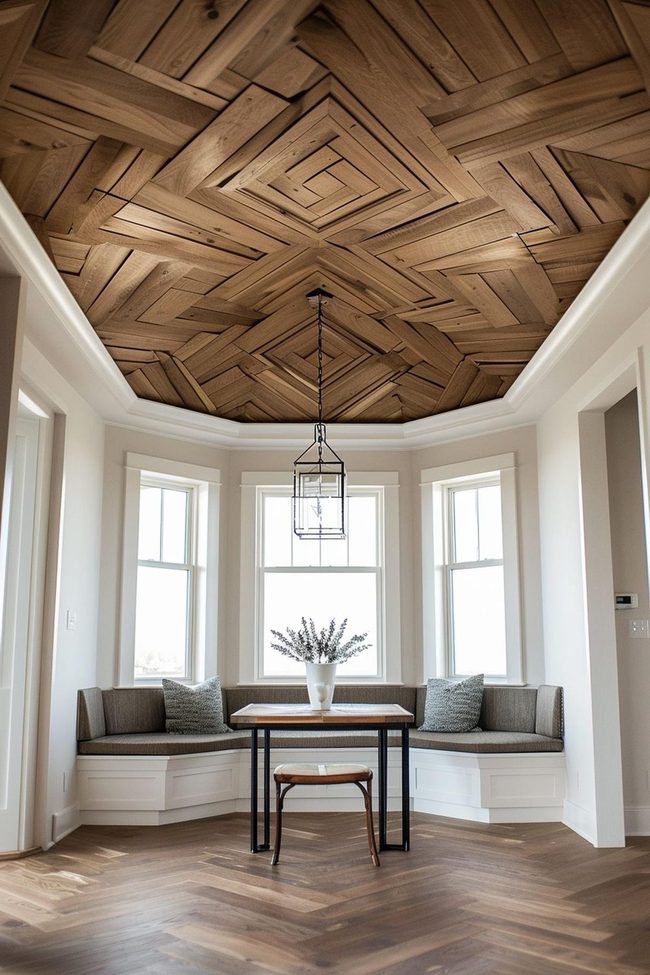
Chevron wood ceilings deliver a bold statement that immediately draws attention upward, with the striking zigzag pattern popping against your flat walls and giving rooms the sensation of being taller than they actually are.
You can maximize this effect by installing alternating planks in an inverted V shape using two contrasting wood tones, think walnut paired with maple or ebony combined with pine, so the geometric design really stands out.
Mixing wider and narrower planks adds even more visual interest and keeps the pattern from feeling too uniform.
A crisp white crown molding frames the design nicely and provides a clean border around the whole ceiling.
Chevron patterns feel fresh and modern, and they work especially well when you want to add contemporary energy to traditional rooms or rustic spaces.
Since the graphic lines move forward in such a dynamic way, the design blends seamlessly with an eclectic mix of old and new furnishings.
Rooms with chevron ceilings instantly feel more lively and interesting.
For anyone looking to make their ceiling unforgettable, this bold geometric choice delivers exactly what you need.
Distressed Grain Ceiling Planks
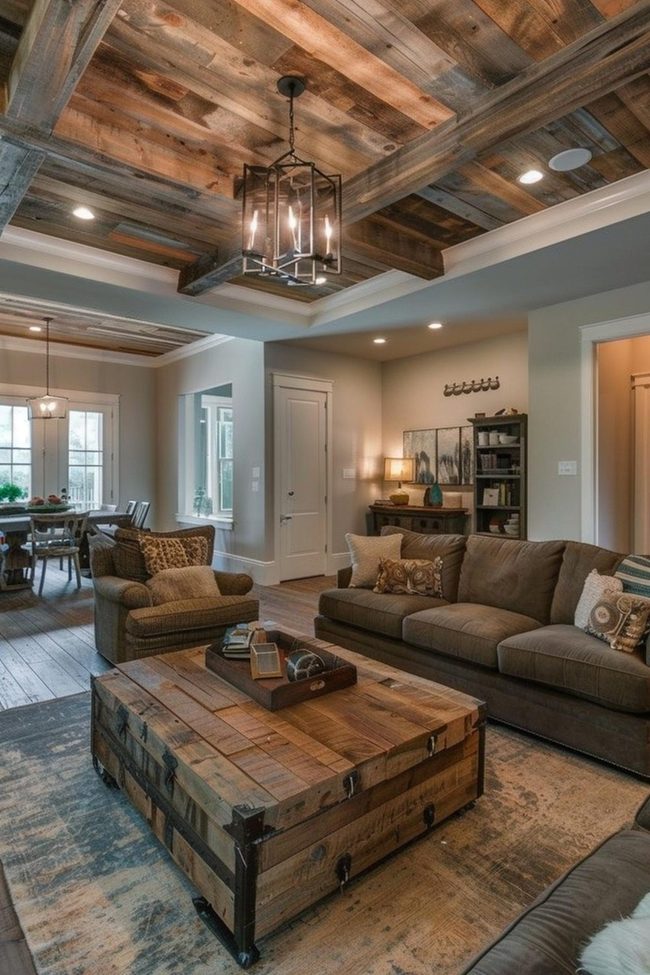
Rough wood planks overhead form an unmistakable rustic charm that draws attention the moment you enter a room, thanks to their unfinished surfaces and visible knots, stains, and nail holes that throughout tell their own story.
Salvaged barn wood or reclaimed lumber works best because it brings genuine warmth and character that new milled wood simply cannot match, and installing these planks in random widths and lengths amplifies that authentic feel by letting them meet unevenly across the ceiling.
If you prefer something a touch more refined while keeping that casual farmhouse spirit, you can choose planks of uniform size and sand them smooth before applying a natural oil finish instead.
This style fits naturally into porches, kitchens, bedrooms, and cabins where the comfortable, lived-in appearance pairs well with farmhouse, cottage, and craftsman design schemes.
Homeowners who care about natural beauty and sustainable choices find real meaning in reclaimed and untreated wood ceilings because the imperfections reflect life's organic cycles and honest processes.
Raw, authentic wood overhead brings your space back to basics and forms a sense of grounded simplicity that feels both timeless and personal.
Morgan Huxley
Founder & Creative Director
Expertise
Interior Design & Bold Décor Concepts, Creative Color Applications & Artistic Details, Budget-Friendly Styling, Sustainable Design Practices
Education
Parsons School of Design, New York, NY
New York Institute of Art and Design (NYIAD)
Morgan Huxley is a designer with a passion for bold interiors that feel personal and inviting. As the founder and creative director of [Brand Name], he helps homeowners bring color, texture, and personality into their spaces. With a degree from Parsons and a decorating certificate from NYIAD, he blends artistic expression with practical design solutions.
Morgan believes that great style shouldn’t be out of reach. He shares budget-friendly tips, sustainable ideas, and creative design tricks to make any home feel elevated.
When he’s not designing, you’ll find him exploring NYC’s art galleries, street murals, and food spots for fresh inspiration.