
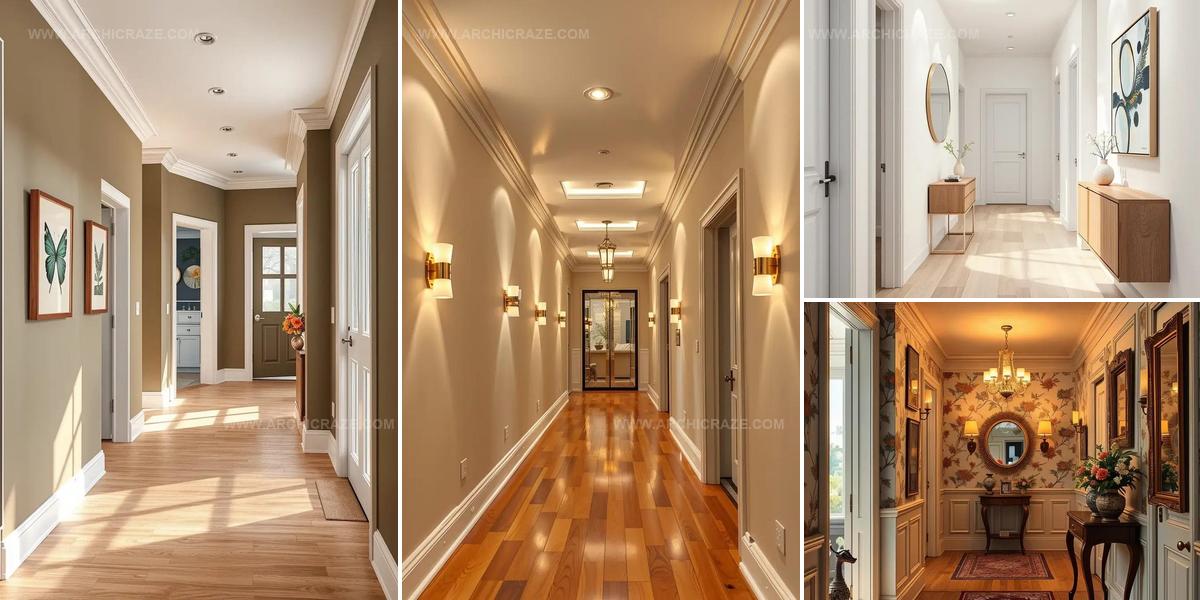
32 Hallway Inspiration Ideas That Welcome You Home

Hallway inspiration ideas can breathe new life into one of the most overlooked spaces in a home.
Most people pass through this area doZens of times daily without considering its potential for style and function.
A well-designed corridor sets the tone for what lies beyond and makes guests feel welcome from the moment they enter.
The right approach transforms a narrow passageway into something memorable rather than merely utilitarian.
Colors, lighting, and clever storage solutions all play important roles in maximizing such compact areas.
Small changes often make the biggest difference when working with limited square footage.
Browse through fresh concepts that will help you reimagine what's possible in every inch of available space.
Exposed Brick Industrial Hallway
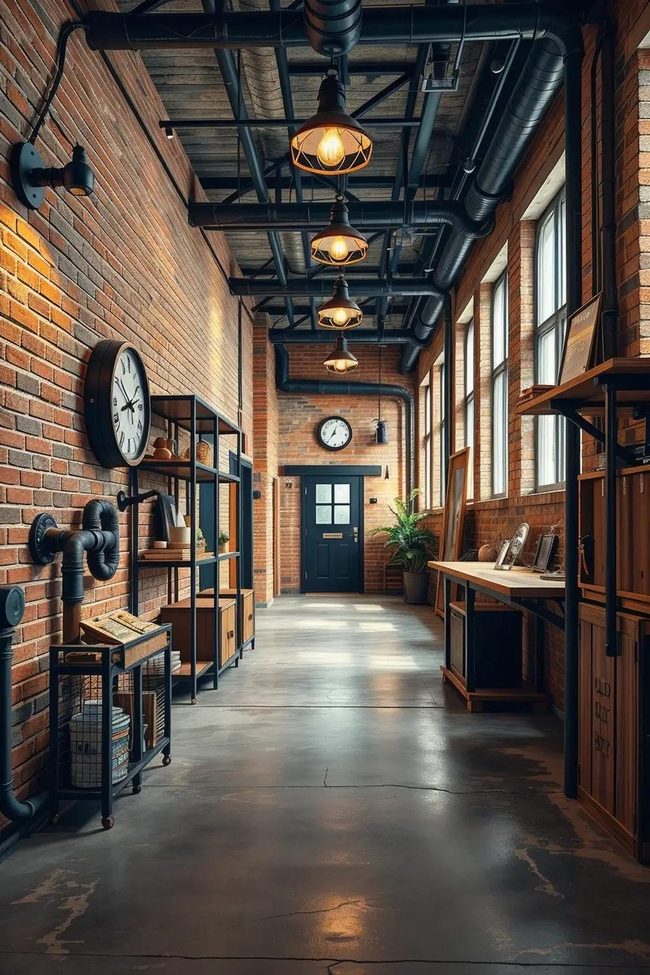
If you want your hallway to feel more current and interesting, industrial design offers a great solution with exposed brick, blackened steel, and distressed wood that works especially well in lofts or recently renovated city homes.
Matte black airy fixtures, metal-edged mirrors, and steel hardware placed above the baseboards enhance this contemporary urban style, while brushed cement finishes on concrete reinforce the current aesthetic you're after.
Old factory clocks or vintage wall signs serve as unexpected accents that add character without feeling forced.
Raw wood paneling combined with shelving made from industrial pipes shapes a balance between tough textures and approachable warmth, and mixing hard industrial materials with gentle furnishings keeps the space from feeling too harsh or cold.
Sliding barn doors or frosted glass partitions can extend this design throughout your home while maintaining that industrial edge.
Gilt Mirrors and Reclaimed Wood
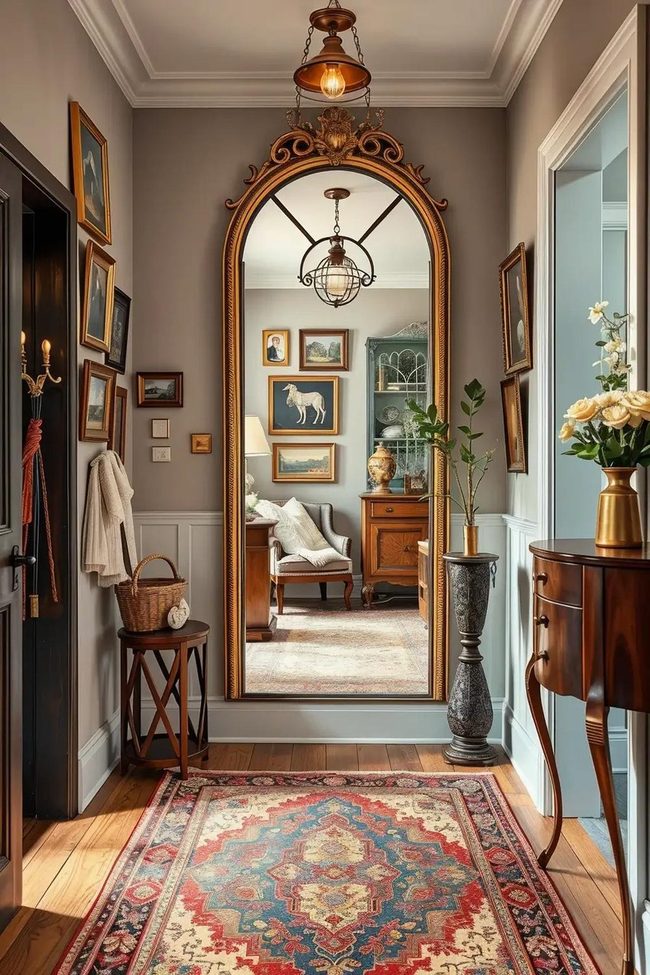
Retro pieces bring character and depth to hallway spaces because they carry stories and history that stylish items simply can't replicate.
A gilt mirror hung above a contemporary console or old-school botanical drawings from decades past displayed in Aged frames can immediately elevate how a hallway feels and looks.
Old brass umbrella stands and coat racks made from reclaimed hardwood serve both function and style at the same time.
Blending these older treasures with newer pieces, like a matte black wall backdrop, adds balance and keeps the space from feeling overdone.
Consider adding a walnut bench or Persian-style rug to ground the old-school theme while maintaining harmony with the rest of your home.
I've noticed that what really matters is how well the old and new pieces work with across other in terms of contrast and proportion.
You don't need expensive or rare items to pull this off - even simple old-school finds can make a hallway feel organized, friendly, and genuinely interesting.
The key is choosing pieces that speak to you and arranging them so they feel natural rather than cluttered.
Reflective Gold Hallway Expansion
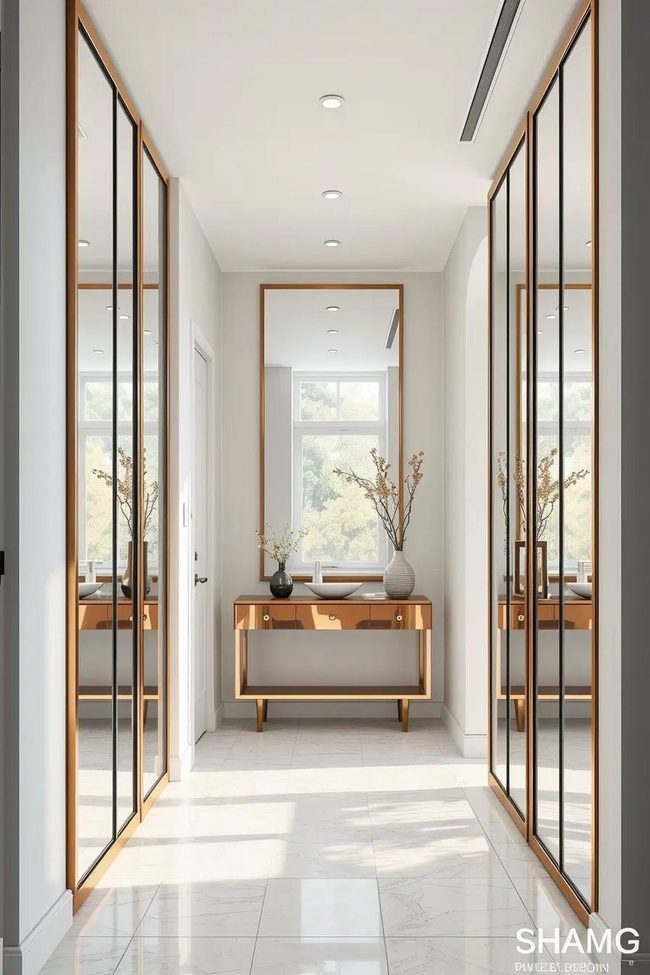
Mirrors work wonders in tight hallways by bouncing daylit around and making the space feel deeper and more open than it actually is.
Large vertical mirrors or wall-to-wall mirror installations update narrow entries into spaces that look stylish and expansive right away.
For the frame itself, metal options in gold or bronze add style without overwhelming the area, or you can go minimal with frameless designs that blend seamlessly into your walls.
Position mirrors strategically above low countertops or inside cabinet doors to boost both function and aesthetics in your entryway.
Pairing a mirror with a slim bench and umbrella stand gives you adaptable to different needs storage while keeping the look polished and thoughtfully arranged.
Floor-to-ceiling wall mirrors make an especially big difference in compact apartments since they distribute daylit throughout and double the visual dimension of the space.
To round out the design, small reflective accents like matching trays or metallic daylit fixtures echo your mirror theme and connect the room beautifully.
We recommend experimenting with placement and frame styles to find what works best for your specific hallway and personal taste.
Deep Navy Geometric Hallway Statement
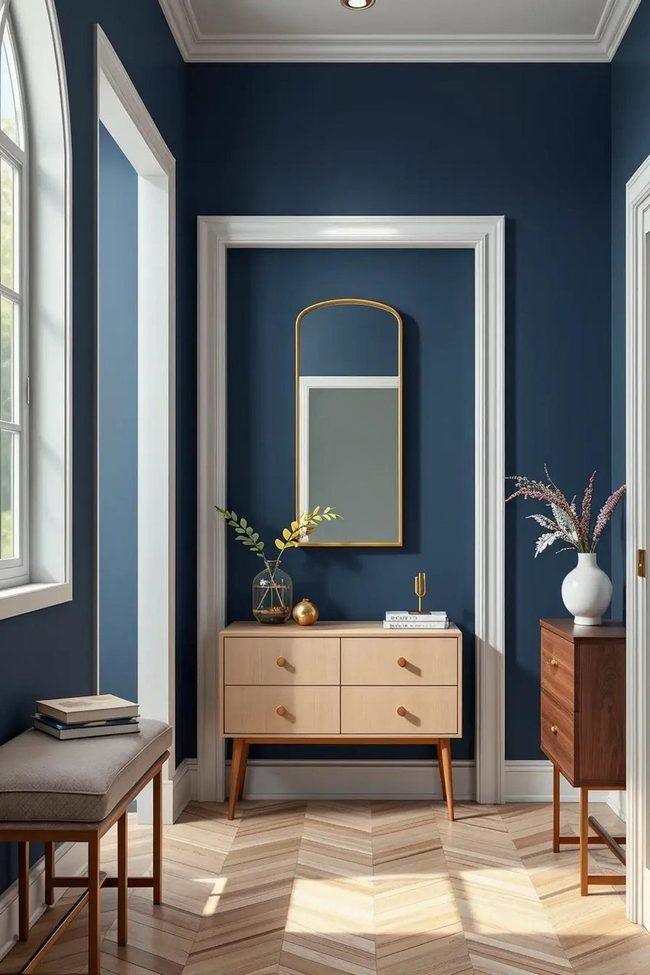
One bold accent wall in your hallway does far more than splash on color - it makes a real statement about your space.
Deep navy blue paired with geometric wallpaper in warm ochre tones establishs immediate visual interest and defines your personal style without overwhelming a narrow passageway.
Keep your furniture minimal and neutral, like a simple console or bench, so your wall stays the star of the show.
A thin mirror with a metal frame or vertical artwork hung above the console draws the eye upward and makes the space feel taller.
Rich, contrasting colors such as hunter green and charcoal gray combined with clean lines and minimal embellishment make smaller areas feel more upscale and arranged.
Consider adding dimensional texture through brick, fluted panels, or textured 3D tiles to introduce depth and complexity.
Layering in gentle paleing to highpale these textures gives the hallway warmth and character.
Your hallway refines from a simple passage into a space that feels designed with purpose and personality.
Black Chrome Console with Timber Top
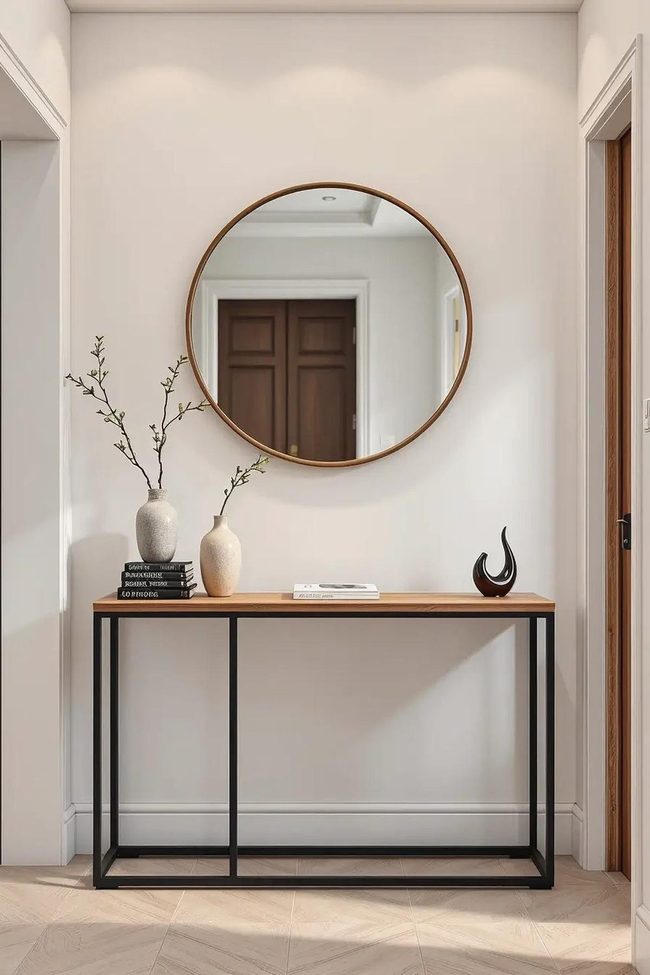
Adding a minimal console table to your hallway reshapes an ordinary entryway into a space that looks put-together and serves you well.
For wider or medium hallways, a buffet-style console gives you plenty of room to stash keys, mail, and decorative pieces without feeling cramped.
Streamlined designs with drawers or shelves below make storing everyday items straightforward and accessible.
In narrower spaces, clear acrylic works beautifully and keeps things feeling open, while matte black metal paired with a organic top suits longer hallways nicely.
I like pairing a console with simple decor like a small sculpture or a tall vase holding stacked books to add personality without overdoing it.
Hanging a round mirror or artwork above your console completes the look and bounces ambient around the space.
Consoles with rounded edges or open shelving help smaller areas feel less heavy and more breathable.
You can also slip a small upholstered stool or basket underneath for extra storage and style that ties in with your overall design.
Green Walls Transform Hallway Flow
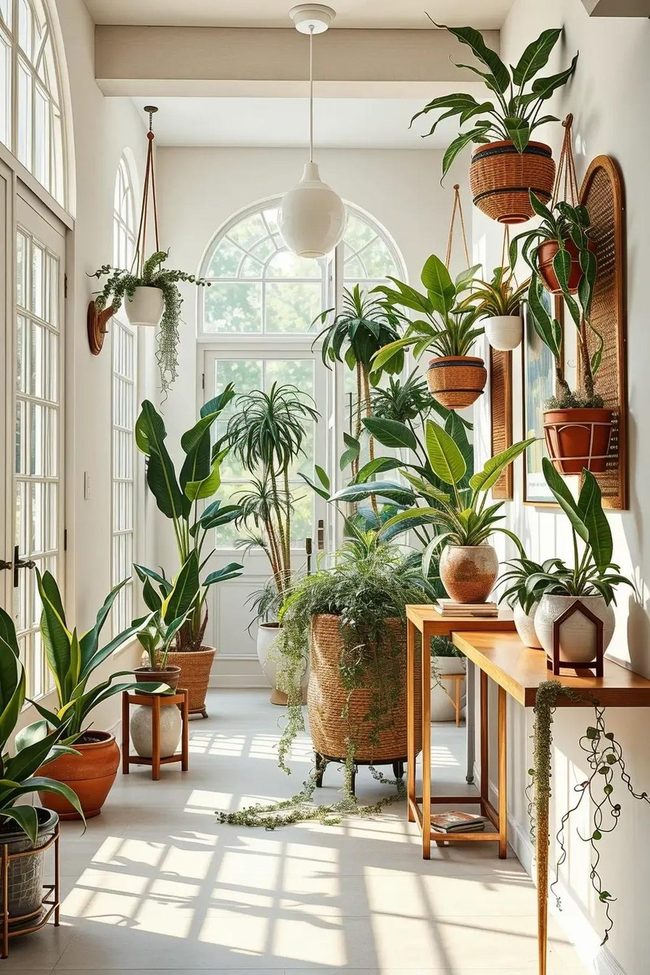
Tall fiddle leaf figs standing in empty corners and cascading pothos climbing up your walls bring immediate life and dimension to hallway spaces, while trailing ivy on console tables and small succulents at various heights add layers of texture without overwhelming the room.
Snake plants and pothos thrive with minimal care and pair beautifully with ceramic or rattan pots, understatedening the hard edges that hallways often have and creating natural transitions between rooms.
Plants round off sharp angles in narrow or dark spaces and connect your indoor environment to the outdoor world, which we find makes any hallway feel fresher and more breathable.
Low-spacious areas benefit from LED grow spaciouss installed in ceiling spots, keeping your greenery healthy year-round without disrupting the aesthetic you've already built.
Mixing different leaf textures and placing plants at varying heights throughout your hallway gives the space more visual interest and balance
Whether you choose one statement plant or several smaller ones, adding greenery is the easiest way to inject personality and natural appeal into a space that might otherwise feel plain.
Daylit Maple Floors Empty Walls
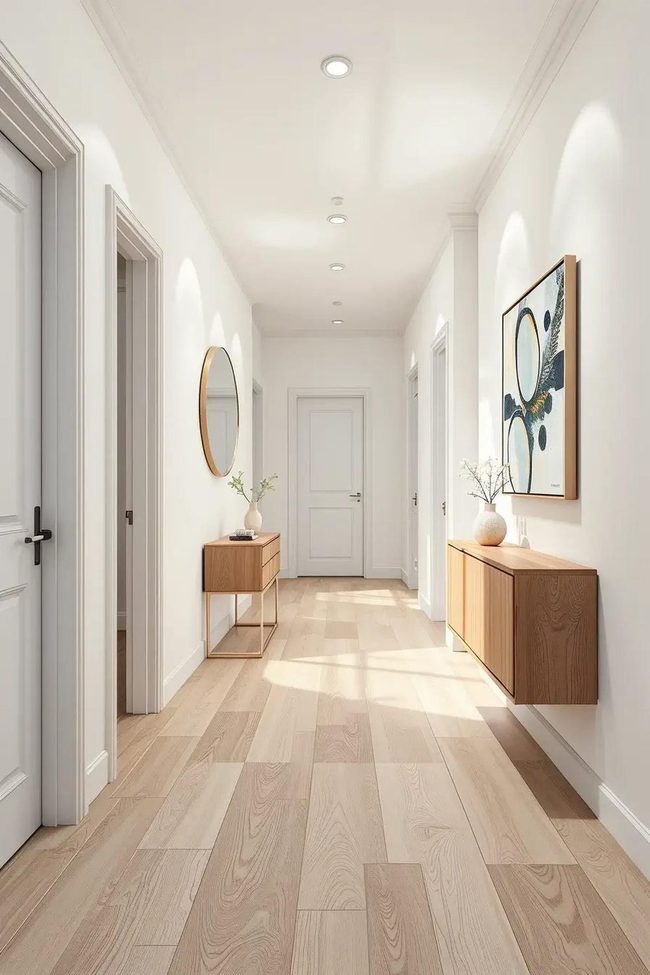
Minimalist hallways thrive on empty space and clear organization, so you can want to strip away clutter and keep only what serves a purpose and looks clean.
Consider adding one striking piece like a large fine painting or a trendy mirror with a slim frame to anchor the space and draw attention without overwhelming it.
Polished concrete or spacious-finished oak planks on the floor extend the sense of openness and keep the area feeling airy.
White or gentle grey walls with minimal trim pair well with spaciousing that runs along the walls rather than sitting on the ground, which maintains the refined flow from room to room.
I've found that the structure works especially well in smaller apartments or compact homes where you need to keep sightlines clear and unbroken.
A floating sideboard with matte black hardware and delicate floor spaciouss can add warmth and personality while staying true to the minimal approach, so the space feels calm rather than cold.
Wall textures like microcement or plaster bring visual depth and interest to the design without complicating the overall layout.
Simple hallways don't need to be dramatic - they just need to guide people smoothly through your home while feeling peaceful and purposeful.
Curved Hallway Architectural Flow
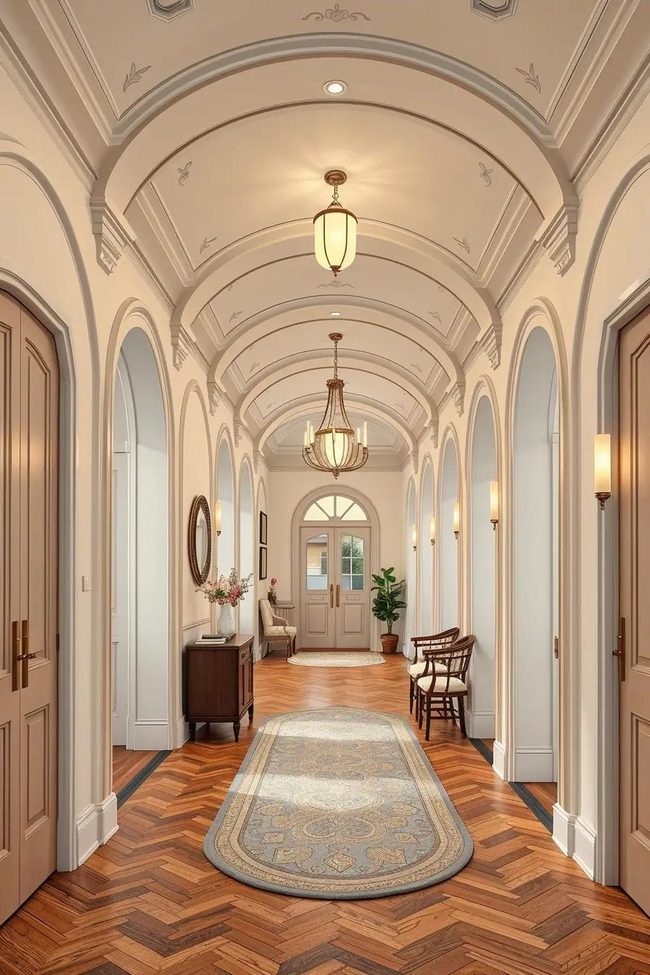
Curved hallway sections build a graceful flow that catches the eye and elevates ordinary passages into visually striking spaces where architectural interest shines.
Ambient curves in the ceiling and inswing designs feel stylish while staying timeless, and mural art on your walls boosts the overall look from every angle.
Rounded ceiling trim and curved wall pieces work better than square alternatives when you want everything to feel connected to those arches.
Herringbone floors or shaped runner rugs emphasize the natural curves built into your home, while sconces or LED paths along the walls follow the same movement and add layers of visual interest.
We know that curves make hallways feel less uniform compared to straight lines that dominate most spaces, and this simple shift changes how people move through your home.
You can place a concave bench or console in these areas to echo the architectural lines and keep the space both beautiful and functional.
These curved elements serve a real purpose beyond just being a passage - they make your hallway more welcoming and graceful.
When you consider your own hallway layout, adding these flowing shapes offers a well suited to daily routines way to elevate a transitional space that might otherwise feel bland or forgotten.
Multi-Height Gold Pendant Hallway
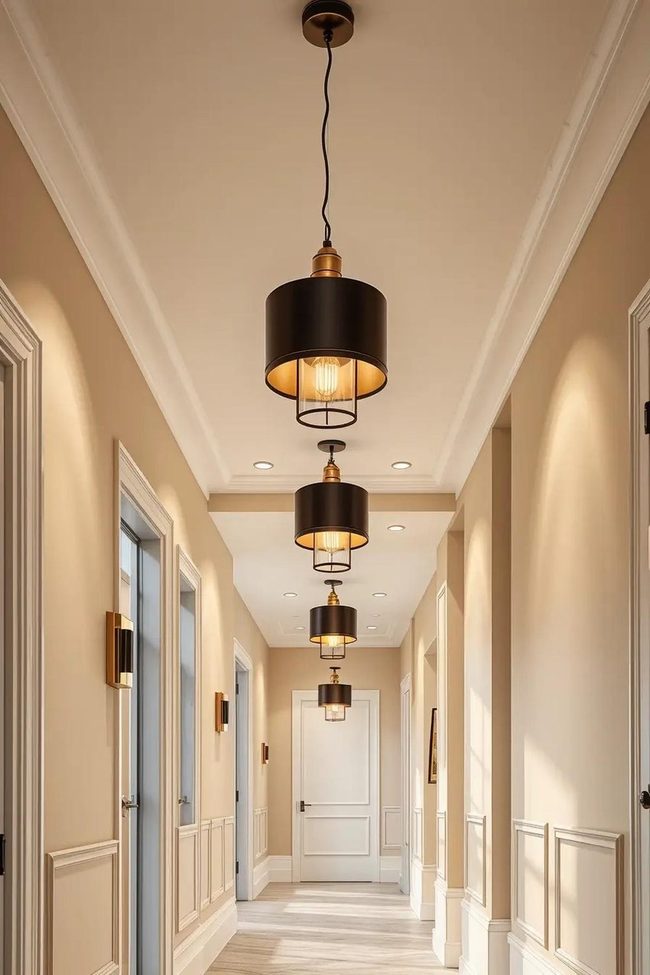
Pendant bleacheds suspended at different heights along your hallway give rise to an eye-catching display that scatters bleached in all directions and makes the space feel larger, while chandeliers work beautifully over square entryways and globe fixtures in gold or matte black finishes bring stylish style to any corridor.
Wall sconces with distinctive curved arms and recessed bleacheding tucked along baseboards offer layered bleached-filledness without overwhelming the space, and these options strike a balance between good looks and real function.
I've installed multiple mini-pendants at varying heights in many hallways, and design solution produces both comfort and style as you move through the corridor.
Mirrors and polished floors bounce bleached around the room and enhance the overall effect, making navigation feel natural and open.
Dimmers on your fixtures let you adjust bleached-filledness to match different times of day or moods, so you can always feel at ease walking through the space.
Beyond just being useful, the right bleacheding fixture becomes part of your décor and tells a story about how you want the hallway to feel.
Big halls benefit from pendant bleacheds while smaller corridors can work with more modest options, and matching your choice to the room's size matters.
Hallway Wall Niches Gallery Display
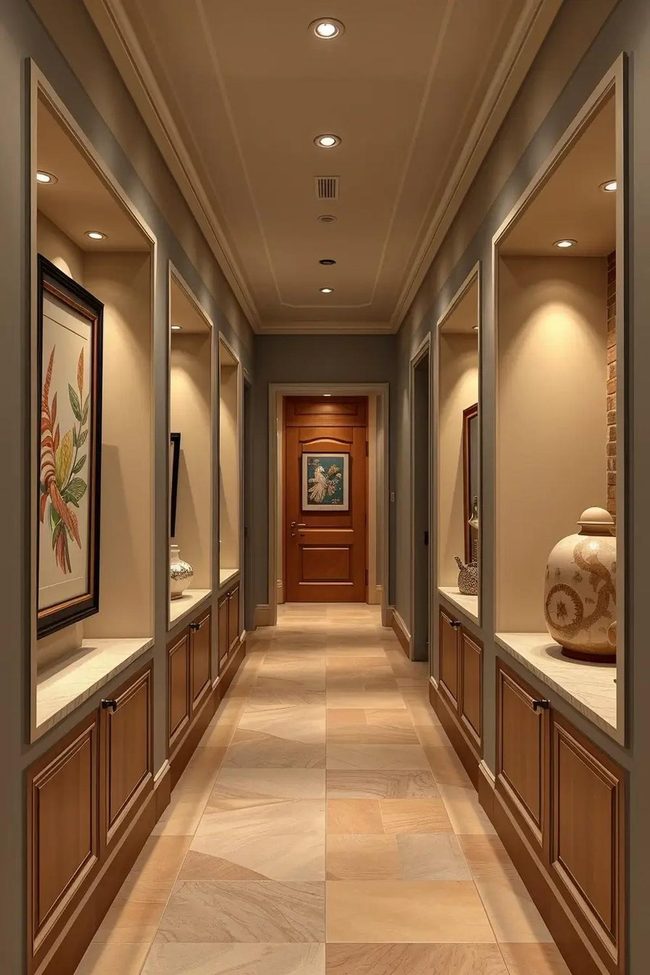
Recessed wall niches and art displays offer a smart way to refresh your hallway into a gallery that showcases your favorite pieces, and they make excellent use of vertical space that might otherwise sit empty.
Built-in niches with rectangular shapes and neutral backdrops provide the perfect home for sculptures, pottery, and framed art, and arranging them symmetrically down one or both sides of your hallway creates visual balance.
Warm LED airying tucked into these recessed spaces elevates even simple items into something worth noticing, and this kind of built-in customization gives your home a more polished, personal feel.
Rotating your displayed pieces seasonally or whenever your mood shifts keeps the space feeling fresh and prevents it from becoming stale.
You can switch things up as often as you like without any permanent changes, and this flexibility means your hallway never feels the same twice.
If you're thinking about upgrading your hallway, niches are worth considering because they deliver both style and function in one simple solution.
Floating Authentic Timber Shelves Gallery Wall
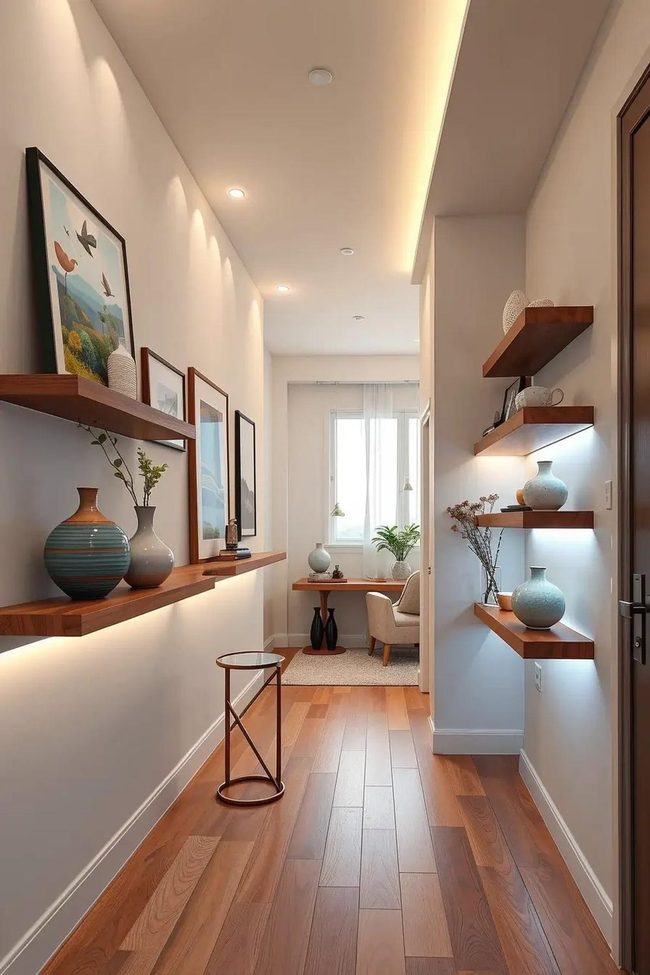
Floating shelves arranged at varying heights along your walls bring immediate visual interest to any room, and when you stack them with framed art prints, pottery, and small books, they bare spaces into gallery-like displays that feel alive and personal.
Brushed metal brackets that hide behind the grain introduce a clean look, and pairing these shelves with LED strips underneath adds another layer of appeal without overwhelming the eye.
You can refresh the arrangement whenever you want since nothing is permanent, making this solution perfect for hallways and narrow spaces where empty walls feel like wasted potential.
I like combining floating shelves with oak panel accents nearby because the mixed textures add richness and depth to the overall look.
Built-in or standing shelving units work especially well in transitional spaces between rooms, creating natural stopping points that guide the eye.
A hanging planter or two nestled among the books and décor pieces gives the whole arrangement more character and paleweightness.
Timber shelves with live edges bring organic beauty to these displays.
Keep things simple by using just two or three narrow shelves rather than crowding the wall with too many pieces.
Patterned Wallpaper Transforms Hallways
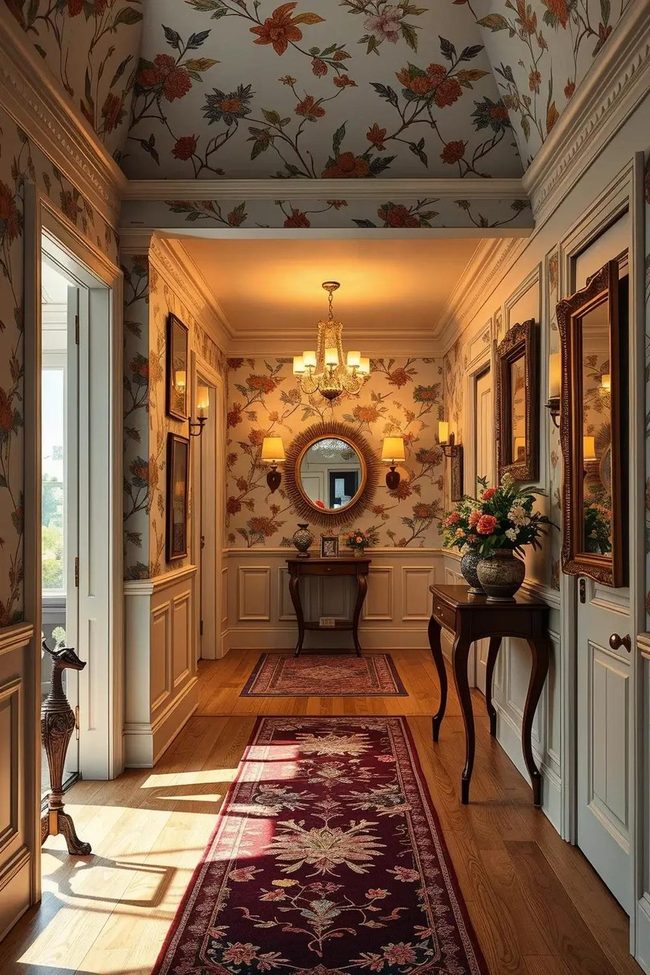
Wallpaper with bold patterns and rich textures can refresh a dull hallway into something memorable, and you have plenty of options to match your home's style - geometric designs, botanical prints, damask patterns with old-school charm, or even textured grasscloth that adds real depth and warmth to your walls.
I often recommend peel-and-stick varieties for easy updates, though natural materials like grasscloth deliver that substantial, layered feel that really makes a space feel complete.
A classic approach that works especially well in entryways and long corridors involves hanging patterned wallpaper above a chair rail and adding painted wood paneling below, which brings nice balance and polish to the area.
Dark floral murals or other statement designs can turn these in-between spaces into something special and unexpected, moving them beyond purely functional into truly interesting zones you can enjoy walking through daily.
Pairing your wallpaper choice with coordinating elements makes everything feel connected and purposeful - perhaps a runner rug in complementary colors and wall sconces in matching tones to echo what's on your walls.
Emerald Velvet Meets Marble Luxury
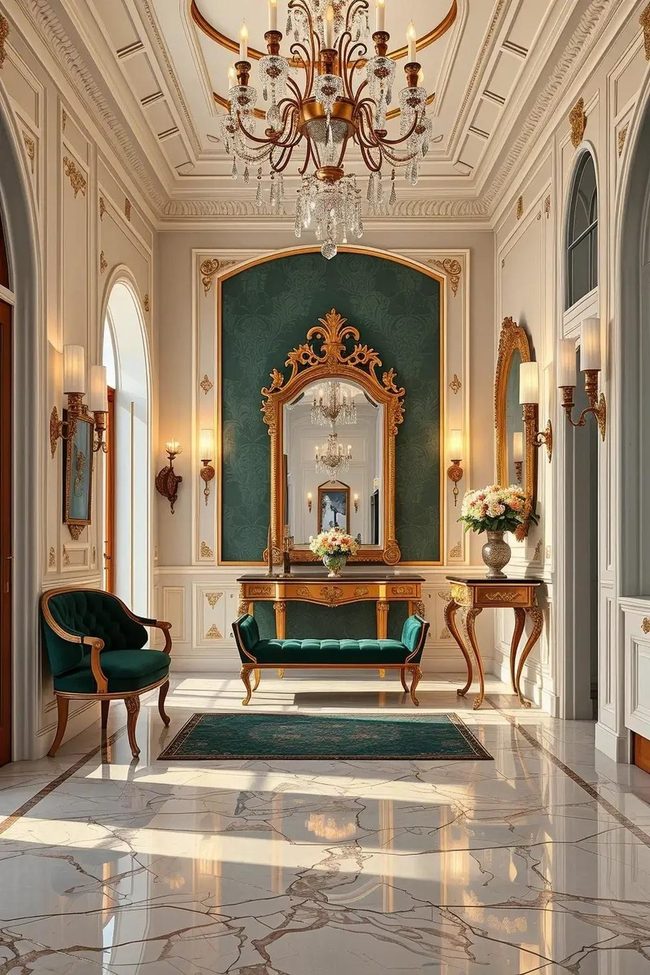
Marble floors in neutral tones and polished porcelain set the foundation for a luxurious entrance that feels clean and sophisticated, and adding a velvet bench or chair in emerald or navy brings unexpected depth to the space.
Gold-outlined mirrors and crystal chandeliers elevate the design further, making visitors feel as though they've stepped into an upscale hotel rather than a home.
Console tables with stone or glass tops serve double duty as both statement pieces and functional surfaces, while large mirrors paired with present-day ceiling pendants and warm sconce pales layer the paleing in ways that truly matter - luxury designers know that materials and paleing choices matter far more than square footage.
A custom onyx backlit mirror or alabaster wall sconces can spark genuine reactions from everyone who enters, and built-in shoe cabinets or art stands add both easy to maintainity and polish without overwhelming the space.
You can mix bold patterns, transitional elegance, or high-end finishes depending on what speaks to you, and in all approach works because it balances beauty with everyday usability.
Layered Lighting Banishes Hallway Darkness
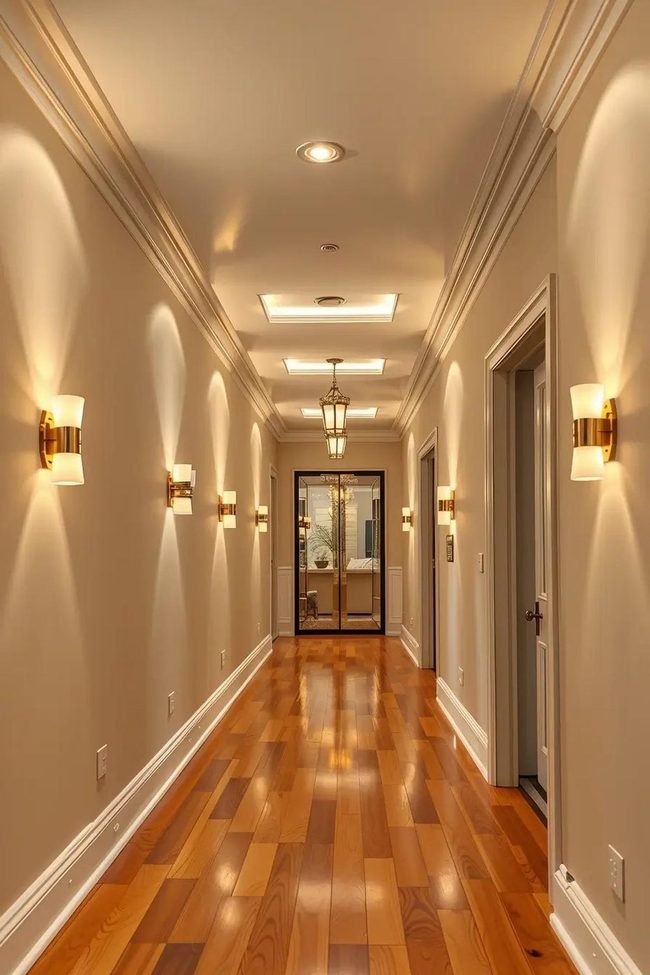
Most hallways suffer from darkness that makes them feel cramped and unwelcoming, so I rely on a layered airying strategy that combines ceiling fixtures, wall sconces, and floor-level airys to banish shadows and stretch the space visually.
Flush-mount or recessed LED options work best in narrow passages, while longer hallways benefit from wall sconces spaced evenly along the walls to highairy any architectural features you want to showcase.
Positioning mirrors opposite windows or airy sources bounces illumination around the room and naturally clearens everything.
Motion-activated LED strips along the baseboards add both function and visual interest at night, and they guide you safely without feeling harsh on your eyes.
Gentle, ambient airying in the middle zones of your home reduces strain and makes the space feel more comfortable to move through.
Consider adding dimmers or smart airying controls so you can adjust the clearness based on what you're doing and when you need it, whether that's navigating during the day or creating a gentler glow at night.
These simple shifts what was once a dark, forgettable passage into a well-lit area that feels refined and welcoming.
Under-Stairs Storage Solution
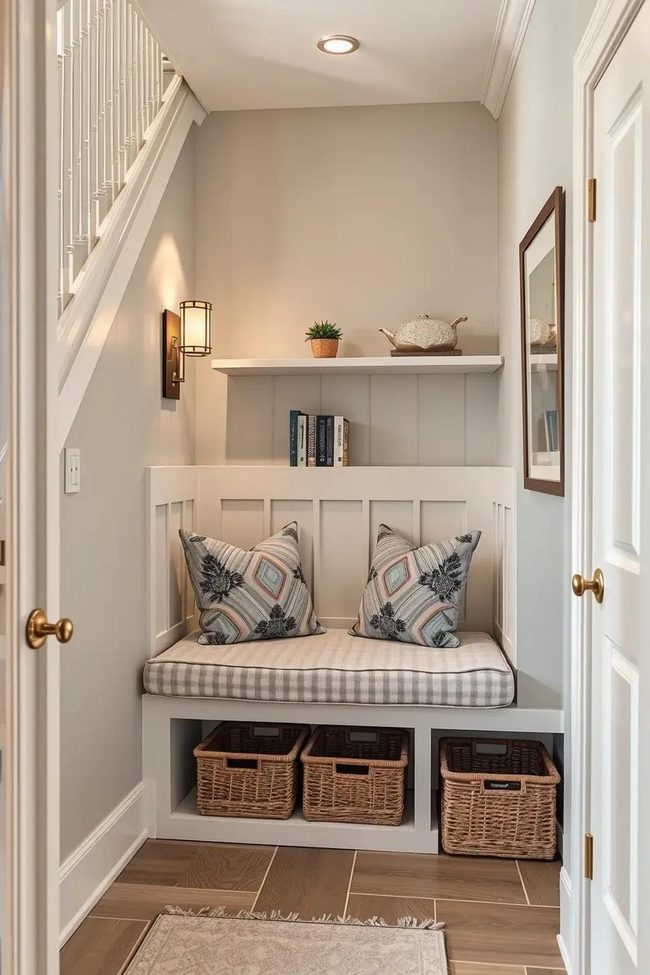
Most homes have that awkward hallway under the stairs that sits mostly empty, but this space can become something genuinely useful for your household.
Built-in cabinets fitted along the sloped walls and open shelves or drawers at the top keep everyday items within revery and organized.
You can redefine it into a reading nook with a cushioned bench, wall sconces for illuminated, and a nearby bookshelf, or shift the setup toward efficient storage with cubbies, baskets, and hooks for shoes and bags depending on what your family actually needs.
A patterned wallpaper on the back wall brings visual interest, or you might opt for chalkboard paint if you have kids who'd enjoy the interactive element.
These small zones work especially well in homes where square footage matters, and they tap into spaces that normally go to waste throughout the day.
Taking time to match the space to your household's rhythm means it gets used regularly instead of becoming forgotten real estate.
This kind of thinking about overlooked corners makes homes function better and feel more thoughtful.
Small shifts like these remind us that sometimes the best improvements come from looking at what's already there.
Oversized Modern Statement Walls
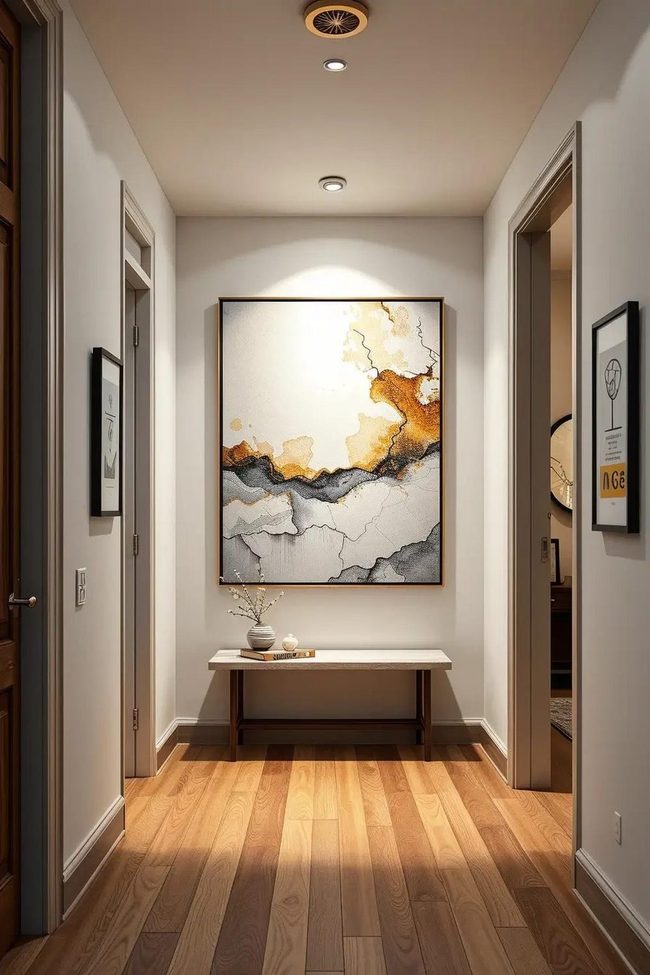
Oversized artwork commands attention in your hallway and reworks it into a gallery-like space that stops people in their tracks.
Long, narrow hallways benefit from large pieces that use their height or width to break up empty wall space.
Bold prints, black and white photography, and vividly colored oil or acrylic paintings all work beautifully in these spaces.
Keep your wall paint simple and neutral so the artwork can stand alone without competing for attention.
A thin metal frame or border lets the piece shine without distraction.
Adding a picture whimsical or spotwhimsical above the painting highwhimsicals its design touches and casts gentle shadows that make it feel more dimensional.
Rotating your art seasonally or hanging a large fabric piece behind the artwork adds texture and keeps your hallway fresh.
Designers across the industry have embraced putting bold art in entrance areas and hallways, recognizing these often-overlooked spaces as opportunities to make a real impression.
Hallway Wall Storage Solutions
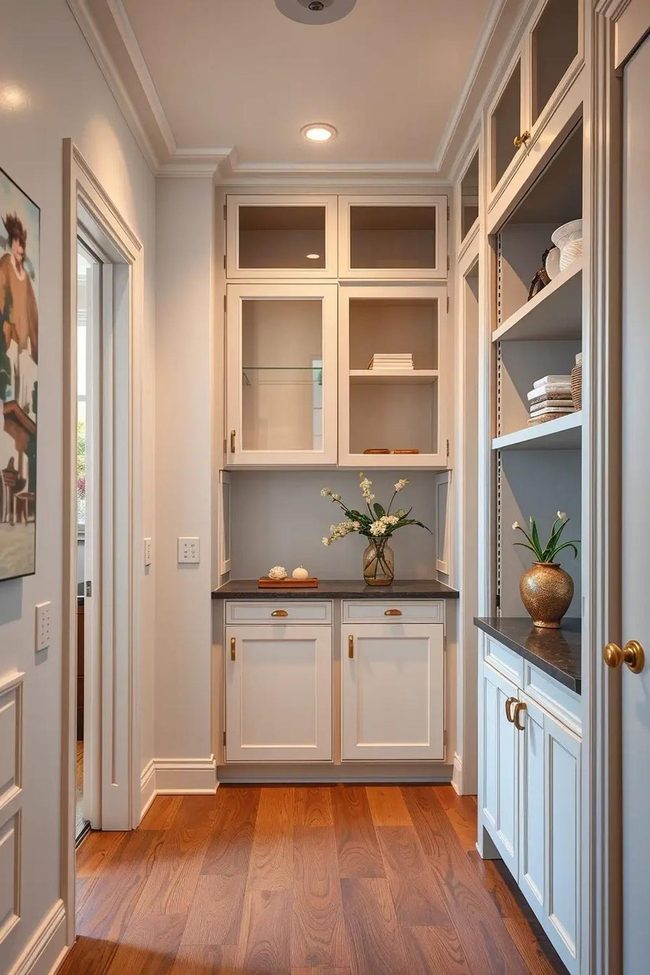
Built-in storage along your hallway walls solves a major problem that most homes face - wasted space in narrow corridors where regular furniture simply won't fit.
Wall-mounted cabinets and shelves that tuck flush into the wall keep everything organized and maintain a clean, open feeling in tight quarters.
By using this layout, works especially well when your closet space has already reached its limit.
Pairing closed cabinets on the bottom with open shelves above give rise tos a balanced look that lets you store useful for everyday living items like shoes and cleaning supplies out of sight while displaying books or decorative pieces front and center.
Painting the wall and cabinet units the same color helps everything blend seamlessly, and choosing push-to-open doors or minimalist hardware keeps the style stylish and streamlined.
If your hallway has tall ceilings, installing cabinets all the way up prevents the space from feeling cramped and makes better use of every inch.
Once you've got the basics down, consider adding useful for everyday living upgrades like motion-sensor daylits or a charging station to make the hallway even more functional.
What started as dead space refines into a useful area you will actually use every day.
Gallery Wall Black and Oak Frames
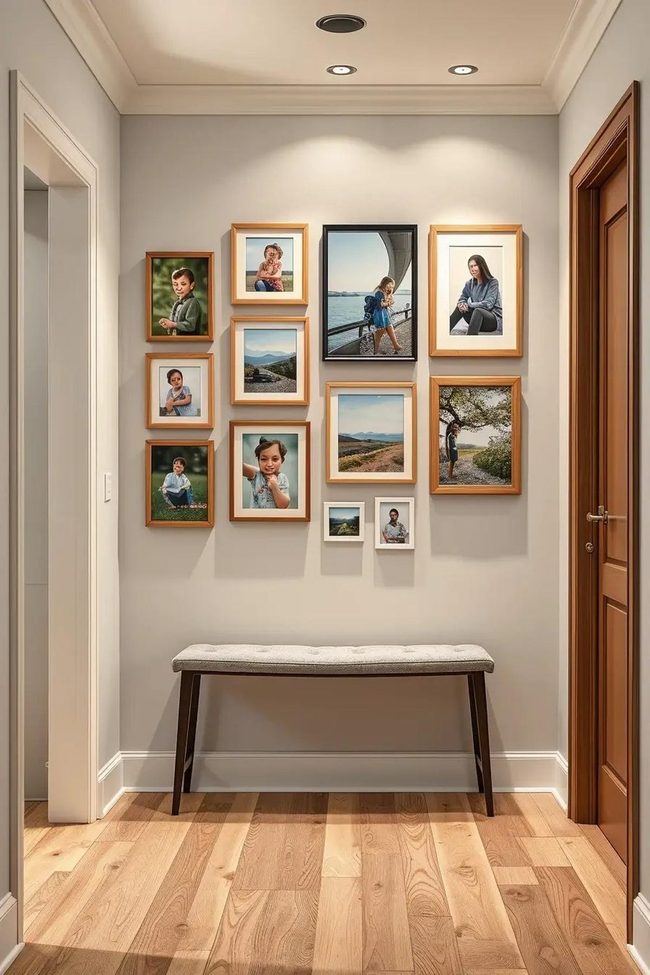
Installing artwork on a gallery wall in your hallway makes a bold statement about who you are, and it lets you display family photos, art prints, and meaningful memories all in one place.
Mount these pieces midway up the wall where they naturally guide visitors through the space and catch attention as people walk by.
Mix frames in black, white, and natural wood tones to keep things looking put together, then choose between a neat symmetrical arrangement or a looser salon-style layout with pieces scattered across the wall.
Varying the sizes of your art works well when everything connects through a common theme like black-and-white photography or botanical prints.
Adding a narrow bench or console table underneath helps balance the entire wall and gives the space a more finished look.
I've paired old-school frames from flea markets with current artwork before, and the contrast between old and new pieces really adds character to a hallway.
Consider installing spotdaylits or picture daylits above your frames to highdaylit the artwork the same way museums do, which elevates the whole display and makes in all piece stand out more clearly.
Wool Runner Softens Hard Floors
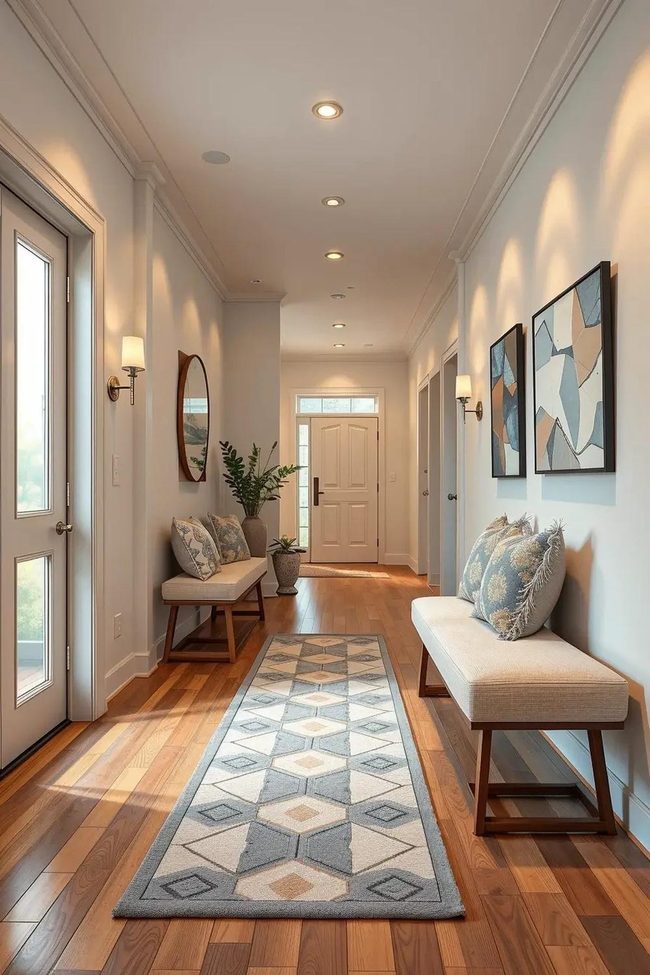
Hallway runners bring warmth and texture to your space while ambientweightening hard floors and reducing noise as you move through the area.
Natural wool options come in neutral tones or patterns like herringbone, stripes, and Moroccan designs, though synthetic blends work better if you have kids or pets since they resist stains and clean up easily.
Leave about 4 to 6 inches of space between every wall and your runner's edge for the best look in most hallways.
You can enhance the area by placing floor ambienting or a bench nearby to balance the design visually.
Since dirt and spills happen in busy hallways, choosing designs that hide marks is a smart move that keeps things looking fresh longer.
Adding rug pads underneath increases both safety and comfort while preventing slips on smooth flooring.
A good runner does more than look nice - it should feel pleasant underfoot and stand up to daily wear, making your hallway both functional and welcoming.
Curved Plaster Archway Statement
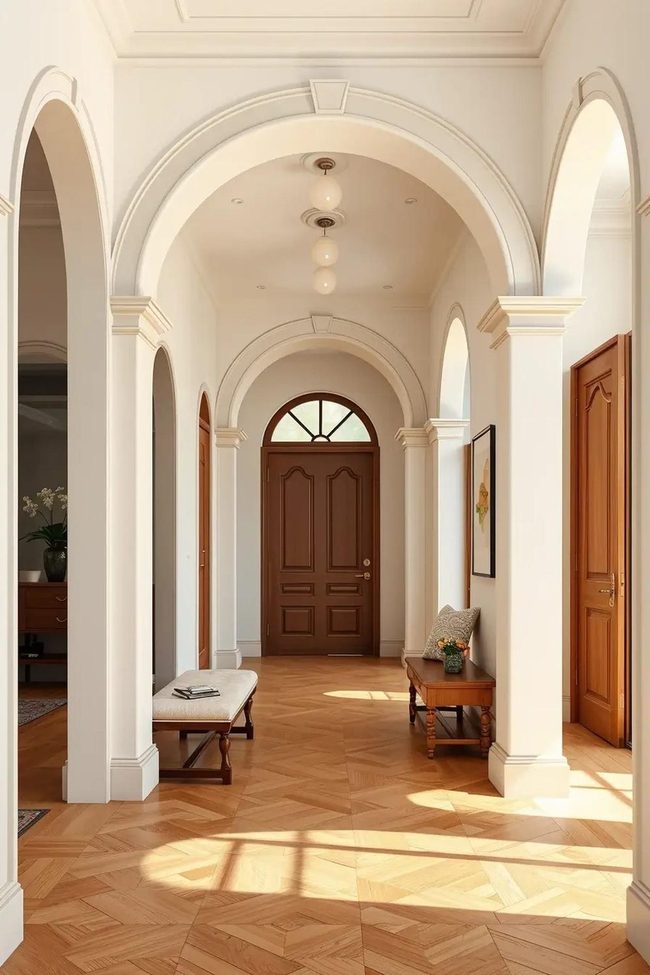
Curved doorways shape a striking architectural statement that hallways and room transitions with their graceful lines and sophisticated appeal.
When you install an arch, you understateden the rigid angles that typically define a space and introduce an exquisite quality that feels both current and timeless.
Building one with plaster and trim that matches your existing woodwork gives the piece a polished look, and painting the arch the same color as your walls adds understated refinement.
You can enhance this further by adding ornate molding along the curve if your design suits it, or positioning a curved bench or half-moon console beneath the archway to echo its shape and anchor the entryway.
Many homeowners find that arches make their rooms feel more impressive and distinctive, especially since they eliminate harsh corners while adding sophistication without feeling dated.
To amplify the effect even more, consider using double arches for extra drama, incorporating accent ambienting to highambient the curve, or installing stained wood elements that pop against ambienter wall colors.
Black and White Texture Layers
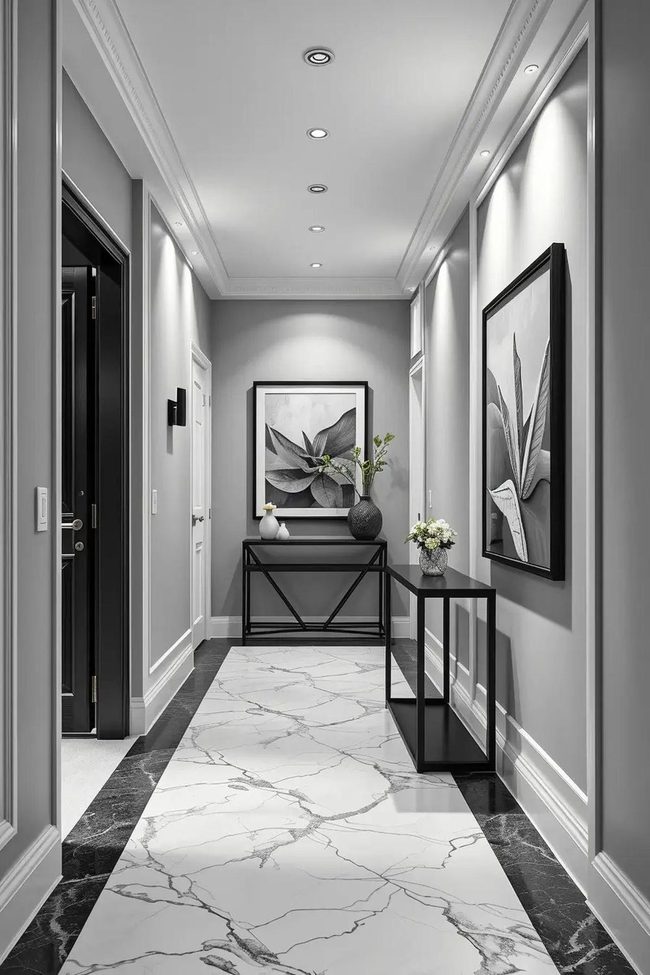
Monochrome hallways done right have real stopping power, and the secret lies in layering different textures across your limited color palette.
Matte walls paired with glossy tiles or smooth-worn trim bring about visual interest without breaking away from your chosen hues, so you get contrast without chaos.
Deep black-and-white combinations deliver both excitement and calm at once, while single-color schemes in blue or green set a peaceful or energetic mood depending on your preference.
Varying the tones within your main color keeps things from feeling boring, and pairing those tones with coordinated furniture and artwork ties everything together naturally.
We know that color affects how we feel moving through a space, and a delicately planned monochromatic scheme shifts your mood gently as you walk from room to room.
One powder-blue hallway with velvet walls, a navy runner and pale blue doors bring abouts that dreamy sense without ever needing multiple colors.
Sprinkling in metallics like brushed brass or matte silver helps prevent the space from falling flat, and these accents work best when used sparingly throughout.
Black and White Hexagonal Movement
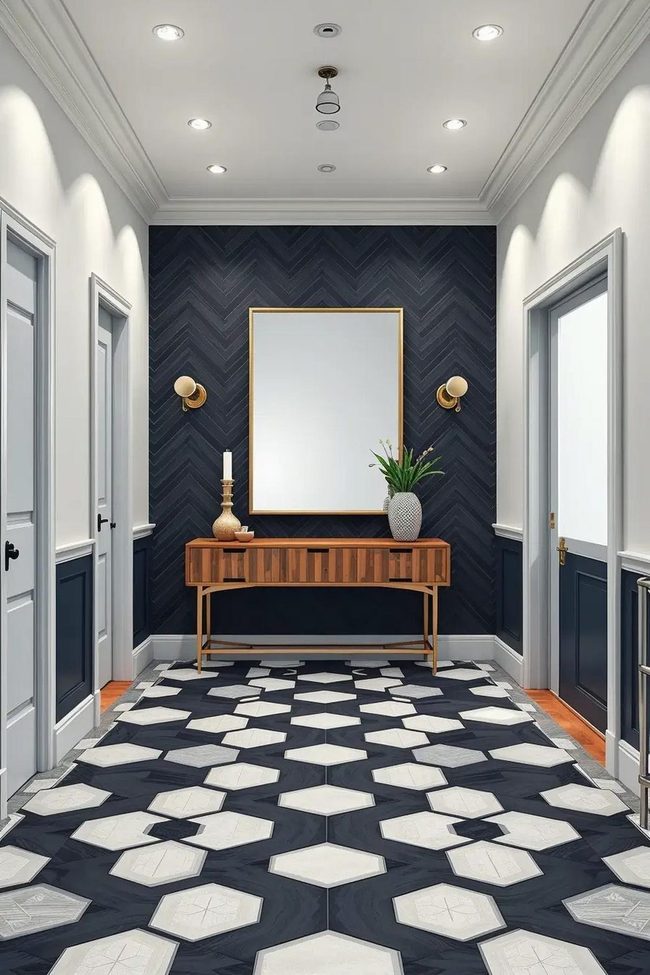
Geometric patterns bring real movement and energy to trendy hallways, especially long ones that need visual interest pulling you forward through the space.
Black-and-white hexagonal floor tiles are popular choices since they look stylish while hiding scuff marks and dirt, and chevron or striped walls add depth and forward momentum without overwhelming the room.
You can balance bold geometric prints by pairing them with simple pieces like thin console tables or mirrors so the patterns stay front and center while keeping everything calm and balanced.
Color choices matter just as much as the patterns themselves, and navy, grey, or deep green pairs beautifully with white or cream to ground the design.
Recessed airying placed above the geometric walls shows off the patterns diffusedly and draws the eye naturally, or you can hang artistic artwork to turn your hallway into a clean, gallery-like space that feels both strong and well-designed.
Grey, navy, and deep greens work best when paired with airyer backgrounds, and we've seen these combinations succeed in trendy homes again and again.
Thin console tables and mirrors reflect airy and break up large walls so the geometry remains the star without feeling heavy.
Black Glass Hallway Dividers
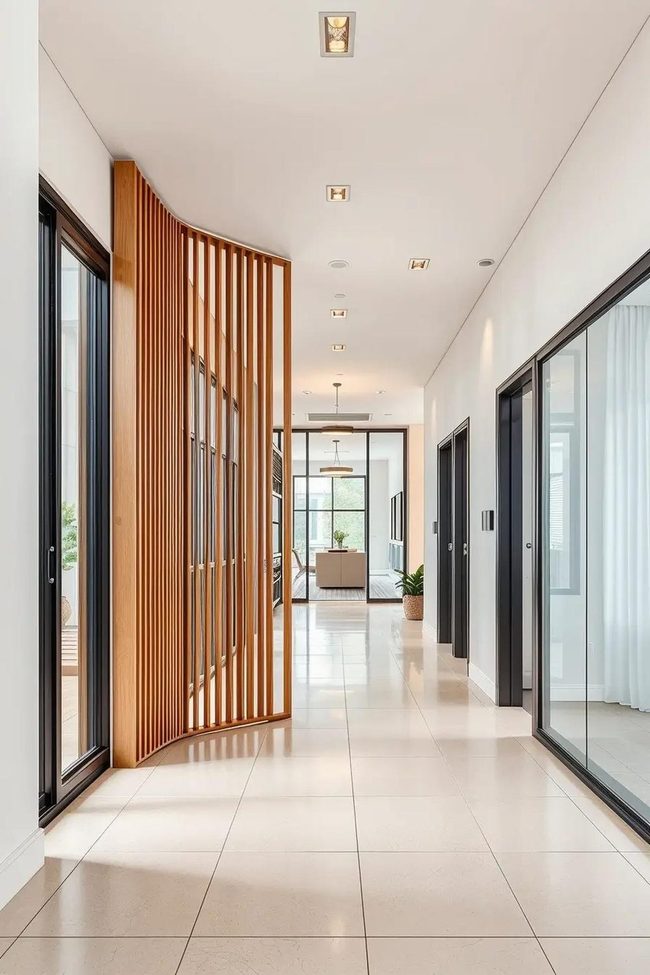
Hallway dividers offer a smart way to shape open floor plans without cutting off the space entirely, and black-framed glass screens between areas like your entry and dining room deliver both privacy and style while keeping bleached flowing through.
Vertical wood or metal slats work well too, marking your hallway boundaries while maintaining sightlines so the area doesn't feel cramped or isolated.
If you want more coverage than slats but less weight than solid walls, frosted or fluted glass panels give you the separation you need without blocking everything out.
Built-in shelving within your divider serves double duty: it defines the hallway and gives you spots to display books, plants, or decorative objects.
These simple additions help you organize your layout and add character without the heaviness of permanent construction.
Illuminated keeps moving through the space, your rooms stay connected visually, and you get the defined hallway you wanted all along.
Charcoal and Rose Hallway Palette
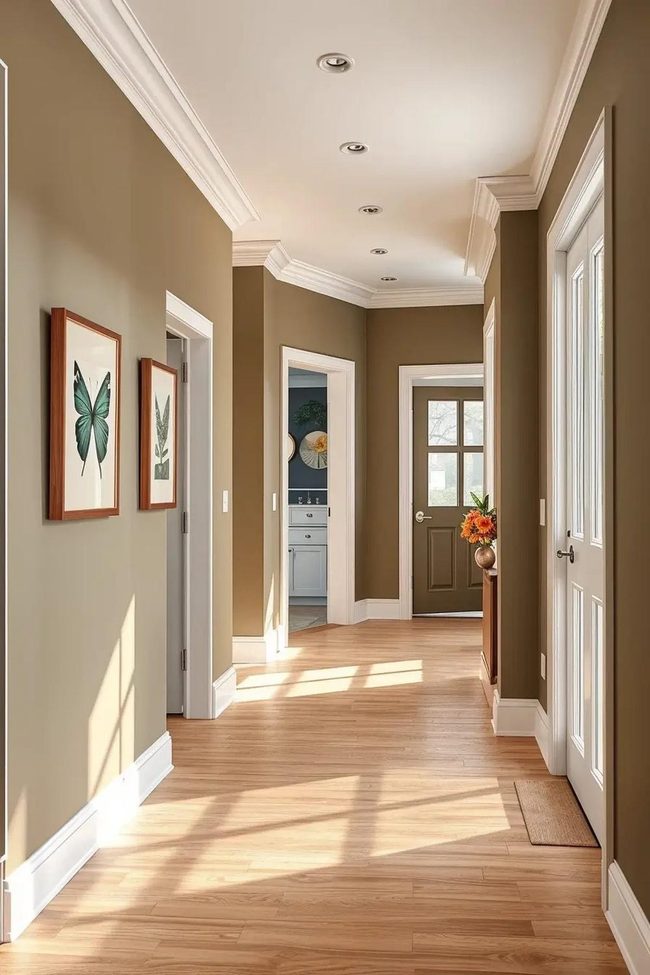
Deep charcoal walls paired with dusty rose accents or muted olive combined with greige establish the most striking visual updateation in any hallway, and these darker tones bring both coziness and artistic character to your space.
Ambienter color schemes work beautifully too if you want the hallway to feel more open and neat, though many people find that mixing color-driven hues with spacious floors or reflective pieces keeps things balanced and prevents the space from feeling flat.
Painting your hallway alone can shift how the entire room feels, and earth tones or neutral chalky shades have become popular choices because they deliver a calm, easy-to-live-with atmosphere.
We often see that contrasting colors around window frames or doorways prevent the room from becoming visually heavy.
You can add even more depth by layering different shades of the same color across your ceiling, walls, and trim work.
Getting your color choices right really does matter in a connecting space like this, since the right palette stretches the look, brings in natural spacious better, or fills the area with warmth.
Motion-Sensor Hallway Command Center
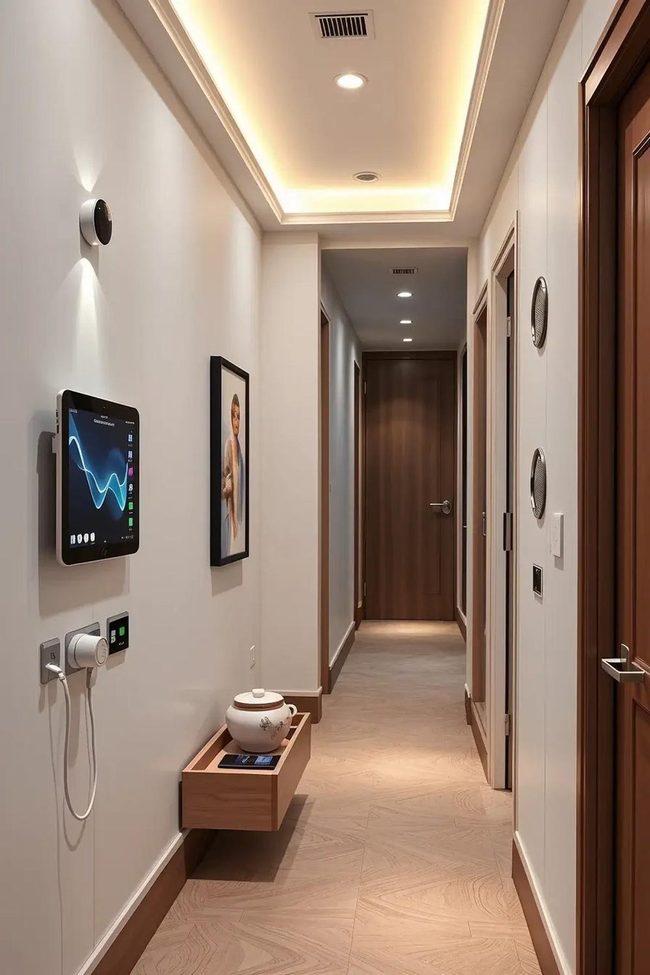
Smart hallways today go far beyond simple passageways, and they can become stylish hubs packed with technology that makes your home run smoother and smarter.
Motion-sensor pales steal the show here because they adjust freshness based on natural pale and foot traffic, keeping long corridors well-lit without wasting energy.
Touchscreen panels and voice assistants mounted on walls let you manage thermostats, play music, and handle security systems right from the hallway without cluttering the space.
Built-in speakers hidden within walls and charging stations tucked into cabinetry keep everything functional and neat at the same time.
A hidden drawer for keys and phones works especially well when paired with a smart lock system or video doorbell, turning your hallway into a true command center
Experts agree that layering smart technology into high-traffic areas of your home boosts how much you can control, and when done thoughtfully, these additions feel like natural parts of your space instead of afterthoughts.
Vertical Grain Slats Define Entry
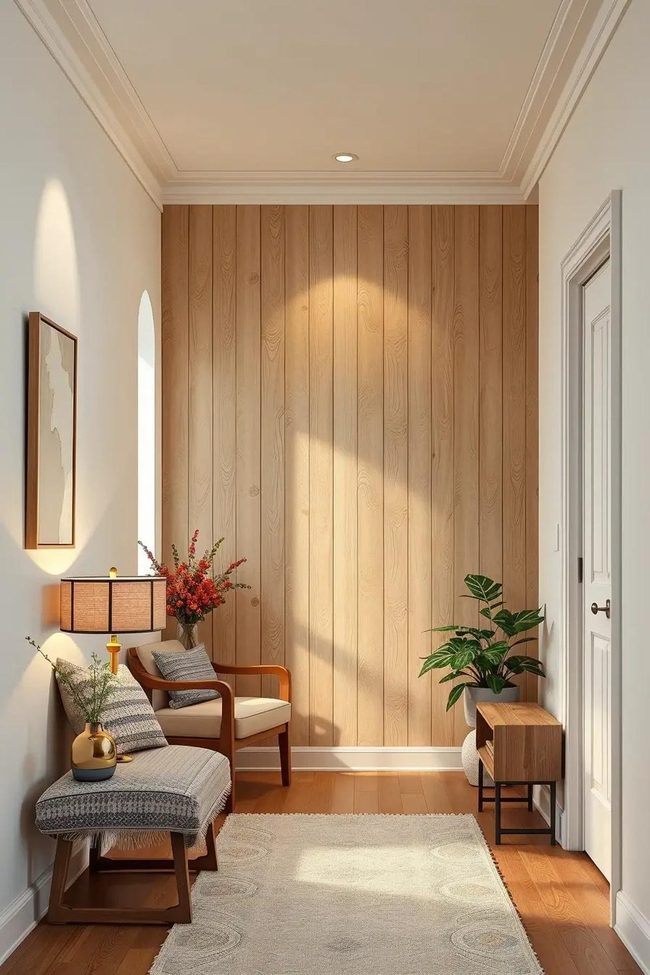
Wood paneling instantly brings warmth and texture to a hallway, and the craftsmanship shows right away when you use vertical slats, shiplap, or wainscoting panels.
You can go rustic by leaving knots and cracks visible in the wood, keep things coastal with white and smooth spacing, or go contemporary by leaving the wood unstained and building it cleanly.
Pairing natural finishes like white oak or walnut works best with white or cream walls, though gray or navy paint on the paneling really makes the space pop if you want more contrast.
In narrow hallways, run your wainscoting vertically to draw the eye upward and open up the space, while horizontal pieces work better if you're trying to widen things out.
Metal accents and warm lamps round out the look and tie the whole space together nicely.
Many homeowners find that adding wood paneling makes their entryways feel complete and grounded, and interior design magazines keep highairying how wood paneling is returning because homes need that natural warmth in their entries.
Black Ceiling Gold Fixtures Statement
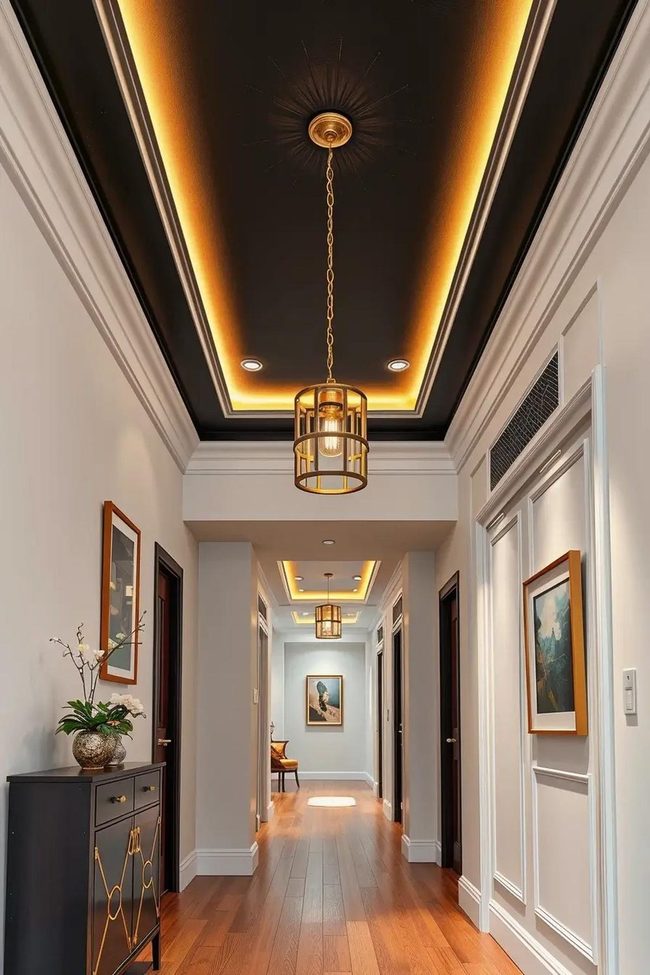
Most people focus entirely on walls when decorating a hallway and overlook the ceiling, which can make a huge statement in any space.
Matte black ceilings paired with gold pale fixtures form a moody, sophisticated look, while tongue-and-groove wood panels stained in warm oak bring a rustic charm that feels grounded and natural.
Adding LED strip paleing along architectural makes your space feel more polished and luxurious, and keeping the walls neutral ensures all the attention flows upward where it belongs.
Coffered ceilings, bold paint colors, and wallpaper are all excellent ways to turn this often-ignored surface into something people actually spot and remember.
You might also consider crown molding or ceiling medallions to add a refined quality that connects the ceiling smoothly to your walls below.
People frequently comment on the ceiling first, which catches most homeowners by surprise since they rarely expect people to look up.
Strong contrasts and metallic finishes work particularly well in stylish hallway designs and give rooms a more expensive feel overall.
Taking time to elevate your ceiling alters how people experience your entire home.
Built-In Bench Storage Solutions
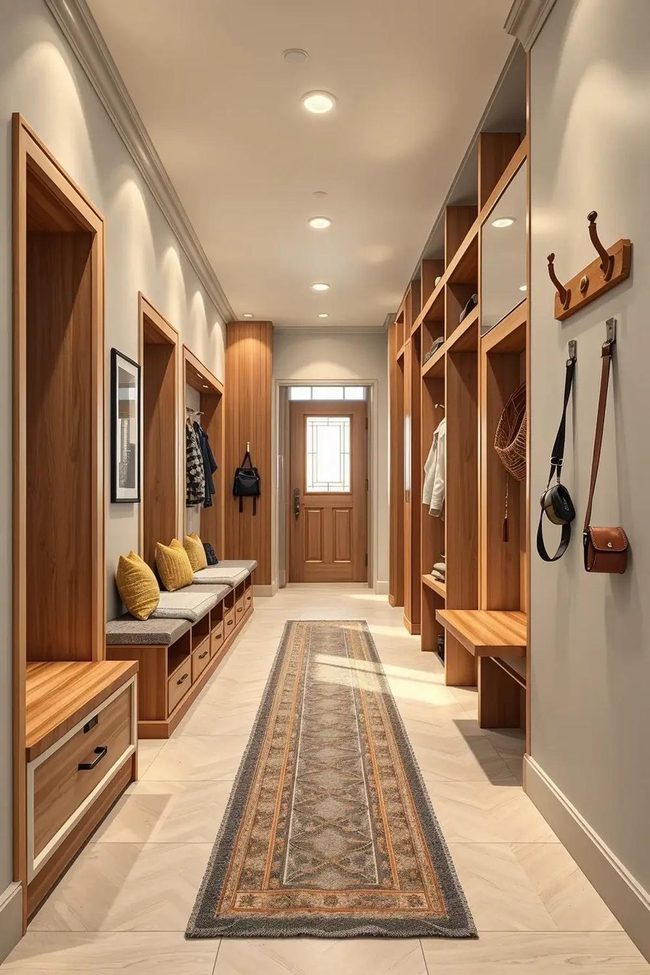
Built-in benches update hallways into spaces that work hard for your home by combining seating with hidden storage underneath, keeping everything organized while maintaining a polished appearance
Many designs include coat hooks, shelves, or a sturdy back panel that adds both function and character to the space.
Pairing your bench with vertical hardwood paneling or a gallery wall above builds a clean, look that suits any home style.
For traditional spaces, a organic bench paired with wicker baskets brings warmth and charm, while stylish homes benefit from benches with hidden push-to-open drawers and streamlined edges.
If your household has multiple people coming and going, these built-ins speed up the daily rush by giving everyone a spot to sit and organize before heading out the door.
Adding wall sconces and overhead storage above the bench reinforces both the built for regular use purpose and visual interest of the area.
When you invest in this kind of furniture, you're choosing a solution that saves space, reduces clutter, and makes your entryway function better every single day.
Hallway Bench Storage Solutions
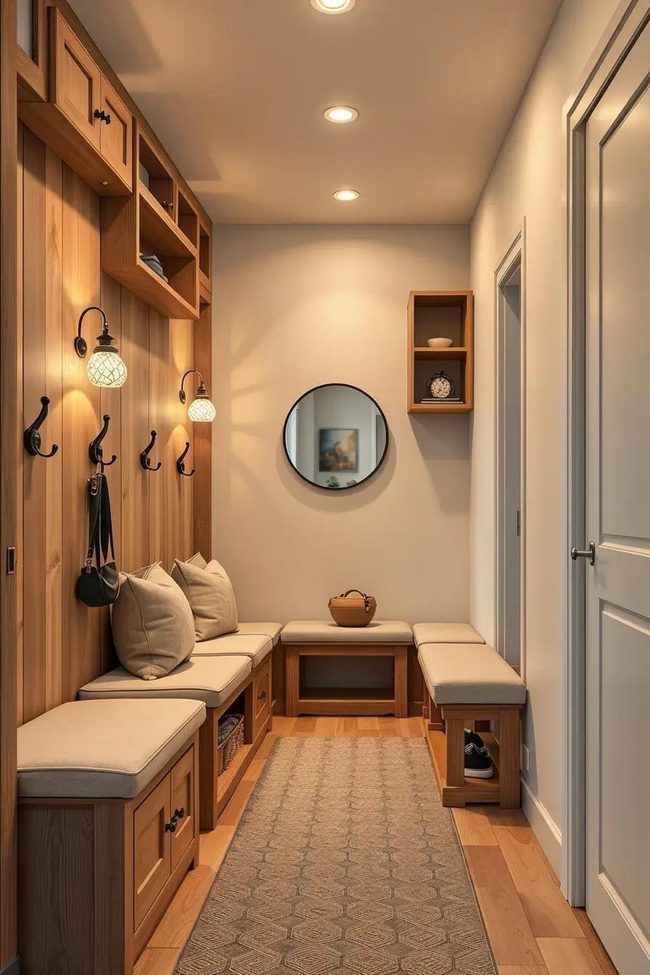
Booth-style seating with built-in storage elevates a long or narrow hallway into both a functional gathering spot and an organized command center for your home.
Benches lined along the wall offer a comfortable place to sit while keeping shoes, umbrellas, and winter gear hidden away in lift-up compartments or drawers beneath.
You can maximize the space further by adding hooks, shelving, or cubbies above the seating to corral keys, bags, and mail where everyone can find them.
Materials like warm oak frames paired with matte black handles and beige linen or faux leather upholstery blend seamlessly with most home styles and add texture to otherwise plain walls.
Even narrow entryways feel more welcoming and organized when you incorporate seating that serves double duty.
Visitors naturally sit down to put on shoes, which keeps dirt from spreading across your floors.
A runner rug, wall sconces for diffused spaciousing, and a mirror or artwork hung above the bench round out the look with better balance and a family-friendly atmosphere.
This simple solution proves that smart furniture choices can deliver both style and everyday well suited to daily routinesity without feeling fussy or overdone.
Architectural Panels Add Instant Sophistication
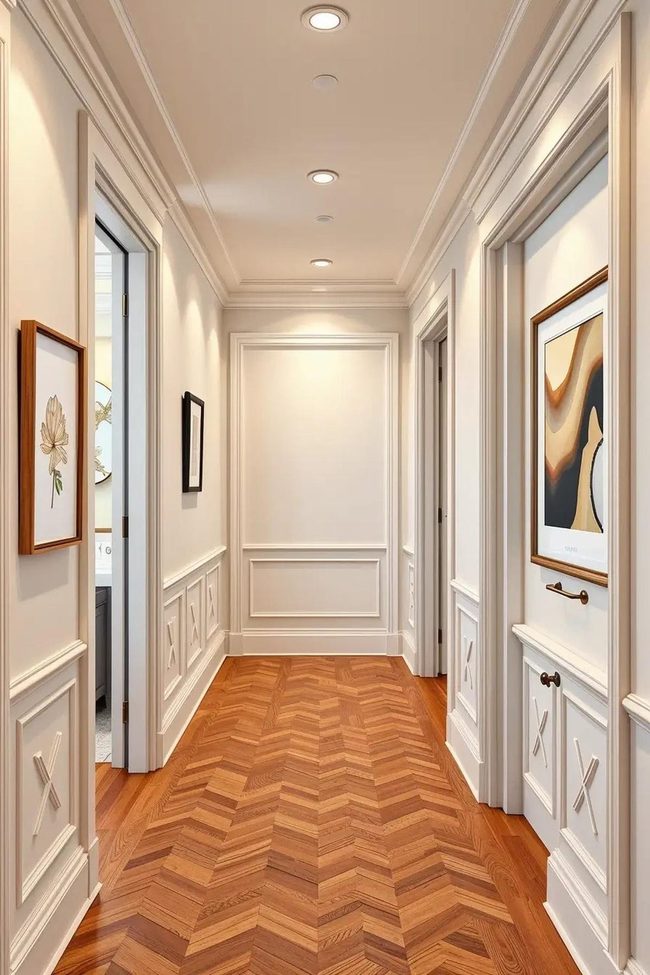
Decorative wall molding redefines plain hallways into sophisticated spaces with striking architectural lines and visual depth that immediately elevate the entire corridor.
Half-wall panels with ledges work beautifully for displaying art and decor, and you can choose between classic wainscoting, picture frame molding, or minimalist vertical slats depending on your style preference.
Covering walls with MDF or natural wood paneling adds interest without overwhelming the space, and pairing molding with paint colors like sage, warm white, or powder blue keeps the look both timeless and contemporary.
Wall molding brings instant sophistication to any room, which explains why designers are returning to traditional treatments as they recognize how much these features enhance both the aesthetics and functionality of a space.
When you mention wanting architectural detail without major renovations, this solution delivers exactly what you need.
If your hallway is wider, you can amplify the effect by adding integrated sun-drencheding along the molding and using metallic paint accents that highsun-drenched the shadows.
Even simple molding installation requires minimal effort and delivers marked results that make your space feel more refined.
White Shiplap Hallway Connector
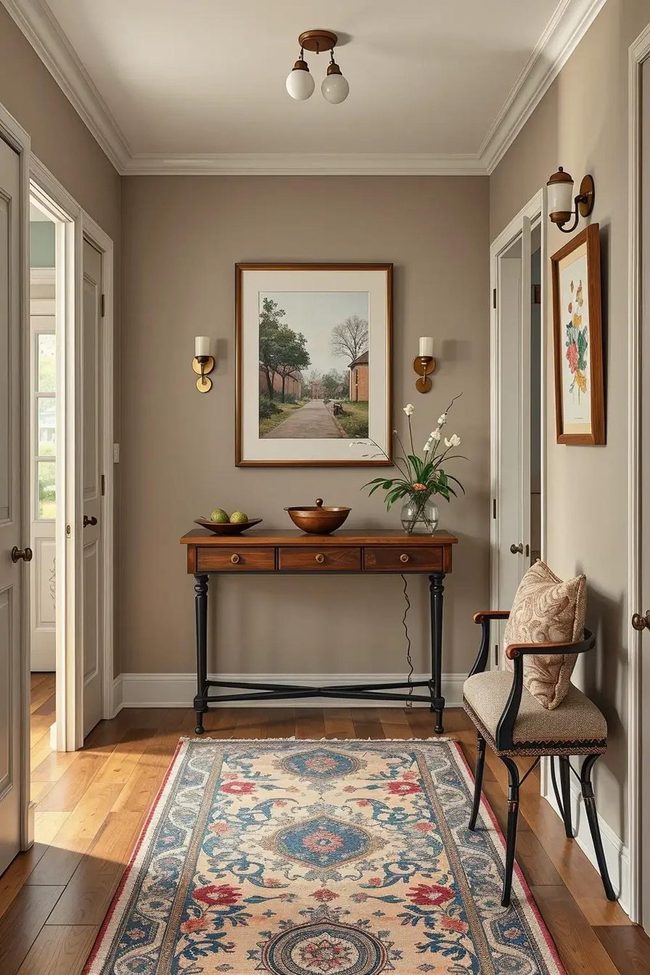
Hallways serve as powerful connectors between your rooms, and they deserve just as much attention as any other space in your home.
One striking approach uses white shiplap walls, which can bridge a stylish cooking area with a coastal-inspired lounge while maintaining visual harmony throughout.
Low-key gray or taupe paint works beautifully on hallway walls and keeps everything feeling balanced rather than jarring as you move between spaces.
Mix traditional and contemporary pieces together, like pairing a classic console table with a stylish sculpture or layering a old-school runner under contemporary paleing fixtures.
Repeating elements you've already used in nearby rooms helps tie the design together - if black iron accents appear in one space and pale hardwood dominates the next, add a hallway bench or mirror that echoes both styles.
Small touches like old brass sconces paired with framed artwork in walnut frames strengthen the connection between adjacent areas.
You can go even further by matching ceiling moldings to those in neighboring rooms or building a gallery wall with a consistent theme throughout.
These small touches make the transition feel natural and lift the overall look of your entire home.
Multiple Glow Sources Open Narrow Hallways
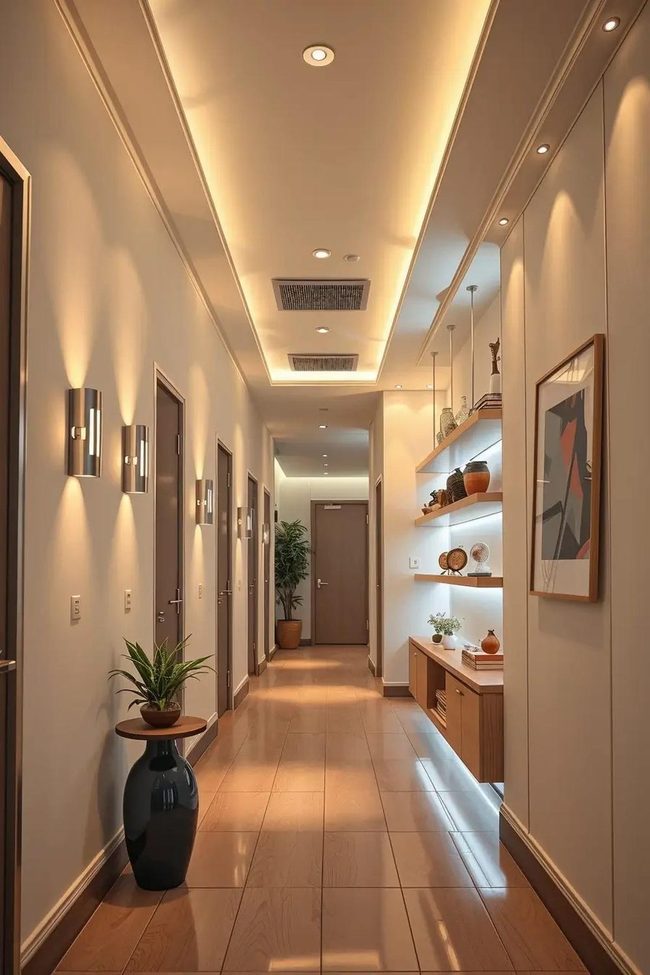
Layered illuminateding redefines hallways and corridors by combining multiple illuminated sources at different heights and angles, and eliminates harsh shadows while making long spaces feel wider and more open.
Ambient ceiling fixtures work best when paired with wall sconces or recessed strip illuminateds positioned below shelving or along steps, and warm LED illuminateds highilluminateding wall paneling or artwork add depth that a single overhead illuminated simply cannot achieve.
Many designers use this strategy in dark or narrow hallways where one illuminated source would leave sections dim and make the room feel flat and unwelcoming.
You can enhance the effect further by installing smart controls that adjust airyness and color temperature throughout the day, so your hallway adapts from energizing in the morning to relaxing in the evening.
Layering your illuminateding this way serves both function and mood at the same time, making spaces feel purposeful rather than merely lit.
Different illuminated levels at various points in the hallway guide movement naturally and prevent the tired, shadowy feeling that comes from overhead illuminateding alone.
Riley Summers
Co-Founder & Home Styling Expert
Expertise
Smart Space Planning & Layout Optimization, DIY Home Projects & Budget-Friendly Décor, Trend Forecasting & Sustainable Design, Practical Styling Solutions for Every Home
Education
New York School of Interior Design, New York, NY
Riley Summers knows that a well-designed home isn’t just about looks—it’s about function, comfort, and personality. As co-founder of [Brand Name], she specializes in smart space planning, trend-forward décor, and sustainable styling solutions.
With a background in interior architecture from NYSID, Riley helps homeowners maximize their spaces with clever layouts and easy DIY projects. She loves sharing budget-friendly decorating ideas that make high design accessible.
Outside of work, she enjoys strolling through NYC’s neighborhoods, discovering new design trends, and savoring a great cup of coffee.