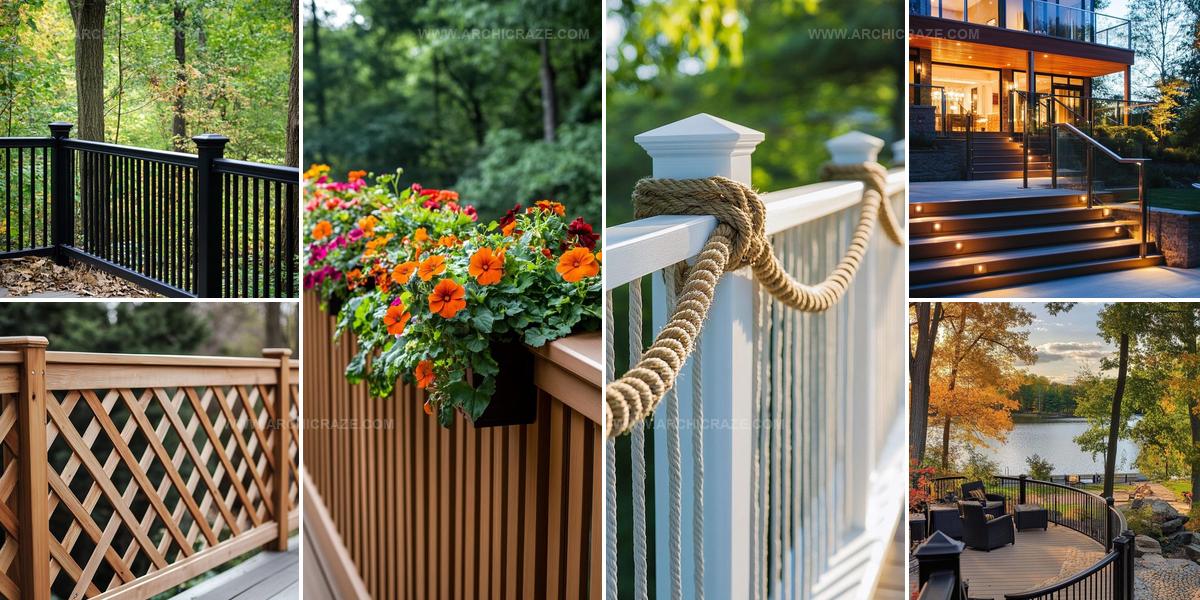
13 Smart Deck Railing Designs That Elevate Your Space

Deck railing designs can completely change how outdoor spaces look and feel while keeping everyone safe.
Beautiful railings blend function with aesthetics in ways that complement architectural styles.
Homeowners often overlook this important feature when planning renovations, yet it makes such a noticeable difference.
Whether modern metal, classic wood, or sleek glass panels suit the space better depends on personal preference and home character.
Simple updates to railings breathe new life into tired patios and balconies without major construction.
Budget-friendly options exist alongside premium materials, so finding something perfect becomes easier than expected.
The right choice will make spending time outside more enjoyable for years ahead.
White Balusters Against Dark Decking
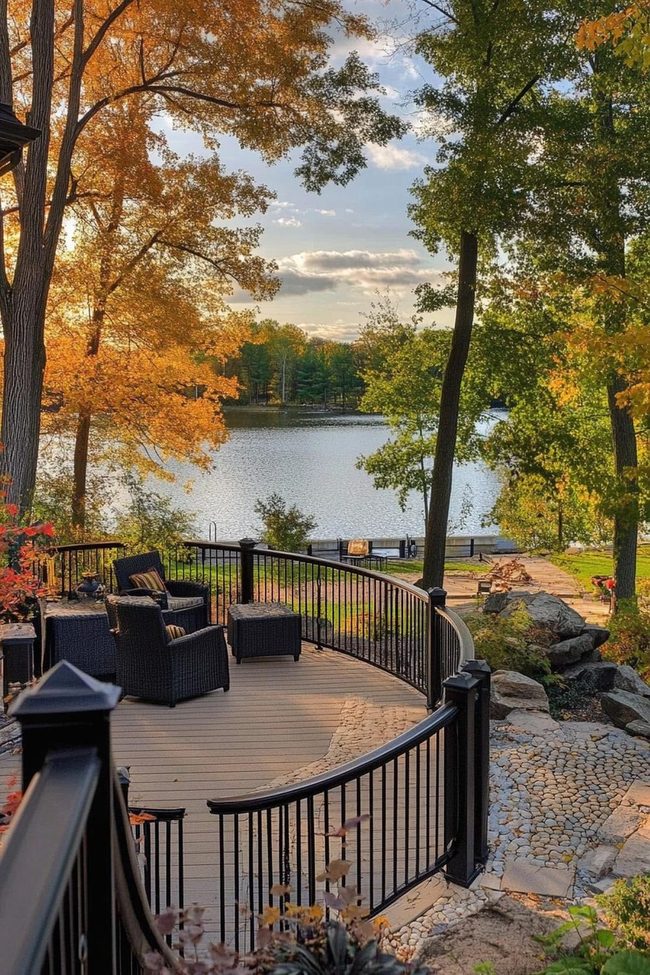
Choosing deck railing colors and materials that stand out against your surroundings gives your garden space real design presence, and radiant white balusters or bold black metalwork add the most eye-catching effects when paired with contrasting deck boards and home finishes.
High contrast light and dark combinations feel crisp and modern, while softer pairings like sky blue rails on brown decking offer a more balanced appeal.
You can also let monochromatic beige railings fade into the background so your color-driven green landscape becomes the star of the show, or go with gray tones paired with weathered decking for a comfortable, understated look.
Using the color wheel to guide your choices helps you build palettes that actually pair naturally instead of clash.
Contrasting railings draw attention where you want it and can obscure less attractive areas of your deck.
Unique colors, textures, and shapes in your railings make an impact without overwhelming the rest of your space.
We recommend taking design risks that feel right for your home and personal style.
Let your creativity shine through in the railing choices you make.
Geometric Patterns Define Deck Character
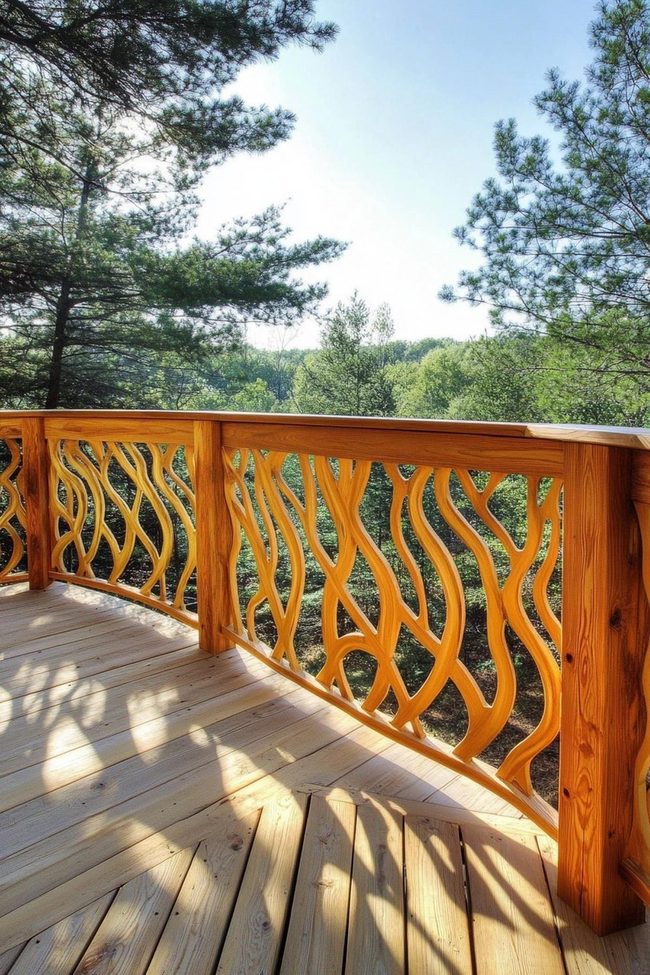
Geometric patterns like zigzags, chevrons, and crisscrosses deliver immediate visual punch to any deck style, and combining vertical and horizontal baluster pieces creates intriguing depth and shadow lines that make your railing stand out from the crowd.
Rotating overlapping balusters in opposing directions gives you a three-dimensional appearance that really catches attention.
You can also explore freeform patterns with delicate curves for a softer feel or bold wavelike forms for drama, and mixing freeform and linear styles together adds organic contrast that feels fresh and modern.
Playing with two different colors or materials in the same railing boosts the dynamic effect, pairing composite balusters with aluminum rail frames or blending different textures creates visual interest in ways standard railings simply cannot match.
Custom wooden railings work well for hands-on DIYers, though professional metalworking or welding skills are necessary for intricate steel, iron, or aluminum pieces, and complex designs typically cost $100 per linear foot or more.
If budget is a concern, many retailers offer patterned railing infills that slip into standard metal frames, giving you style without the hefty price.
Whatever colors and shapes you select, unique patterns and textures transform your deck railing into an artistic element and help you embrace your creative side to craft a dynamic outdoor living space.
Synthetic Rope Railings For Coastal Decks
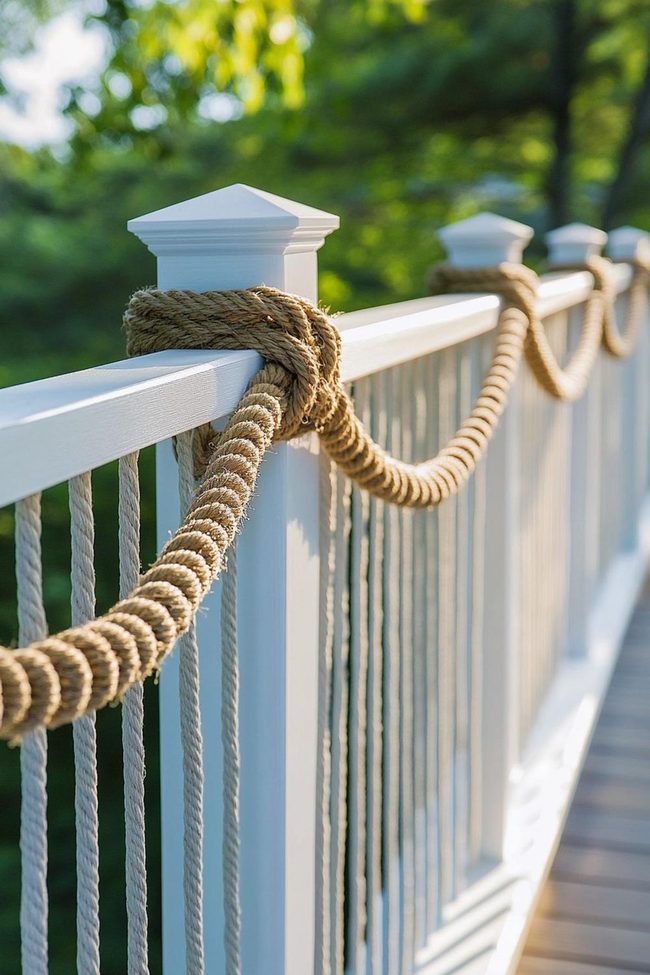
Rope railings bring a breezy nautical feel to your patio space with their casual, free-spirited character that goes beyond what traditional cable systems can offer.
These systems use durable synthetic fibers strung horizontally through plastic or metal stanchions, and you can add knots between sections for extra texture and visual interest.
Matching rope handrails pair nicely with the deck rails to tie your design together.
They work beautifully at beach houses, lake homes, and coastal cottages where the casual ropes evoke sailing and water adventures.
Synthetic rope materials resist mildew and weather damage, keeping maintenance simple and requiring just occasional tension adjustments.
Prices range from about $30 per linear foot for basic kits up to $70-$100 per foot for installed systems with marine grade stainless steel hardware and custom options.
We appreciate how their unfussy style contrasts nicely against intricate house trims or natural stone features.
If you want a railing that feels more grounded in natural fiber aesthetics than modern cable designs, rope systems deliver both personality and efficient durability for any patio area.
Flowing Metal Curves Transform Decks
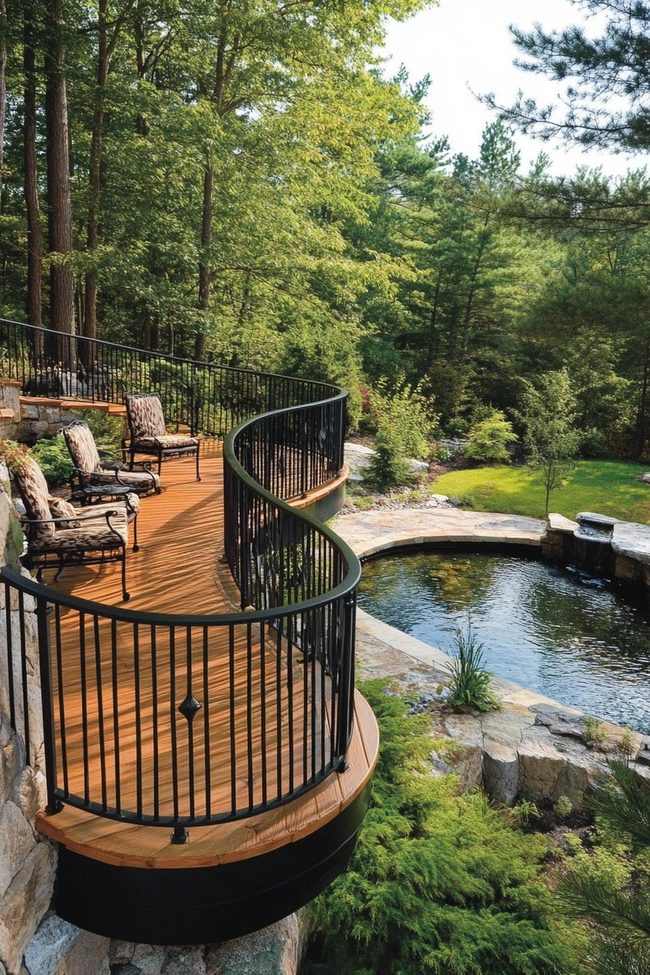
Curved railings transform your deck with flowing lines that catch light in ways straight edges simply cannot, making them a standout feature that sets your space apart from standard designs.
Most people stick with basic straight railings because they're cheaper and easier to build, but adding curves brings a natural elegance that complements curved walls, arches, and custom landscaping on your property.
If you have a poolside deck, curved railings echo the oval shape of your pool and enhance its form beautifully.
Even gentle curves that angle along your deck's perimeter make a sophisticated statement without feeling overdone, while bolder serpentine shapes introduce more dramatic flair.
Mixing curved and straight sections together adds a designer-quality look without making the structure too complicated.
Metal curved railings need special bending skills and labor, so plan on spending $125 to $250 per linear foot for the fabrication and installation work.
Wood railings with curves require skilled carpentry to piece smaller segments together, and both materials demand extra effort and cost.
That extra investment pays off with a railing that's completely unique and looks refined compared to what your neighbors probably have, so curved railings work especially well if you've already invested in upscale architectural finishing touches or custom styling throughout your deck.
Lightweight Aluminum Deck Railings
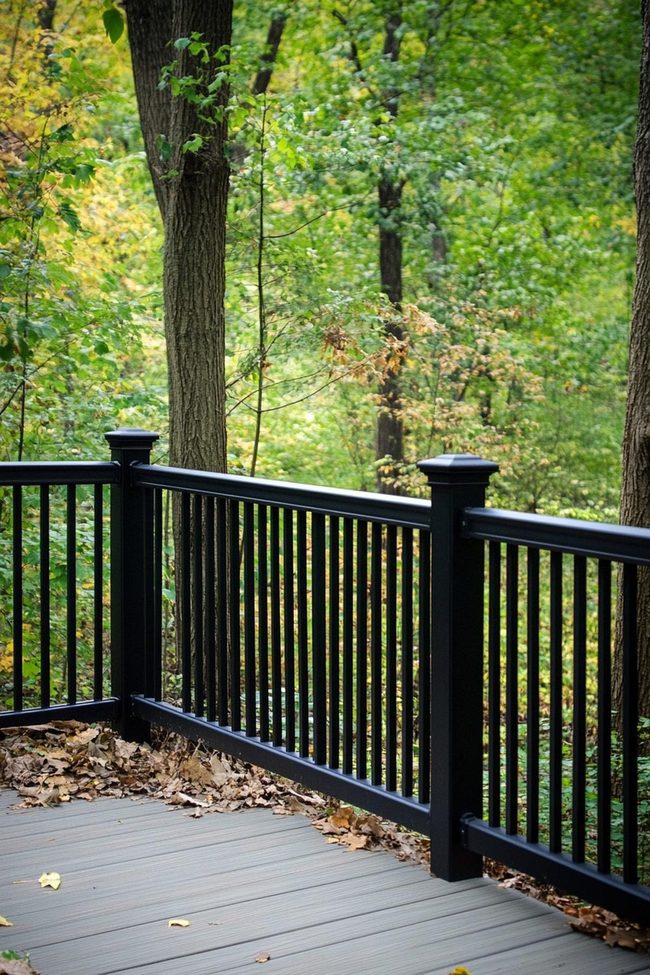
Minimalist aluminum cable railings deliver an ultra-modern look with horizontal cables spaced 4-6 inches apart stretching between aluminum posts to set up an unobtrusive see-through design that maximizes your deck views while still meeting safety standards.
If you prefer something with more visual presence, aluminum railings come in picket, lattice, or glass infill panel designs that offer increased privacy and architectural interest.
Curved aluminum railings work beautifully on homes with distinctive features like arched windows, helping the railing blend seamlessly with your home's existing style.
Beyond aesthetics, aluminum stands out as one of the strongest and most durable deck railing materials available.
Weather fluctuations and elemental exposure don't damage aluminum the way they wear down wood or other materials.
Since aluminum resists rust and corrosion and requires virtually no upkeep, your railing will look great year after year without periodic refinishing or maintenance.
Basic powder-coated aluminum railings start around $35 per linear foot, making them budget-friendly, while cable railings run $55-$100 per linear foot installed.
You can also enhance your railing with optional upgrades like LED lighting or decorative post caps if you want added appeal.
Vertical Terrace Deck Rails
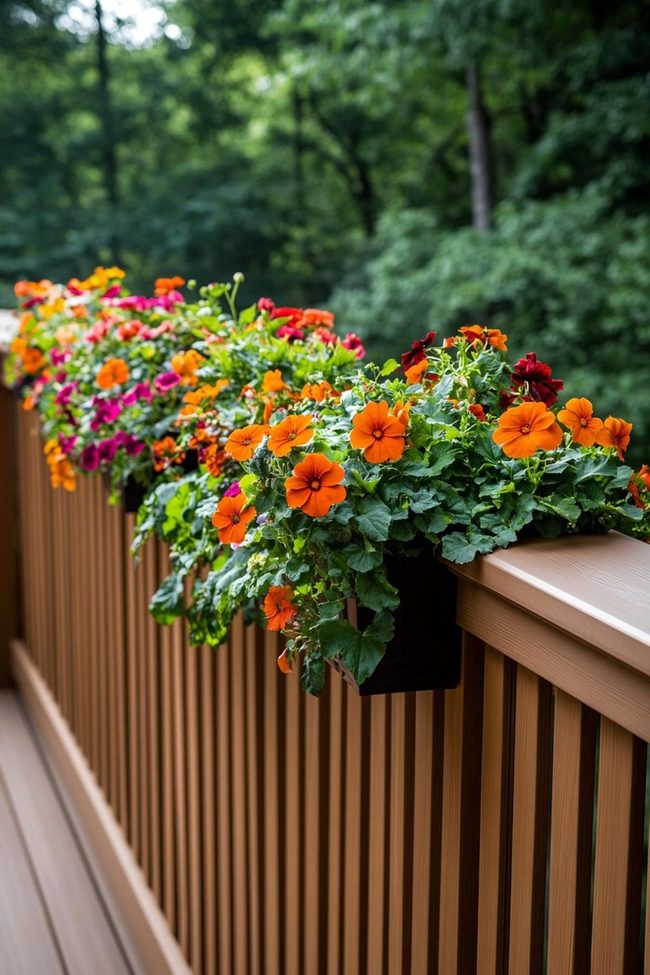
Flowers and foliage tumbling down your deck rails form living walls that transform the entire yard space into a layered garden.
Built-in planters let you grow flowers, herbs, and trailing plants without eating up your deck's usable area.
Most decks feature rectangular railing panels designed to hold pots, with metal or plastic boxes tucked inside wood or composite frames.
You can pick removable planter boxes for easier access when you want to change things out seasonally.
Sizes run from one foot to several feet across, so you can grow anything from small succulents to sprawling vegetable vines or blooming annuals.
Make sure your railing and posts can handle the weight of wet soil before you fill everything up.
These planters typically run between seventy and one hundred twenty dollars per linear foot, though custom designs for bigger spaces cost more.
Beyond the way they look, planted railings give you privacy, filter unwanted views, and even clean the air around your deck.
We like mixing ornamental edibles such as strawberries with your favorite flowering plants to make the space both useful and beautiful.
Proper drainage and regular care keep your railing boxes thriving, letting your vertical garden ideas expand upward instead of outward.
Two Rails Between Posts
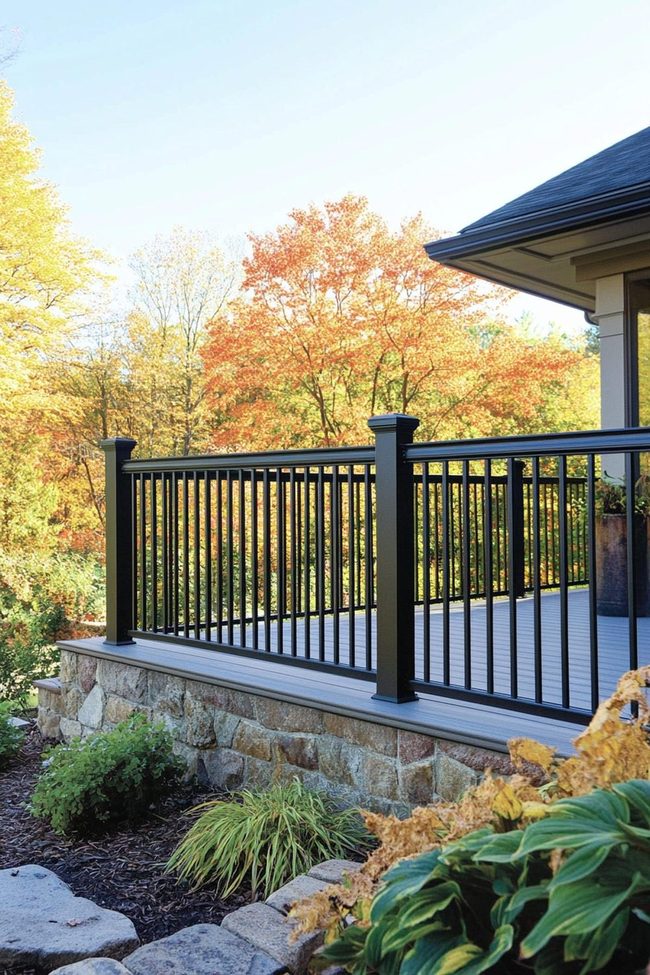
Post-to-rail railings strip away unnecessary elements and present you with a beautifully simple structure built on just two horizontal rails stretching between vertical posts.
Clean lines and uncluttered sightlines define this classic approach, which comes in wood, metal, or composite materials and works especially well for contemporary and transitional garden spaces.
Aluminum options feel lightweight and coordinate smoothly with other deck features, while composite post sleeves can wrap wood posts to match a composite deck seamlessly.
Without balusters filling the spaces between posts, you gain real freedom to integrate railings around steps, benches, and other structures without awkward design compromises.
Rail height variations add visual interest without blocking your view of the surrounding landscape, and the straightforward design keeps your focus on the natural beauty beyond the deck itself.
Installation tends to be straightforward enough for many homeowners to handle themselves, with costs starting around thirty dollars per linear foot for basic systems.
Despite their minimalist appearance, these railings meet all safety regulations and building codes for proper deck barriers.
Sometimes the most honest design approach turns out to be the most effective, and post-to-rail systems prove that functional simplicity and understated style belong together.
Diagonal Lattice Cedar Railings
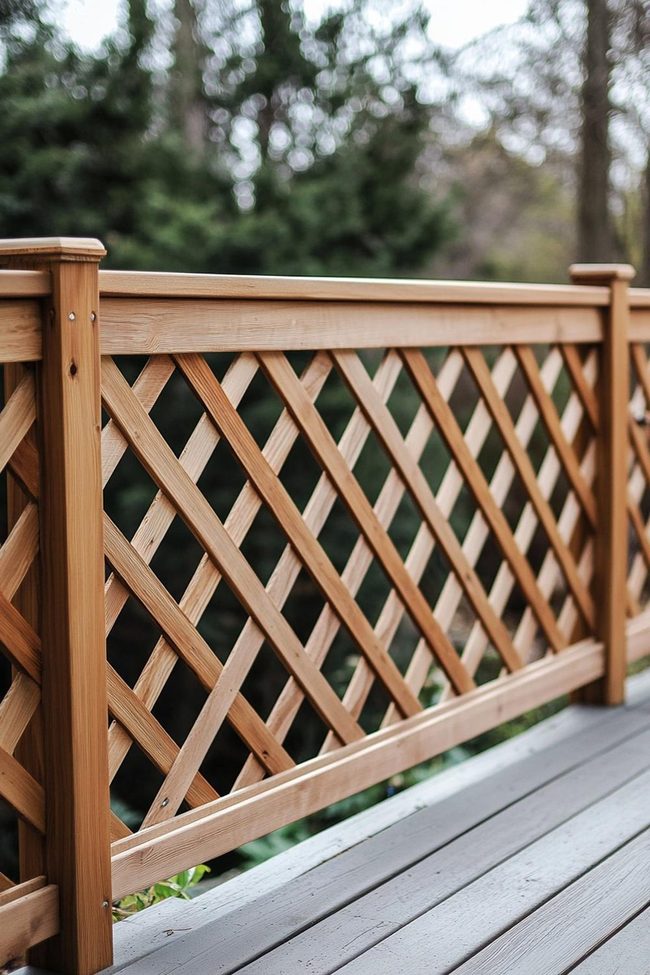
Wood deck railings showcase timeless charm through natural grain patterns and warm tones that immediately draw attention to your patio space.
You can choose from simple straight balusters or intricate designs, with lattice patterns being especially popular since they feature crisscrossing diagonal slats that blend traditional aesthetics with modern farmhouse appeal.
Cedar, redwood, and pressure-treated pine are all solid material choices, though redwood and cedar naturally resist decay better than other options.
Keep in mind that wood requires regular maintenance, expect to refinish your railings every two to four years with stain or paint to preserve their appearance.
You get wonderful customization possibilities since you can match the wood finish to any color scheme your home already has, and unfinished wood will gradually weather into a distinguished gray patina if you prefer that look.
Installation costs typically run between forty-five and one hundred dollars per linear foot when professionally built, though DIY kits for simpler designs can lower expenses if you're willing to handle assembly yourself.
Wood railings remain a smart investment because they add character to your deck while giving you flexibility in design and color, something that keeps them popular year after year.
White Picket Fence Charm
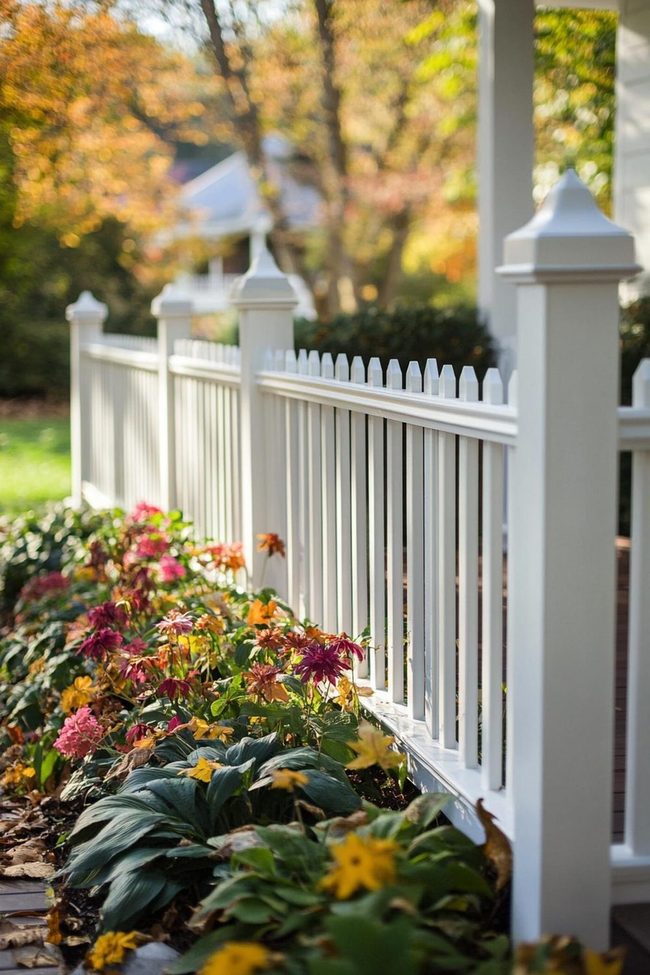
Picket railings stand out as the most visually distinctive railing choice, instantly evoking charming cottages and sprawling farmhouse porches with their evenly spaced vertical balusters and clean lines that feel both casual and polished.
You can find these classic railings made from wood, composite, aluminum, or vinyl, so whether you want the traditional look of wood or prefer something that needs less upkeep, there's an option that works for your deck.
Spacing matters quite a bit, closer balusters give you more privacy and keep pets and children safer, while wider gaps of four to five inches let your eye travel and make the railing feel more open.
When it comes to cost, picket railings typically run between fifty and one hundred dollars per linear foot once installed, which is pretty standard compared to other railing styles.
We recommend choosing durable materials that don't need constant sealing and staining, since that saves you time and effort down the road.
No matter what style your home has, picket railings work well because their simple design fits naturally with any exterior.
For people who love traditional design, pickets bring that homespun quality and practicality that never goes out of style.
Reclaimed Grain Pallet Deck Railings
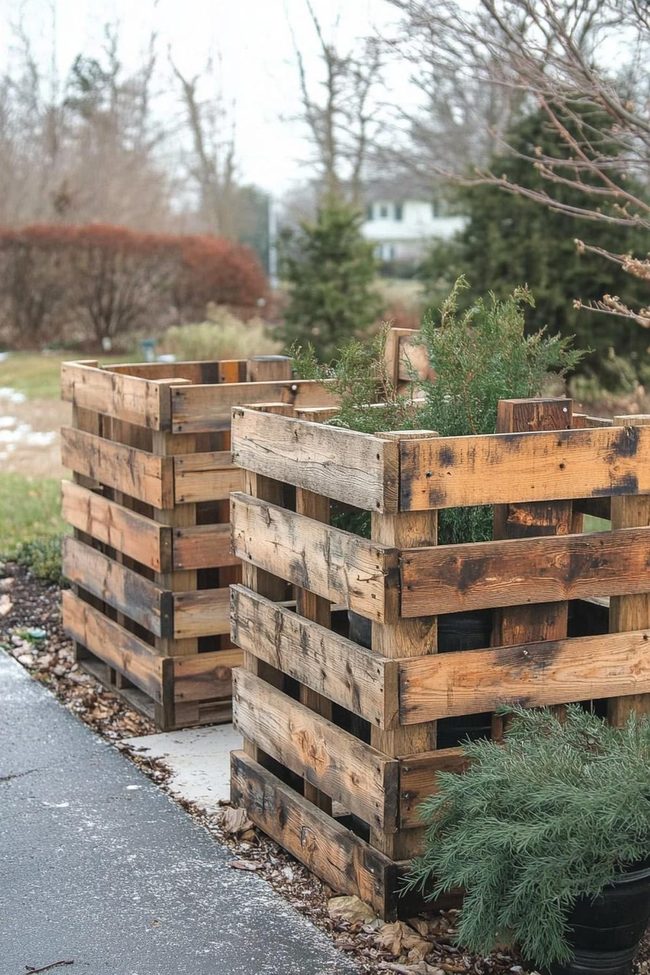
Recycled pallet railings give your deck a rustic farmhouse look while staying budget-friendly and good for the planet.
Old shipping pallets are easy to find for free or cheap at most home improvement stores, and many locations happily hand them over as discards.
Hunt for heat-treated pallets without broken boards or sticking nails, then saw or chop them into sections that become your railing pickets.
Wire brushing and sanding smooth out the wood and prep it for finishing, while staining brings out the grain and unifies the look.
Set sturdy 4×4 treated lumber or fence posts in concrete as your frame, spacing the pallet pickets 3-4 inches apart for safety and code rules.
Flipping picket direction back and forth adds visual interest, and leaving a 1-2 inch overhang into the post pockets keeps everything rock solid.
This project requires some carpentry know-how but saves serious money and keeps useful materials out of landfills.
When picking a railing style, think about how it fits your home's look, your climate, and what you need in terms of views, light, and privacy for your outside space.
Wood pickets offer classic appeal, while newer cable systems bring modern flair, so you can mix colors and textures to match your personal style.
Iron Scrollwork Deck Railings
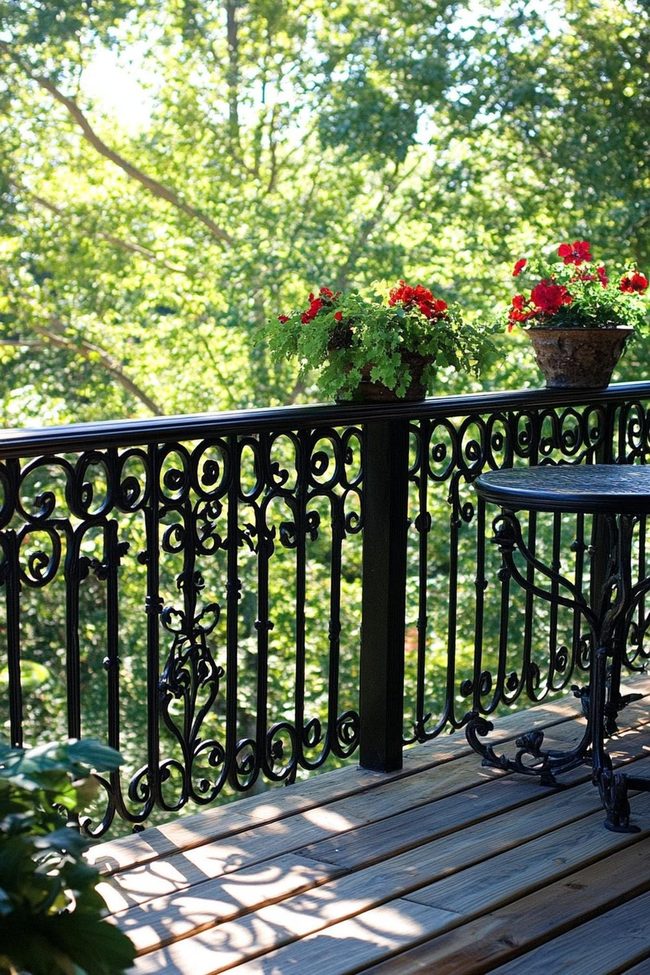
Metal railings offer distinctive visual possibilities that range from ornate wrought iron with intricate scrollwork and cast visual cues to stainless steel cable designs, with the latter's transparency allowing unobstructed views of waterfront or mountain scenery while staggered spacing and varying heights add both visual interest and safety redundancy.
Beyond aluminum, materials like steel, iron, and stainless steel deliver exceptional durability and can easily last for decades when properly maintained, making them ideal for homeowners who want long-lasting quality that withstands extreme weather, coastal salt spray, blistering heat, heavy snow, and pouring rain.
Wrought iron railings bring old-world character and classic ornamentation perfect for Mediterranean or cottage-style homes, while stainless steel cable systems provide that modern look you might prefer if contemporary design suits your space better, and custom coverings are available to help the cabling match your surrounding aesthetics.
Pricing varies considerably based on complexity and materials, with simple steel designs starting around seventy dollars per linear foot while elaborate custom ironwork can climb to two hundred dollars per foot or beyond, and labor-intensive installation, material costs, and finishing work all factor into the final expense.
Crystal Clear Deck Protection
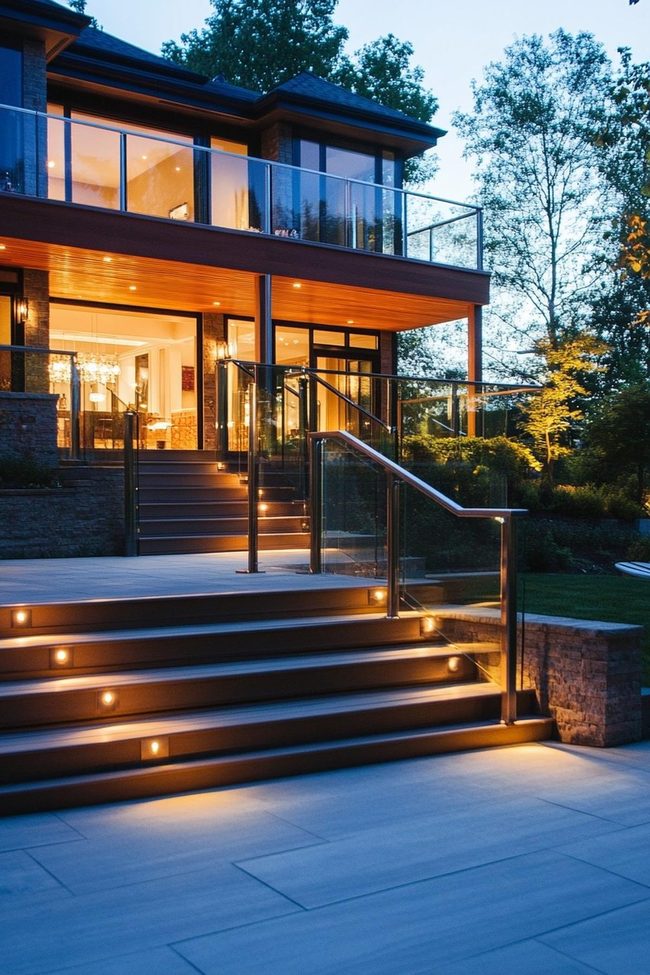
Glass deck railings deliver an unmatched visual presence with their transparent panels that showcase expansive outdoor views while keeping you safe from falling.
Tempered glass provides impressive strength and durability for this purpose, and the see-through quality produces an almost weightless, floating sensation that elevates your deck's appearance.
Frameless structural glass designs attach panels directly to support posts, forming an almost invisible barrier that works beautifully for modern homes and gazebos.
Stainless steel hardware pairs best with glass and enhances the clean aesthetic.
You can also integrate LED lighting into the glass structure to achieve a striking nighttime glow that updates your outdoor space.
Horizontal cable railings offer another option, allowing tempered glass balusters to open up the railing compared to traditional wooden styles at around $70-$120 per linear foot installed.
Cost remains the main challenge with glass railings, as fabrication and installation typically start at $100 per linear foot and often climb higher depending on complexity.
Ongoing upkeep stays fairly simple, but the substantial upfront expense prevents many homeowners from choosing this route.
Still, if you want dramatic views paired with modern style, glass railings stand apart as a unique and breathtaking addition to any deck.
Grey Composite Railings Low Maintenance
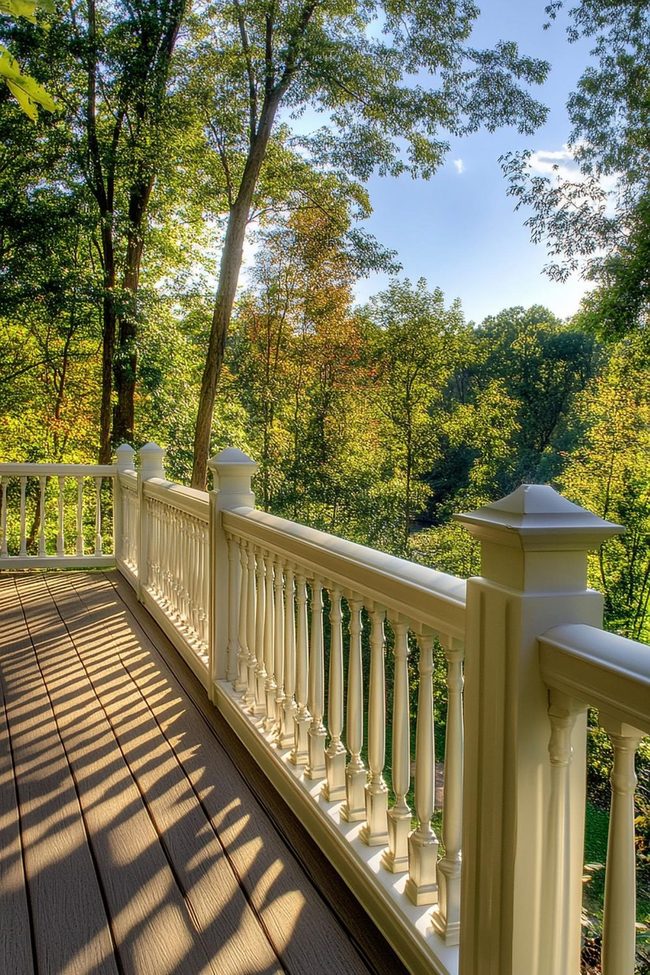
Composite railings deliver a polished, modern appearance when paired with matching composite decking, such as grey Trex decking combined with steel grey balusters and black aluminum posts that work seamlessly together.
Made from recycled plastic and wood fibers, these railing systems mimic the natural look of traditional wood while offering superior durability across changing weather conditions.
You can customize your setup by mixing traditional baluster designs with aluminum frame components to suit both your aesthetic preferences and budget, with costs typically ranging from $65 to $100 per linear foot when installed.
Unlike wood railings that demand regular staining, sealing, and painting, composite railings stay maintenance-free for up to 15 years and only need occasional cleaning with soap and water to look their best.
One major advantage is that these engineered materials resist decay, splintering, and insect damage that commonly damage traditional wood railings over time.
If you want the natural wood appearance without the constant upkeep, composite railing systems give you exactly that benefit.
Many manufacturers like Trex now offer matching railing components that pair perfectly with their decking lines, making it easy for you to coordinate colors and textures throughout your open-air space.
For high-traffic decks where low maintenance really matters, composite railings combine space-saving durability with the visual appeal of natural wood.
Riley Summers
Co-Founder & Home Styling Expert
Expertise
Smart Space Planning & Layout Optimization, DIY Home Projects & Budget-Friendly Décor, Trend Forecasting & Sustainable Design, Practical Styling Solutions for Every Home
Education
New York School of Interior Design, New York, NY
Riley Summers knows that a well-designed home isn’t just about looks—it’s about function, comfort, and personality. As co-founder of [Brand Name], she specializes in smart space planning, trend-forward décor, and sustainable styling solutions.
With a background in interior architecture from NYSID, Riley helps homeowners maximize their spaces with clever layouts and easy DIY projects. She loves sharing budget-friendly decorating ideas that make high design accessible.
Outside of work, she enjoys strolling through NYC’s neighborhoods, discovering new design trends, and savoring a great cup of coffee.